
 Afrik
Afrik Aazi
Aazi Orop
Orop Amerik Worgo
 Ostaraali e Oseyaani
 Antarktik
 Geec Pasifik
 Geec Atlantik
 Geec Enndo
 Geec Arktik
 Geec Mediteraane
 Geec Boɗeejo
 Geec Karayib
 Geec Korayl
 Geec Siin Worgo
 Geec Filipiin
 Geec Andaman
 Geec Rewo
 Geec Timor e Arafura
 Gulf Bengal
 Gulf Kaliforni
Black-footed yellow sac spider
 Ŋatgol
The black-footed yellow sac spider is a small, pale yellow spider native to the Americas. It hunts at night and does not spin webs to catch food. It sometimes lives in homes, but its bites rarely cause more than local symptoms.1

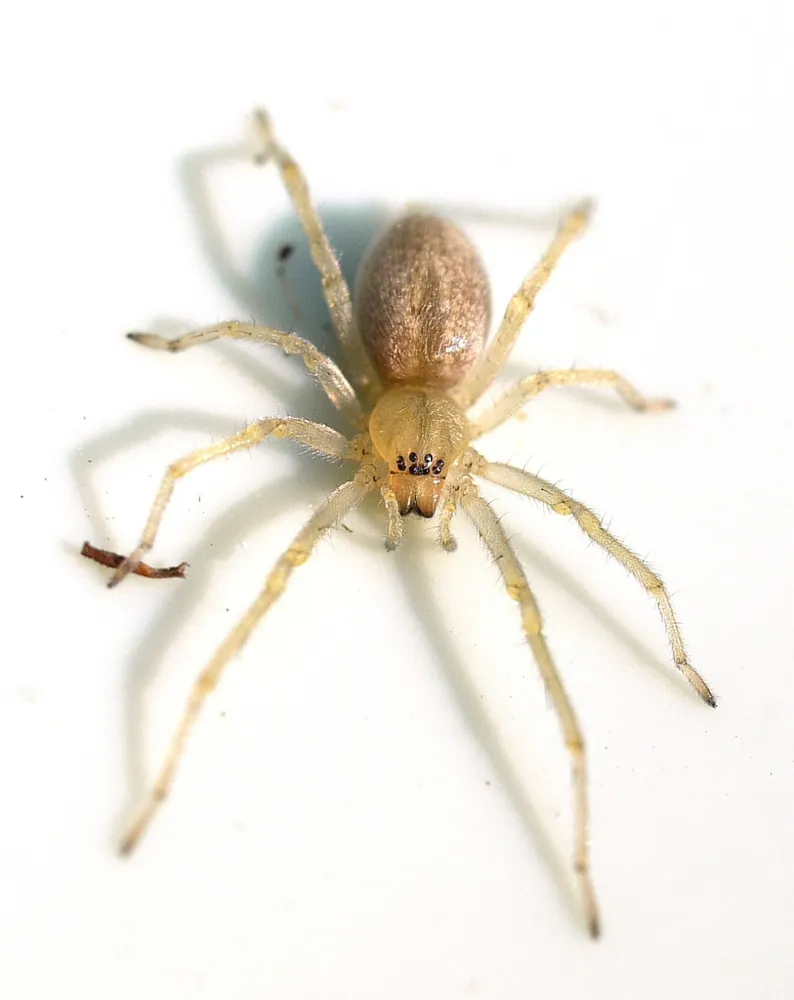
 No anndirte ngal
- Pale yellow-beige body colour.1
- Dark brown markings on the palps, jaws (chelicerae) and the ends of the feet (tarsi).1
- Often an orange-brown stripe running down the top-centre of the abdomen.1
- Eight similar-sized eyes in two parallel horizontal rows.1
- Females measure 5 to 9 mm in body length and males 4 to 8 mm. The leg span can reach 2.5 cm, and the front pair of legs is longer than the other three pairs.1
Ina heewi waylondireede e: Cheiracanthium mildei, an introduced species from Europe, is similar in appearance and natural history. It can also be found in North American homes.1
Doole tooke
Tooke ngal ina yaltira ñiiƴe mum so ina ŋata.
Hol ko tooke ŋatgol mum waɗata?
A bite begins with moderate pain, followed by itching. Symptoms usually clear within 7 to 10 days. The venom rarely causes more than local symptoms.1
Hol no bone mum heewiri e yimɓe?
Bone e yimɓe: MuusɗoIna waawi muusde sanne, kono hertaani wonde huunde mawnde.Bites are rare. Females bite more often than wandering males. The venom rarely causes more than local symptoms.1
 So ina ŋata
- Loot nokku ŋataaɗo oo, waɗ galaas e mum ngam muusu ngu. Heɓ ballal cafrol so muusu ngu ina tiiɗi, ina saakoo walla neɗɗo oo ina wiya wonaa e jam.
Adii fof noddu nimero urgence (112, 000, 911). Ɗum ko anndinal ballal adiingal, wonaa saaraangal doktoor. Ko adii e ballal adiingal
 Reen hoore maa
- Wota a meem, wota a nanngu, wota a ñiŋŋu kullal ladde haa abada, hay so ngal ina famɗi, hay so ina nanndi e ɗaaniingal walla maayngal.
- Accu ngal nokku. So a fotti e ngal, deƴƴu, ruttu ɓaawo seeɗa seeɗa, accu ngal yaha laawol mum.
- So gooto ŋatii ma: deƴƴu, wota a dillu, noddu nimero urgence (112, 000, 911) walla yahu opitaal law. Jogo e hakkille no ngal nanndi, natal ina walla.
Ngal faalaaka gaañde ma. Ina huutoroo tooke mum ngam nanngude ñaamdu walla reenaade, ina ɓuri yiɗde suuɗaade. Ɓeydu anndude no reentortoo
Hol to e aduna?
Hol no mawniri?
Hol no juutiri?
 hedde juutde no ñippirde kaayitaaje
Hol no Black-footed yellow sac spider mawniri, so fooɗondiraama e AN?
Limgal tan e navigatoor maa. Alaa ko danndetee walla ko neldetee.
Hol no yaawiri?


Humpito
It hunts at night and builds a new small silk nest every day, in under 10 minutes.1
It can spread to new trees and shrubs by releasing a long silk thread that the wind carries, or by ballooning through the air on a silk line.1
It does not spin a web to catch prey. It hunts actively instead.1
Females mate only once and produce their first egg mass about 14 days after mating.1
Feññinoowo fenaande
Fenaande: Cheiracanthium bites cause necrosis, the death of skin and tissue.
Goonga: Bites cause only localised swelling.1
Ngam ganduɓe tooke
- Innde ganndal
- Cheiracanthium inclusum
- Fedde
- Araañeeji
- Ɓesngu
- Cheiracanthiidae2
- Ordre
- Araneae
- Leyɗe mawɗe
- Amerik Rewo, Amerik Worgo
- Ɓiɓɓe tokooso
- Females usually lay two egg masses, though they may lay from one to five. Each mass holds 17 to 85 eggs, and up to 112 have been reported. The female guards the eggs and then the young for about 17 days.1
- Bone e yimɓe
- 2 / 5: Muusɗo3
Ɗo humpito iwri
- Cheiracanthium inclusum (Wikipedia (CC BY-SA 4.0))
- Cheiracanthium inclusum (iNaturalist): inɗe e ceergal.
- Venom Wiki: tolno bone, mawnude heewnde e miijo yaawde ko amen. Yiy no men keɓirta ɗum: No men tolnirta bone.
Kala humpito e ngoo hello ina jogii limoore hollirnde iwdi mum. So men juumii, yaafo, men ko yiɗɓe kulle, wonaa jaaynde ganndal. Wiy men e [email protected], men feewnita.
 Yaare nden ina weelaa! Venom Wiki ko golle neɗɗo gooto: yoɓetaake, alaa ko jeeyetee, alaa rewɓe. Ndokkal seeɗa ina walla ngam heddude e enternet.Ñaam yaare nden
 Brazilian wandering spider
 Brown recluse
 Southern black widow
 Amazon wandering spider
 Chilean recluse
 Northern black widow
 Terciopelo
 Eastern coral snake
 Eastern diamondback rattlesnake
 Eyelash viper
 Timber rattlesnake
 Western diamondback rattlesnake