
 Afrik
Afrik Aazi
Aazi Orop
Orop Amerik Worgo
 Ostaraali e Oseyaani
 Antarktik
 Geec Pasifik
 Geec Atlantik
 Geec Enndo
 Geec Arktik
 Geec Mediteraane
 Geec Boɗeejo
 Geec Karayib
 Geec Korayl
 Geec Siin Worgo
 Geec Filipiin
 Geec Andaman
 Geec Rewo
 Geec Timor e Arafura
 Gulf Bengal
 Gulf Kaliforni
Boxer crab anemone
 Tiimbe jukkooje
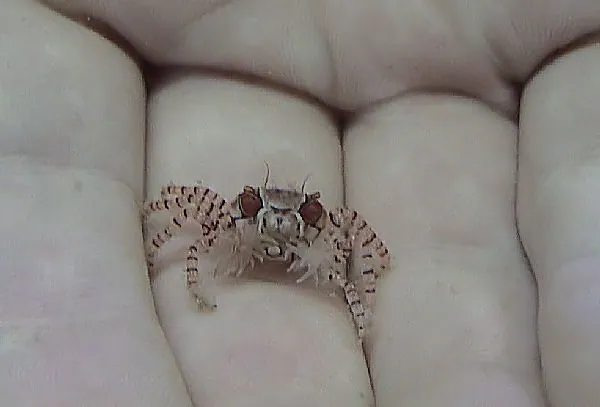
The boxer crab anemone is a small sea anemone, only about 1.5 cm tall, that lives on reefs in the warm Indo-Pacific. It is the only species in its genus, and it is special because it teams up with small boxer crabs, which carry it in their claws.1

 No anndirte ngal
- Small and pale brown, with a base about 1 cm across1
- A crown of about 50 relatively long tentacles on top1
- A ring of branching, pale brown pseudo-tentacles halfway up the body1
- Grey, pink or green bulges called vesicles on the pseudo-tentacles1
- In daylight its pseudo-tentacles look dark brown, because of the algae they contain1
Doole tooke
Jukkirɗe tokoose guluuje ina ŋata so huunde meemii ɗe.
Hol ko tooke ŋatgol mum waɗata?
Its stinging cells, called cnidocytes, are packed into the vesicles and tentacles. The venom is strong enough to stun small prey. In the Red Sea it is reported to be one of the most venomous sea anemones, and the toxic agent is very stable, resisting chemicals and heat.1
Hol no bone mum heewiri e yimɓe?
Bone e yimɓe: MuusɗoIna waawi muusde sanne, kono hertaani wonde huunde mawnde.In the Red Sea it is reported to be one of the most venomous sea anemones. Stings to bare skin cause pain and swelling.1
Hol ko ngal waɗata so ina hula?
Its vesicles, which are well armed with stinging cells, protect the pseudo-tentacles, which might otherwise look like food to a predator.1
 So ina jukka
- Yaltin neɗɗo oo e ndiyam, ittu kala tiimbe meduus (e gaŋte walla taƴre leppi).
- Ngam meduus kaaɗe tulnde: wuj winegar e nokkuuje jukkaaɗe, ko famɗi fof segonde 30, noddu ballal, heblo waɗde réanimation (RCP). Ngam bluebottles e ko heewi e goɗɗe: loot e ndiyam geec, refti ndiyam guleeɗam ngam muusu.
Adii fof noddu nimero urgence (112, 000, 911). Ɗum ko anndinal ballal adiingal, wonaa saaraangal doktoor. Ko adii e ballal adiingal
 Reen hoore maa
- Wota a meem, wota a nanngu, wota a ñiŋŋu kullal ladde haa abada, hay so ngal ina famɗi, hay so ina nanndi e ɗaaniingal walla maayngal.
- Accu ngal nokku. So a fotti e ngal, deƴƴu, ruttu ɓaawo seeɗa seeɗa, accu ngal yaha laawol mum.
- So gooto jukkii ma: deƴƴu, wota a dillu, noddu nimero urgence (112, 000, 911) walla yahu opitaal law. Jogo e hakkille no ngal nanndi, natal ina walla.
Ngal faalaaka gaañde ma. Ina huutoroo tooke mum ngam nanngude ñaamdu walla reenaade, ina ɓuri yiɗde suuɗaade. Ɓeydu anndude no reentortoo
Hol to e aduna?
Hol no mawniri?
Hol no juutiri?
 ɓuri hondu maa tokooso rabbaɗde
 ɓuri kokiyaas ngesa leelde
Hol no Boxer crab anemone mawniri, so fooɗondiraama e AN?
Limgal tan e navigatoor maa. Alaa ko danndetee walla ko neldetee.
Hol no yaawiri?


Humpito
Boxer crabs of the genus Lybia hold one of these anemones in each claw and wave it like a weapon to keep predators away.1
If a crab loses one anemone, it can tear the other in half, and each half grows into a new individual.1
The crab uses its anemones to stun and catch prey for itself.1
In one reported case, a sting left skin pain and swelling for several weeks, with a dark, blistered mark and long-lasting sensitivity.1
The anemones seem unharmed by being carried and used in this way.1
Ɗo humpito iwri
- Triactis (Wikipedia (CC BY-SA 4.0))
- Triactis producta (iNaturalist): inɗe e ceergal.
- Venom Wiki: tolno bone, mawnude heewnde e miijo yaawde ko amen. Yiy no men keɓirta ɗum: No men tolnirta bone.
Kala humpito e ngoo hello ina jogii limoore hollirnde iwdi mum. So men juumii, yaafo, men ko yiɗɓe kulle, wonaa jaaynde ganndal. Wiy men e [email protected], men feewnita.
 Yaare nden ina weelaa! Venom Wiki ko golle neɗɗo gooto: yoɓetaake, alaa ko jeeyetee, alaa rewɓe. Ndokkal seeɗa ina walla ngam heddude e enternet.Ñaam yaare nden
Goɗɗe e nder fedde wootere: Meduusaaji e kulle geec jukkooje
 Meduus kaaɗe OstaraaliMeduusaaji e kulle geec jukkoojeBareejoWota a meem
 Irukandji jellyfishMeduusaaji e kulle geec jukkoojeIna waawi wardeWota a meem
 Portuguese man o' warMeduusaaji e kulle geec jukkoojeIna sokli doktoorWota a meem
 Lion's mane jellyfishMeduusaaji e kulle geec jukkoojeIna muusi tanWota a meem
 Moon jellyfishMeduusaaji e kulle geec jukkoojeAlaa bone
 Common kingslayerMeduusaaji e kulle geec jukkoojeIna waawi wardeWota a meem
Ina wuuri kadi e: Geec Pasifik
 Kokiyaas kone jeografiKokiyaas kone e pulpuujiBareejo
 Pulp mawɗo koode bulaajeKokiyaas kone e pulpuujiBareejo
 Liingu puffer SapoŋKulle goɗɗe jogiiɗe tooke ɓannduBareejo
 Pulp koode bulaaje worgoKokiyaas kone e pulpuujiBareejo
 Hawksbill sea turtleKulle goɗɗe jogiiɗe tooke ɓannduIna waawi warde
 Reef stonefishLiƴƴi jogiiɗi tookeIna waawi wardeWota a meem