
 Afrik
Afrik Aazi
Aazi Orop
Orop Amerik Worgo
 Ostaraali e Oseyaani
 Antarktik
 Geec Pasifik
 Geec Atlantik
 Geec Enndo
 Geec Arktik
 Geec Mediteraane
 Geec Boɗeejo
 Geec Karayib
 Geec Korayl
 Geec Siin Worgo
 Geec Filipiin
 Geec Andaman
 Geec Rewo
 Geec Timor e Arafura
 Gulf Bengal
 Gulf Kaliforni
Egg-yolk jellyfish
 Tiimbe jukkooje
The egg-yolk jellyfish is a very large jellyfish with a bright yellow centre that looks like a fried egg. It lives in cool seas across most of the world's oceans and is most common in the Northern Pacific. It is special because it can grow very large, and it is one of the few jellyfish that can survive in low-oxygen water.1



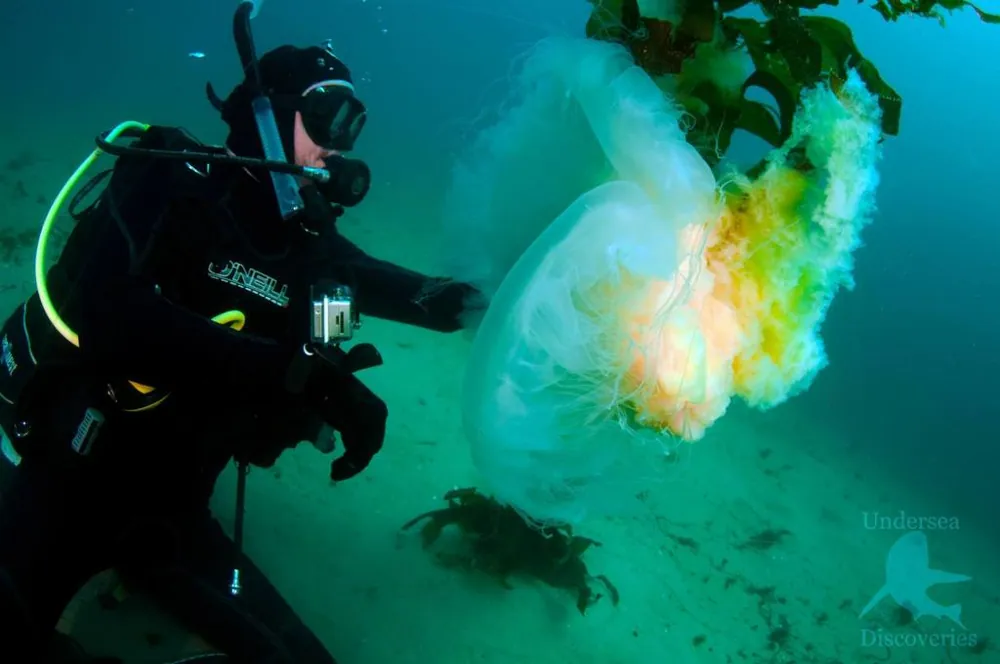
 No anndirte ngal
- A yellow centre that looks like a broken egg yolk, surrounded by opaque white tissue1
- A large bell, sometimes close to 60 cm across1
- 16 clusters of tentacles, each with up to a few dozen tentacles, and each tentacle up to 6 m long1
- Broad, curtain-like oral arms1
- Mostly drifts with the current, with only limited movement1
Ina heewi waylondireede e: The lion's mane jellyfish (Cyanea capillata) is sometimes confused with this species. The smaller Cotylorhiza tuberculata, which is found mainly in warmer water, especially in the Mediterranean Sea, is also called a fried egg jellyfish.1
Doole tooke
Jukkirɗe tokoose guluuje ina ŋata so huunde meemii ɗe.
Hol ko tooke ŋatgol mum waɗata?
Its tentacles contain nematocysts, stinging cells that help it catch prey. Its sting is weak, which allows some small animals to ride on its bell and steal food from its arms and tentacles.1
Hol no bone mum heewiri e yimɓe?
Bone e yimɓe: HoyɗoNo jukkugol ñaaki walla ko ɓuri famɗude. Ko ɓuri heewde alaa bone e yimɓe.Its sting is weak.1
Hol ko ngal waɗata so ina hula?
Its tentacles contain nematocysts, which also help protect it from predators.1
 So ina jukka
- Yaltin neɗɗo oo e ndiyam, ittu kala tiimbe meduus (e gaŋte walla taƴre leppi).
- Ngam meduus kaaɗe tulnde: wuj winegar e nokkuuje jukkaaɗe, ko famɗi fof segonde 30, noddu ballal, heblo waɗde réanimation (RCP). Ngam bluebottles e ko heewi e goɗɗe: loot e ndiyam geec, refti ndiyam guleeɗam ngam muusu.
Adii fof noddu nimero urgence (112, 000, 911). Ɗum ko anndinal ballal adiingal, wonaa saaraangal doktoor. Ko adii e ballal adiingal
 Reen hoore maa
- Wota a meem, wota a nanngu, wota a ñiŋŋu kullal ladde haa abada, hay so ngal ina famɗi, hay so ina nanndi e ɗaaniingal walla maayngal.
- Accu ngal nokku. So a fotti e ngal, deƴƴu, ruttu ɓaawo seeɗa seeɗa, accu ngal yaha laawol mum.
- So gooto jukkii ma: deƴƴu, wota a dillu, noddu nimero urgence (112, 000, 911) walla yahu opitaal law. Jogo e hakkille no ngal nanndi, natal ina walla.
Ngal faalaaka gaañde ma. Ina huutoroo tooke mum ngam nanngude ñaamdu walla reenaade, ina ɓuri yiɗde suuɗaade. Ɓeydu anndude no reentortoo
Hol no mawniri?
Hol no juutiri?
 juutde no banaanaaji 3 sammondiraaɗi
 juutde no kaaɗe mahirɗe 18 ɗaɓɓondiraaɗe
 ina waawi yoowde juuteendi pisin mawɗo (50 m) e segonde 140
Hol no Egg-yolk jellyfish mawniri, so fooɗondiraama e AN?
Limgal tan e navigatoor maa. Alaa ko danndetee walla ko neldetee.
Hol no yaawiri?

Humpito
Its tentacles can reach up to 6 m long, which is far longer than its bell.1
It has no gills, lungs or circulatory system. It takes in oxygen through its thin body surface instead.1
The giant deep-sea octopus Haliphron atlanticus clings to this jellyfish and eats its oral arms and stomach.1
It can survive in low-oxygen water for several hours at a time, and it sometimes dives into these zones during the day to avoid competition.1
Small crabs and an amphipod called Hyperia medusarum can live on its bell, and some feed on the parasites that infest the jellyfish.1
Ngam ganduɓe tooke
- Innde ganndal
- Phacellophora camtschatica
- Fedde
- Meduusaaji e kulle geec jukkooje
- Ɓesngu
- Phacellophoridae2
- Ordre
- Semaeostomeae
- Leyɗe mawɗe
- Geec Pasifik, Geece mawɗe
- Ɓiɓɓe tokooso
- Eggs are fertilised and develop into swimming larvae called planulae. These settle on the seabed and grow into polyps, which later release young jellyfish called ephyrae.1
- Bone e yimɓe
- 1 / 5: Hoyɗo3
Ɗo humpito iwri
- Phacellophora (Wikipedia (CC BY-SA 4.0))
- Phacellophora camtschatica (iNaturalist): inɗe e ceergal.
- Venom Wiki: tolno bone, mawnude heewnde e miijo yaawde ko amen. Yiy no men keɓirta ɗum: No men tolnirta bone.
Kala humpito e ngoo hello ina jogii limoore hollirnde iwdi mum. So men juumii, yaafo, men ko yiɗɓe kulle, wonaa jaaynde ganndal. Wiy men e [email protected], men feewnita.
 Yaare nden ina weelaa! Venom Wiki ko golle neɗɗo gooto: yoɓetaake, alaa ko jeeyetee, alaa rewɓe. Ndokkal seeɗa ina walla ngam heddude e enternet.Ñaam yaare nden
Goɗɗe e nder fedde wootere: Meduusaaji e kulle geec jukkooje
 Meduus kaaɗe OstaraaliMeduusaaji e kulle geec jukkoojeBareejoWota a meem
 Irukandji jellyfishMeduusaaji e kulle geec jukkoojeIna waawi wardeWota a meem
 Portuguese man o' warMeduusaaji e kulle geec jukkoojeIna sokli doktoorWota a meem
 Lion's mane jellyfishMeduusaaji e kulle geec jukkoojeIna muusi tanWota a meem
 Moon jellyfishMeduusaaji e kulle geec jukkoojeAlaa bone
 Common kingslayerMeduusaaji e kulle geec jukkoojeIna waawi wardeWota a meem
Ina wuuri kadi e: Geec Pasifik
 Kokiyaas kone jeografiKokiyaas kone e pulpuujiBareejo
 Pulp mawɗo koode bulaajeKokiyaas kone e pulpuujiBareejo
 Liingu puffer SapoŋKulle goɗɗe jogiiɗe tooke ɓannduBareejo
 Pulp koode bulaaje worgoKokiyaas kone e pulpuujiBareejo
 Hawksbill sea turtleKulle goɗɗe jogiiɗe tooke ɓannduIna waawi warde
 Reef stonefishLiƴƴi jogiiɗi tookeIna waawi wardeWota a meem