
 Afrik
Afrik Aazi
Aazi Orop
Orop Amerik Worgo
 Ostaraali e Oseyaani
 Antarktik
 Geec Pasifik
 Geec Atlantik
 Geec Enndo
 Geec Arktik
 Geec Mediteraane
 Geec Boɗeejo
 Geec Karayib
 Geec Korayl
 Geec Siin Worgo
 Geec Filipiin
 Geec Andaman
 Geec Rewo
 Geec Timor e Arafura
 Gulf Bengal
 Gulf Kaliforni
Flower hat jelly
 Tiimbe jukkooje
The flower hat jelly is a small, glowing sea creature from the northwestern Pacific, living off central and southern Japan and Jeju Island in South Korea. Although it looks like a jellyfish, it is a hydromedusa, a close relative of hydroids. It matters to people because its sting can cause a painful rash, and it is one of the few of its kind known to have caused a death.1

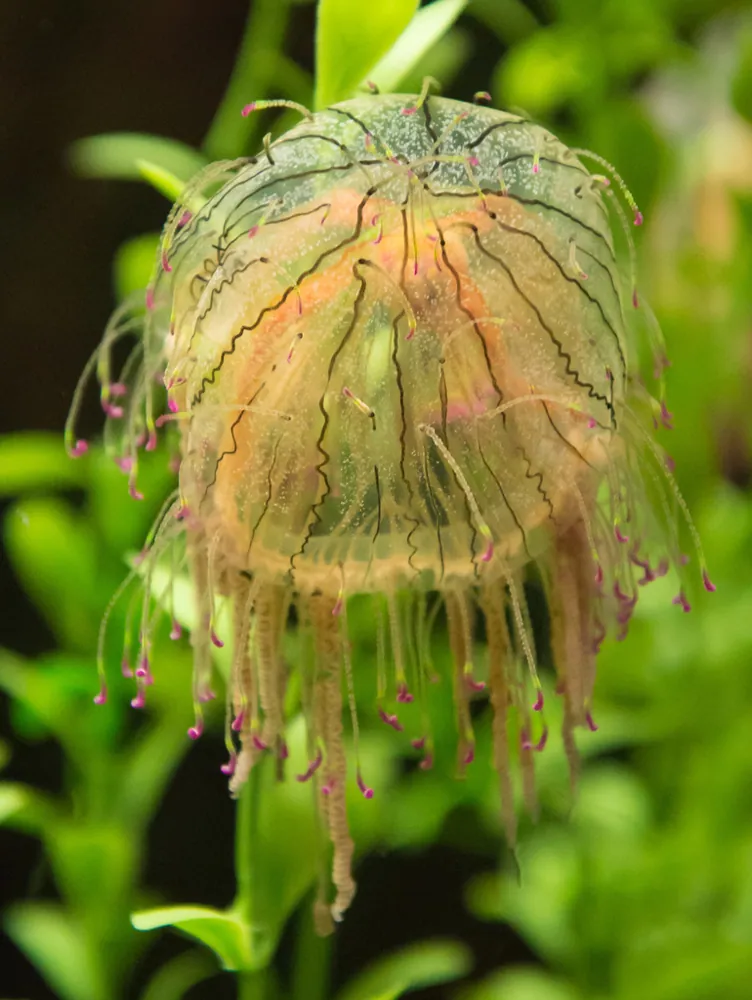
 No anndirte ngal
Doole tooke
Jukkirɗe tokoose guluuje ina ŋata so huunde meemii ɗe.
Hol ko tooke ŋatgol mum waɗata?
The sting is generally mildly painful and leaves a rash.1
Hol no bone mum heewiri e yimɓe?
Bone e yimɓe: MuusɗoIna waawi muusde sanne, kono hertaani wonde huunde mawnde.The sting is generally mildly painful. There is a single known human fatality from Japan.1
 So ina jukka
- Yaltin neɗɗo oo e ndiyam, ittu kala tiimbe meduus (e gaŋte walla taƴre leppi).
- Ngam meduus kaaɗe tulnde: wuj winegar e nokkuuje jukkaaɗe, ko famɗi fof segonde 30, noddu ballal, heblo waɗde réanimation (RCP). Ngam bluebottles e ko heewi e goɗɗe: loot e ndiyam geec, refti ndiyam guleeɗam ngam muusu.
Adii fof noddu nimero urgence (112, 000, 911). Ɗum ko anndinal ballal adiingal, wonaa saaraangal doktoor. Ko adii e ballal adiingal
 Reen hoore maa
- Wota a meem, wota a nanngu, wota a ñiŋŋu kullal ladde haa abada, hay so ngal ina famɗi, hay so ina nanndi e ɗaaniingal walla maayngal.
- Accu ngal nokku. So a fotti e ngal, deƴƴu, ruttu ɓaawo seeɗa seeɗa, accu ngal yaha laawol mum.
- So gooto jukkii ma: deƴƴu, wota a dillu, noddu nimero urgence (112, 000, 911) walla yahu opitaal law. Jogo e hakkille no ngal nanndi, natal ina walla.
Ngal faalaaka gaañde ma. Ina huutoroo tooke mum ngam nanngude ñaamdu walla reenaade, ina ɓuri yiɗde suuɗaade. Ɓeydu anndude no reentortoo
Hol to e aduna?
Hol no mawniri?
Hol no juutiri?
 juutde no kaaɗe mahirɗe 5 ɗaɓɓondiraaɗe
Hol no Flower hat jelly mawniri, so fooɗondiraama e AN?
Limgal tan e navigatoor maa. Alaa ko danndetee walla ko neldetee.
Hol no yaawiri?


Humpito
Its tentacles look random, but research has shown they are arranged mathematically, following a pattern called Fibonacci hashing.1
Its fluorescent light acts like a supernormal stimulus, luring prey towards it because the light is not normal for the habitat.1
A fluorescent protein from this species, called Gamillus, is used as a tag for tracking molecules in research, including work on SARS-CoV-2 viral entry.1
Adults are seen mainly from December to July, with peaks in April and May, and the adult form only lives a few months.1
Feññinoowo fenaande
Fenaande: It is a true jellyfish.
Goonga: Although it looks like a jellyfish, it belongs to the class Hydrozoa. True jellyfish belong to the class Scyphozoa.1
Ngam ganduɓe tooke
- Innde ganndal
- Olindias formosus
- Fedde
- Meduusaaji e kulle geec jukkooje
- Ɓesngu
- Olindiidae2
- Ordre
- Limnomedusae
- Leyɗe mawɗe
- Geec Pasifik, Geec Enndo, Geec Boɗeejo, Geece mawɗe
- Ɓiɓɓe tokooso
- Its life cycle includes hydroids that bud and release medusae about 1 mm across, but little is known about this in the wild.1
- Bone e yimɓe
- 2 / 5: Muusɗo3
Ɗo humpito iwri
- Flower hat jelly (Wikipedia (CC BY-SA 4.0))
- Olindias formosus (iNaturalist): inɗe e ceergal.
- Venom Wiki: tolno bone, mawnude heewnde e miijo yaawde ko amen. Yiy no men keɓirta ɗum: No men tolnirta bone.
Kala humpito e ngoo hello ina jogii limoore hollirnde iwdi mum. So men juumii, yaafo, men ko yiɗɓe kulle, wonaa jaaynde ganndal. Wiy men e [email protected], men feewnita.
 Yaare nden ina weelaa! Venom Wiki ko golle neɗɗo gooto: yoɓetaake, alaa ko jeeyetee, alaa rewɓe. Ndokkal seeɗa ina walla ngam heddude e enternet.Ñaam yaare nden
Goɗɗe e nder fedde wootere: Meduusaaji e kulle geec jukkooje
 Meduus kaaɗe OstaraaliMeduusaaji e kulle geec jukkoojeBareejoWota a meem
 Irukandji jellyfishMeduusaaji e kulle geec jukkoojeIna waawi wardeWota a meem
 Portuguese man o' warMeduusaaji e kulle geec jukkoojeIna sokli doktoorWota a meem
 Lion's mane jellyfishMeduusaaji e kulle geec jukkoojeIna muusi tanWota a meem
 Moon jellyfishMeduusaaji e kulle geec jukkoojeAlaa bone
 Common kingslayerMeduusaaji e kulle geec jukkoojeIna waawi wardeWota a meem
Ina wuuri kadi e: Geec Pasifik
 Kokiyaas kone jeografiKokiyaas kone e pulpuujiBareejo
 Pulp mawɗo koode bulaajeKokiyaas kone e pulpuujiBareejo
 Liingu puffer SapoŋKulle goɗɗe jogiiɗe tooke ɓannduBareejo
 Pulp koode bulaaje worgoKokiyaas kone e pulpuujiBareejo
 Hawksbill sea turtleKulle goɗɗe jogiiɗe tooke ɓannduIna waawi warde
 Reef stonefishLiƴƴi jogiiɗi tookeIna waawi wardeWota a meem