
 Afrik
Afrik Aazi
Aazi Orop
Orop Amerik Worgo
 Ostaraali e Oseyaani
 Antarktik
 Geec Pasifik
 Geec Atlantik
 Geec Enndo
 Geec Arktik
 Geec Mediteraane
 Geec Boɗeejo
 Geec Karayib
 Geec Korayl
 Geec Siin Worgo
 Geec Filipiin
 Geec Andaman
 Geec Rewo
 Geec Timor e Arafura
 Gulf Bengal
 Gulf Kaliforni
Golden mantella
 Tooke e nguru mum
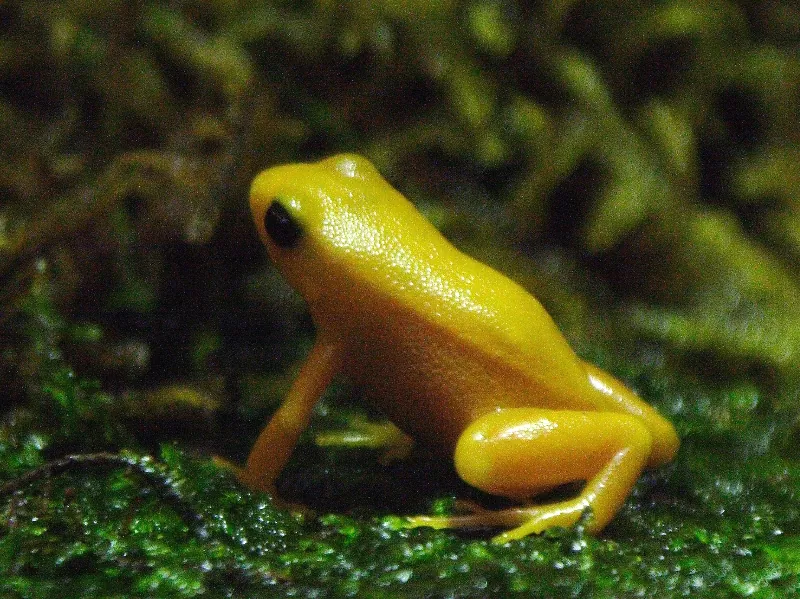
The golden mantella is a small frog, only about 2 to 2.6 cm long, that is found only on the island of Madagascar. Its bright yellow, orange or red skin is a warning that it is poisonous. It is one of the most threatened amphibians on the island.1


 No anndirte ngal
Doole tooke ɓanndu
Nguru mum ina jogii tooke. Ina bonna so meemaama, lakkaama walla ñaamaama.
Hol no bone mum heewiri e yimɓe?
Bone e yimɓe: HoyɗoNo jukkugol ñaaki walla ko ɓuri famɗude. Ko ɓuri heewde alaa bone e yimɓe.Hol ko ngal waɗata so ina hula?
Its bright colours warn predators that it is poisonous.1
 So neɗɗo meemii ngal walla ñaamii ngal
- So neɗɗo meemii gooto: loot juuɗe ɗee no moƴƴiri, wota a meem gite walla hunduko. So cukalel walla kullal galle lakkii walla ñaamii gooto: noddu centre antipoison walla nimero urgence.
Adii fof noddu nimero urgence (112, 000, 911). Ɗum ko anndinal ballal adiingal, wonaa saaraangal doktoor. Ko adii e ballal adiingal
 Reen hoore maa
- Wota a meem, wota a nanngu, wota a ñiŋŋu kullal ladde haa abada, hay so ngal ina famɗi, hay so ina nanndi e ɗaaniingal walla maayngal.
- Accu ngal nokku. So a fotti e ngal, deƴƴu, ruttu ɓaawo seeɗa seeɗa, accu ngal yaha laawol mum.
- So a meemii ngal walla a ñaamii ngal: wota a moomtu gite maa walla hunduko maa, loot juuɗe maa, heɓ ballal cafrol.
Ngal faalaaka gaañde ma. Tooke mum woni tan ngam wota huunde ñaam ngal. Ɓeydu anndude no reentortoo
Hol to e aduna?
Hol no mawniri?
Hol no juutiri?
 hedde juutde no ñippirde kaayitaaje
 ina waawi taƴde 100 meeteer e segonde 110 (neɗɗo ɓurɗo yaawde ina sokli 9,6)
Hol no Golden mantella mawniri, so fooɗondiraama e AN?
Limgal tan e navigatoor maa. Alaa ko danndetee walla ko neldetee.
Hol no yaawiri?


Humpito
The golden mantella's skin toxins come from the small invertebrates it eats, not from its own body.1
A snake called Thamnosophis lateralis and a skink of the genus Zonosaurus have been seen preying on it at Torotorofotsy Wetland, even though it is poisonous.1
Its bright colours are an example of aposematism, a warning signal to predators about its poison.1
It has a convergent evolution link with the poison dart frogs of Central and South America, which are not closely related but share similar traits.1
It is popular in the pet trade because it is active during the day, has attractive colours and is fairly easy to keep.1
Males often call from hidden spots near water, and their call is a pleasant, repeated click.1
Ngam ganduɓe tooke
- Innde ganndal
- Mantella aurantiaca
- Fedde
- Ñaari tooke, ñaari e newts
- Ɓesngu
- Mantellidae2
- Ordre
- Anura
- Leyɗe mawɗe
- Afrik
- Ɓiɓɓe tokooso
- Eggs are laid on land in moist leaf litter near water. When the rains come, the tadpoles are washed from the land into the water.1
- Hol no ngal woniri e ladde
- Critically endangered1
- Bone e yimɓe
- 1 / 5: Hoyɗo3
Ɗo humpito iwri
- Golden mantella (Wikipedia (CC BY-SA 4.0))
- Mantella aurantiaca (iNaturalist): inɗe e ceergal.
- Venom Wiki: tolno bone, mawnude heewnde e miijo yaawde ko amen. Yiy no men keɓirta ɗum: No men tolnirta bone.
Kala humpito e ngoo hello ina jogii limoore hollirnde iwdi mum. So men juumii, yaafo, men ko yiɗɓe kulle, wonaa jaaynde ganndal. Wiy men e [email protected], men feewnita.
 Yaare nden ina weelaa! Venom Wiki ko golle neɗɗo gooto: yoɓetaake, alaa ko jeeyetee, alaa rewɓe. Ndokkal seeɗa ina walla ngam heddude e enternet.Ñaam yaare nden
Goɗɗe e nder fedde wootere: Ñaari tooke, ñaari e newts
 Iberian ribbed newtÑaari tooke, ñaari e newtsAlaa bone
 Tomato frogÑaari tooke, ñaari e newtsAlaa bone
 African common toadÑaari tooke, ñaari e newtsIna muusi tanWota a meem
 Baron's mantellaÑaari tooke, ñaari e newtsAlaa bone
 Blue-legged mantellaÑaari tooke, ñaari e newtsAlaa bone
 Climbing mantellaÑaari tooke, ñaari e newtsAlaa bone
 Mamba ɓaleeri
 Yaare oolnde maayde
 Kobra Misra
 Mbaa-ndiyam (Puff adder)
 Boomslang
 Fat-tailed scorpion