
 Afrik
Afrik Aazi
Aazi Orop
Orop Amerik Worgo
 Ostaraali e Oseyaani
 Antarktik
 Geec Pasifik
 Geec Atlantik
 Geec Enndo
 Geec Arktik
 Geec Mediteraane
 Geec Boɗeejo
 Geec Karayib
 Geec Korayl
 Geec Siin Worgo
 Geec Filipiin
 Geec Andaman
 Geec Rewo
 Geec Timor e Arafura
 Gulf Bengal
 Gulf Kaliforni
Gooty sapphire tarantula
 Ŋatgol
The Gooty sapphire tarantula is a large spider with bright blue hair, the only blue species in its genus. It lives in a small patch of forest in southern India, where it makes its home in holes in tall trees. It is critically endangered, so it is rare and needs protection.1

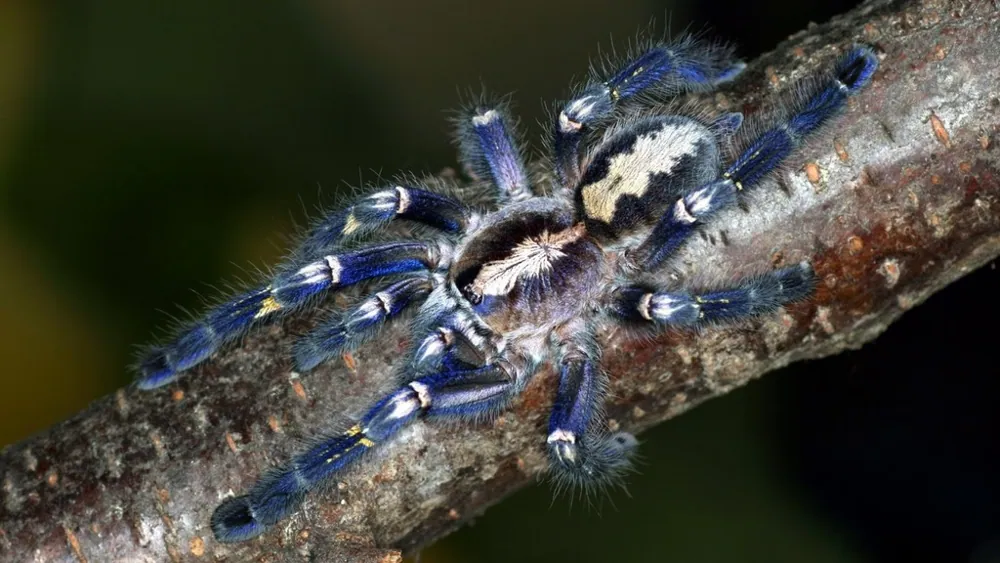
 No anndirte ngal
- Covered in blue hair, the only blue species in the genus Poecilotheria1
- An intricate, fractal-like geometric pattern on the abdomen1
- Young spiders are less colourful; the blue becomes stronger as they mature1
- Mature males are more slender, with longer legs than females1
- Full-grown leg span of 15 to 20 cm1
Doole tooke
Tooke ngal ina yaltira ñiiƴe mum so ina ŋata.
Hol ko tooke ŋatgol mum waɗata?
Its venom may cause intense pain, although this is judged from the experience of keepers bitten by other spiders in the genus. A bite may cause a rise in heart rate, followed by sweating, headache, stinging, cramping or swelling. These effects can last for up to a week.1
Hol no bone mum heewiri e yimɓe?
Bone e yimɓe: Ina tiiɗiŊatgol ina sokli doktoor. Maayde ina famɗi sanne.No human death from its bite has ever been recorded. Its bite is still considered medically significant. Most bites are dry bites, where no venom is injected. It can move quickly and may defend itself when cornered.1
Hol ko ngal waɗata so ina hula?
It is skittish and will try to flee first. It also flees from light, as it is sensitive to it. If provoked, it may bite.1
 So ina ŋata
- Loot nokku ŋataaɗo oo, ɓuuɓnu mo. Heɓ ballal cafrol so muusu ngu ina tiiɗi walla neɗɗo oo ina wiya wonaa e jam.
Adii fof noddu nimero urgence (112, 000, 911). Ɗum ko anndinal ballal adiingal, wonaa saaraangal doktoor. Ko adii e ballal adiingal
 Reen hoore maa
- Wota a meem, wota a nanngu, wota a ñiŋŋu kullal ladde haa abada, hay so ngal ina famɗi, hay so ina nanndi e ɗaaniingal walla maayngal.
- Accu ngal nokku. So a fotti e ngal, deƴƴu, ruttu ɓaawo seeɗa seeɗa, accu ngal yaha laawol mum.
- So gooto ŋatii ma: deƴƴu, wota a dillu, noddu nimero urgence (112, 000, 911) walla yahu opitaal law. Jogo e hakkille no ngal nanndi, natal ina walla.
Ngal faalaaka gaañde ma. Ina huutoroo tooke mum ngam nanngude ñaamdu walla reenaade, ina ɓuri yiɗde suuɗaade. Ɓeydu anndude no reentortoo
Hol to e aduna?
Hol no mawniri?
Hol no juutiri?
 juutde no kaaɗe mahirɗe 6 ɗaɓɓondiraaɗe
 ina waawi taƴde 100 meeteer e segonde 200 (neɗɗo ɓurɗo yaawde ina sokli 9,6)
Hol no Gooty sapphire tarantula mawniri, so fooɗondiraama e AN?
Limgal tan e navigatoor maa. Alaa ko danndetee walla ko neldetee.
Hol no yaawiri?


Humpito
Its vivid blue colour comes from tiny structures in its hair that reflect light, so the colour shifts when viewed from different angles.1
Its adult fangs can reach nearly 3/4 of an inch (about 1.9 cm) in length.1
Females typically live for 11 to 12 years, and males live for 3 to 4 years.1
Some blue tarantulas may use their colour in choosing mates or in contests for mates.1
It has been bred in captivity for more than ten years and is popular with tarantula enthusiasts.1
Feññinoowo fenaande
Fenaande: Its bite is deadly.
Goonga: No human death from its bite has ever been recorded, although the bite is considered medically significant.1
Ɗo humpito iwri
- Poecilotheria metallica (Wikipedia (CC BY-SA 4.0))
- Poecilotheria metallica (iNaturalist): inɗe e ceergal.
- Venom Wiki: tolno bone, mawnude heewnde e miijo yaawde ko amen. Yiy no men keɓirta ɗum: No men tolnirta bone.
Kala humpito e ngoo hello ina jogii limoore hollirnde iwdi mum. So men juumii, yaafo, men ko yiɗɓe kulle, wonaa jaaynde ganndal. Wiy men e [email protected], men feewnita.
 Yaare nden ina weelaa! Venom Wiki ko golle neɗɗo gooto: yoɓetaake, alaa ko jeeyetee, alaa rewɓe. Ndokkal seeɗa ina walla ngam heddude e enternet.Ñaam yaare nden
Goɗɗe e nder fedde wootere: Taranteel e funnel-web
 Indian ornamental tarantulaTaranteel e funnel-webIna sokli doktoor
 Cobalt blue tarantulaTaranteel e funnel-webIna muusi tan
 Chinese bird spiderTaranteel e funnel-webIna sokli doktoor
 Chinese black earth tiger tarantulaTaranteel e funnel-webIna sokli doktoor
 Fringed ornamental tarantulaTaranteel e funnel-webIna sokli doktoor
 Japanese funnel-web spiderTaranteel e funnel-webIna sokli doktoor
 Yaare oolnde maayde
 Kobra Enndo
 Wipeer cerkeeje siy Enndo
 Kobra laamɗo
 Mbaa-ndiyam (Puff adder)
 Ladde Russell