
 Afrik
Afrik Aazi
Aazi Orop
Orop Amerik Worgo
 Ostaraali e Oseyaani
 Antarktik
 Geec Pasifik
 Geec Atlantik
 Geec Enndo
 Geec Arktik
 Geec Mediteraane
 Geec Boɗeejo
 Geec Karayib
 Geec Korayl
 Geec Siin Worgo
 Geec Filipiin
 Geec Andaman
 Geec Rewo
 Geec Timor e Arafura
 Gulf Bengal
 Gulf Kaliforni
Orange baboon tarantula
 Ŋatgol
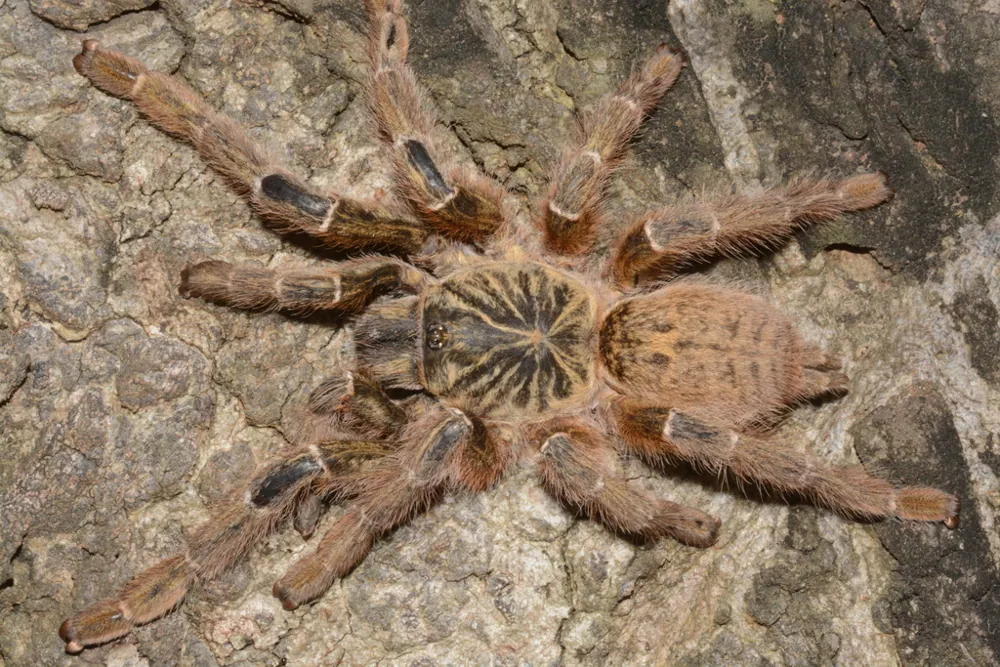
The orange baboon tarantula is a large, nocturnal spider, so it is most active at night. It lives in parts of Africa, including Angola, central and southern Africa and the island of Zanzibar. Its bite is not known to be deadly, but it is very painful, so it should be left alone.1



 No anndirte ngal
Doole tooke
Tooke ngal ina yaltira ñiiƴe mum so ina ŋata.
Hol ko tooke ŋatgol mum waɗata?
The venom is not known to be lethal to humans, but the bite is considered medically significant. The bite is extremely painful.1
Hol no bone mum heewiri e yimɓe?
Bone e yimɓe: MuusɗoIna waawi muusde sanne, kono hertaani wonde huunde mawnde.The bite is not thought to be serious, but it is extremely painful. It is considered medically significant, so handling this species is advised against.1
Hol ko ngal waɗata so ina hula?
It is very defensive and will bite if provoked, often without first showing its typical threat display.1
 So ina ŋata
- Loot nokku ŋataaɗo oo, ɓuuɓnu mo. Heɓ ballal cafrol so muusu ngu ina tiiɗi walla neɗɗo oo ina wiya wonaa e jam.
Adii fof noddu nimero urgence (112, 000, 911). Ɗum ko anndinal ballal adiingal, wonaa saaraangal doktoor. Ko adii e ballal adiingal
 Reen hoore maa
- Wota a meem, wota a nanngu, wota a ñiŋŋu kullal ladde haa abada, hay so ngal ina famɗi, hay so ina nanndi e ɗaaniingal walla maayngal.
- Accu ngal nokku. So a fotti e ngal, deƴƴu, ruttu ɓaawo seeɗa seeɗa, accu ngal yaha laawol mum.
- So gooto ŋatii ma: deƴƴu, wota a dillu, noddu nimero urgence (112, 000, 911) walla yahu opitaal law. Jogo e hakkille no ngal nanndi, natal ina walla.
Ngal faalaaka gaañde ma. Ina huutoroo tooke mum ngam nanngude ñaamdu walla reenaade, ina ɓuri yiɗde suuɗaade. Ɓeydu anndude no reentortoo
Hol to e aduna?
Hol no mawniri?
Hol no juutiri?
 juutde no kaaɗe mahirɗe 5 ɗaɓɓondiraaɗe
 ina waawi taƴde 100 meeteer e segonde 200 (neɗɗo ɓurɗo yaawde ina sokli 9,6)
Hol no Orange baboon tarantula mawniri, so fooɗondiraama e AN?
Limgal tan e navigatoor maa. Alaa ko danndetee walla ko neldetee.
Hol no yaawiri?


Humpito
Hobbyists nickname it OBT, short for orange baboon tarantula or orange bitey thing, and call it the pterror, a pun on its genus name.1
It can be found in five known colour forms, and the colour is thought to be linked to the type of soil where each form lives.1
Unlike some New World tarantulas, it has no urticating hairs to irritate the skin.1
It builds a tunnel-shaped web.1
It is a nocturnal spider, so it is most active at night.1
Ɗo humpito iwri
- Pterinochilus murinus (Wikipedia (CC BY-SA 4.0))
- Pterinochilus murinus (iNaturalist): inɗe e ceergal.
- Venom Wiki: tolno bone, mawnude heewnde e miijo yaawde ko amen. Yiy no men keɓirta ɗum: No men tolnirta bone.
Kala humpito e ngoo hello ina jogii limoore hollirnde iwdi mum. So men juumii, yaafo, men ko yiɗɓe kulle, wonaa jaaynde ganndal. Wiy men e [email protected], men feewnita.
 Yaare nden ina weelaa! Venom Wiki ko golle neɗɗo gooto: yoɓetaake, alaa ko jeeyetee, alaa rewɓe. Ndokkal seeɗa ina walla ngam heddude e enternet.Ñaam yaare nden
Goɗɗe e nder fedde wootere: Taranteel e funnel-web
 King baboon spiderTaranteel e funnel-webIna muusi tan
 Featherleg baboon spiderTaranteel e funnel-webIna sokli doktoor
 Togo starburst tarantulaTaranteel e funnel-webIna sokli doktoor
 Cameroon red baboon spiderTaranteel e funnel-webIna muusi tan
 Golden blue-leg baboon spiderTaranteel e funnel-webIna muusi tan
 Horned baboon spiderTaranteel e funnel-webIna muusi tan
 Mamba ɓaleeri
 Yaare oolnde maayde
 Kobra Misra
 Mbaa-ndiyam (Puff adder)
 Boomslang
 Fat-tailed scorpion