
 Afrik
Afrik Aazi
Aazi Orop
Orop Amerik Worgo
 Ostaraali e Oseyaani
 Antarktik
 Geec Pasifik
 Geec Atlantik
 Geec Enndo
 Geec Arktik
 Geec Mediteraane
 Geec Boɗeejo
 Geec Karayib
 Geec Korayl
 Geec Siin Worgo
 Geec Filipiin
 Geec Andaman
 Geec Rewo
 Geec Timor e Arafura
 Gulf Bengal
 Gulf Kaliforni
Pacific sea nettle
 Tiimbe jukkooje
The Pacific sea nettle is a large jellyfish with a golden-brown bell and long, trailing tentacles. It lives in the cool and temperate coastal waters of the northeastern Pacific Ocean, from southern British Columbia down to Mexico. Its sting is irritating, but it is rarely dangerous to people.1



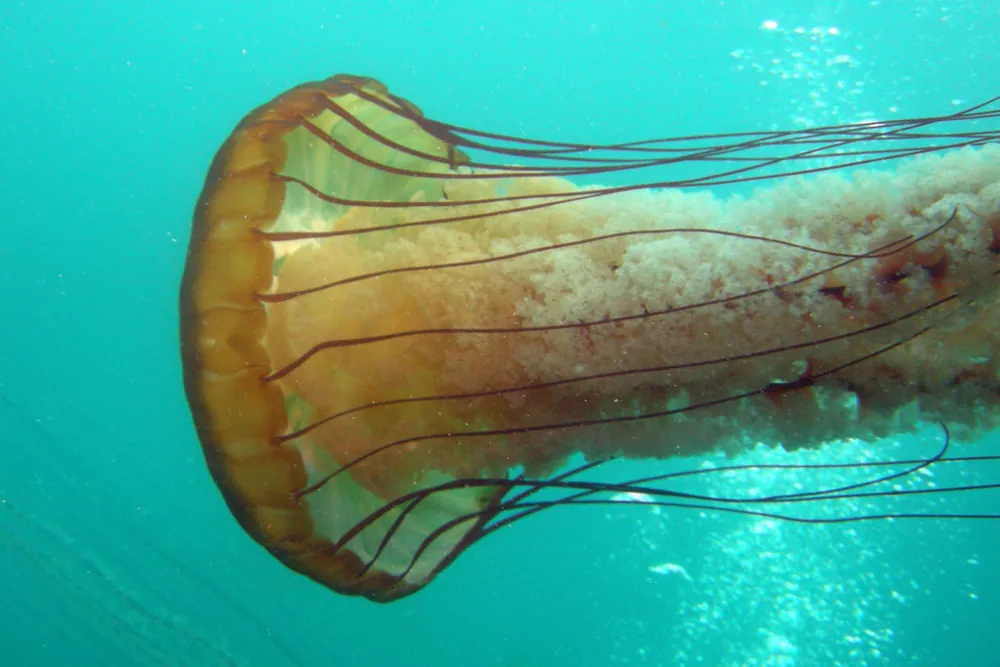
 No anndirte ngal
Doole tooke
Jukkirɗe tokoose guluuje ina ŋata so huunde meemii ɗe.
Hol ko tooke ŋatgol mum waɗata?
When prey touches the tentacles, thousands of stinging cells (nematocysts) fire barbed stingers that inject venom. The venom contains proteins, including proteases and pore-forming toxins, which can disrupt cell membranes and tissues. The venom is effective against prey and humans, but is typically not lethal to people.1
Hol no bone mum heewiri e yimɓe?
Bone e yimɓe: MuusɗoIna waawi muusde sanne, kono hertaani wonde huunde mawnde.Its sting is often irritating and possibly mildly painful to people, but it is rarely dangerous. It is typically nonlethal to humans.1
Hol ko ngal waɗata so ina hula?
Its stinging tentacles are its main defence, although some animals, such as leatherback turtles, are not bothered by the sting.1
 So ina jukka
- Yaltin neɗɗo oo e ndiyam, ittu kala tiimbe meduus (e gaŋte walla taƴre leppi).
- Ngam meduus kaaɗe tulnde: wuj winegar e nokkuuje jukkaaɗe, ko famɗi fof segonde 30, noddu ballal, heblo waɗde réanimation (RCP). Ngam bluebottles e ko heewi e goɗɗe: loot e ndiyam geec, refti ndiyam guleeɗam ngam muusu.
Adii fof noddu nimero urgence (112, 000, 911). Ɗum ko anndinal ballal adiingal, wonaa saaraangal doktoor. Ko adii e ballal adiingal
 Reen hoore maa
- Wota a meem, wota a nanngu, wota a ñiŋŋu kullal ladde haa abada, hay so ngal ina famɗi, hay so ina nanndi e ɗaaniingal walla maayngal.
- Accu ngal nokku. So a fotti e ngal, deƴƴu, ruttu ɓaawo seeɗa seeɗa, accu ngal yaha laawol mum.
- So gooto jukkii ma: deƴƴu, wota a dillu, noddu nimero urgence (112, 000, 911) walla yahu opitaal law. Jogo e hakkille no ngal nanndi, natal ina walla.
Ngal faalaaka gaañde ma. Ina huutoroo tooke mum ngam nanngude ñaamdu walla reenaade, ina ɓuri yiɗde suuɗaade. Ɓeydu anndude no reentortoo
Hol no mawniri?
Hol no juutiri?
 juutde no ulluuɗi galle 2, hinere haa lawol
 juutde no banaanaaji 6 sammondiraaɗi
Hol no Pacific sea nettle mawniri, so fooɗondiraama e AN?
Limgal tan e navigatoor maa. Alaa ko danndetee walla ko neldetee.
Hol no yaawiri?


Humpito
Small fish and crabs sometimes hide inside its bell, where they may feed on it.1
It uses light-sensing organs called ocelli to migrate from deep water up to the surface.1
It swims by jet propulsion, squeezing its bell to push water out, though it mostly floats.1
Its population may be growing because of nutrient pollution from human sources, which feeds algal blooms and the wider food chain.1
It is kept in many aquariums because of its bright colours and very long tentacles, and it is low-maintenance in captivity.1
Ngam ganduɓe tooke
- Innde ganndal
- Chrysaora fuscescens
- Fedde
- Meduusaaji e kulle geec jukkooje
- Ɓesngu
- Pelagiidae2
- Ordre
- Semaeostomeae
- Leyɗe mawɗe
- Geec Pasifik, Geece mawɗe
- Ɓiɓɓe tokooso
- Females hold fertilised eggs on their oral arms, where they grow into free-swimming larvae. The larvae settle, become polyps, and bud new polyps before developing into jellyfish. No number is given.1
- Bone e yimɓe
- 2 / 5: Muusɗo3
Ɗo humpito iwri
- Chrysaora fuscescens (Wikipedia (CC BY-SA 4.0))
- Chrysaora fuscescens (iNaturalist): inɗe e ceergal.
- Venom Wiki: tolno bone, mawnude heewnde e miijo yaawde ko amen. Yiy no men keɓirta ɗum: No men tolnirta bone.
Kala humpito e ngoo hello ina jogii limoore hollirnde iwdi mum. So men juumii, yaafo, men ko yiɗɓe kulle, wonaa jaaynde ganndal. Wiy men e [email protected], men feewnita.
 Yaare nden ina weelaa! Venom Wiki ko golle neɗɗo gooto: yoɓetaake, alaa ko jeeyetee, alaa rewɓe. Ndokkal seeɗa ina walla ngam heddude e enternet.Ñaam yaare nden
Goɗɗe e nder fedde wootere: Meduusaaji e kulle geec jukkooje
 Meduus kaaɗe OstaraaliMeduusaaji e kulle geec jukkoojeBareejoWota a meem
 Irukandji jellyfishMeduusaaji e kulle geec jukkoojeIna waawi wardeWota a meem
 Portuguese man o' warMeduusaaji e kulle geec jukkoojeIna sokli doktoorWota a meem
 Lion's mane jellyfishMeduusaaji e kulle geec jukkoojeIna muusi tanWota a meem
 Moon jellyfishMeduusaaji e kulle geec jukkoojeAlaa bone
 Common kingslayerMeduusaaji e kulle geec jukkoojeIna waawi wardeWota a meem
Ina wuuri kadi e: Geec Pasifik
 Kokiyaas kone jeografiKokiyaas kone e pulpuujiBareejo
 Pulp mawɗo koode bulaajeKokiyaas kone e pulpuujiBareejo
 Liingu puffer SapoŋKulle goɗɗe jogiiɗe tooke ɓannduBareejo
 Pulp koode bulaaje worgoKokiyaas kone e pulpuujiBareejo
 Hawksbill sea turtleKulle goɗɗe jogiiɗe tooke ɓannduIna waawi warde
 Reef stonefishLiƴƴi jogiiɗi tookeIna waawi wardeWota a meem