
 Afrik
Afrik Aazi
Aazi Orop
Orop Amerik Worgo
 Ostaraali e Oseyaani
 Antarktik
 Geec Pasifik
 Geec Atlantik
 Geec Enndo
 Geec Arktik
 Geec Mediteraane
 Geec Boɗeejo
 Geec Karayib
 Geec Korayl
 Geec Siin Worgo
 Geec Filipiin
 Geec Andaman
 Geec Rewo
 Geec Timor e Arafura
 Gulf Bengal
 Gulf Kaliforni
Santa Catalina rattlesnake
 Ŋatgol
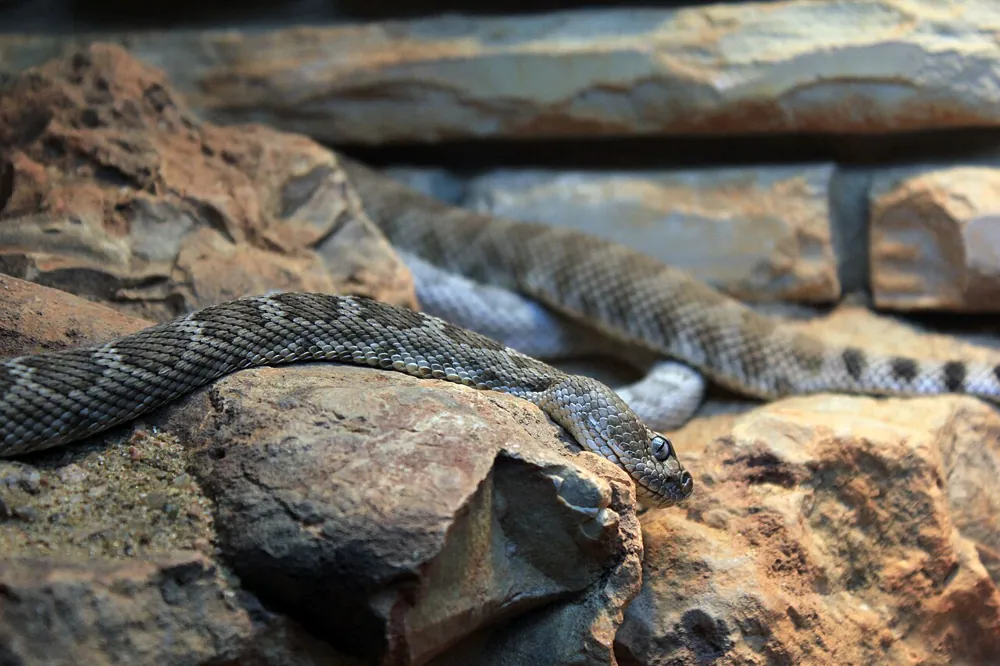
The Santa Catalina rattlesnake is a small, slender pit viper with a very unusual feature: it has no rattle. It lives only on Isla Santa Catalina, a small island in the Gulf of California off the coast of Baja California Sur, Mexico. It is critically endangered.1


 No anndirte ngal
- It has no rattle. The tail tip falls off with each shed instead of forming new segments.1
- It is relatively slender and small, growing to a maximum of 73.1 cm.1
- The most common colour form has a light cream base with reddish-brown blotches down the back and black and white banding around the tail.1
- The other colour form is ash grey with darker grey blotches, and it still has tail banding.1
- It is mostly active at night and is often seen out in the open rather than hiding.1
Doole tooke
Tooke ngal ina yaltira ñiiƴe mum so ina ŋata.
Hol ko tooke ŋatgol mum waɗata?
It is venomous, like all pit vipers. It holds its prey in its jaws until the venom takes effect, so the prey cannot escape before it succumbs.1
Hol no bone mum heewiri e yimɓe?
Bone e yimɓe: Ina tiiɗiŊatgol ina sokli doktoor. Maayde ina famɗi sanne.Hol ko ngal waɗata so ina hula?
Unlike most rattlesnakes, it does not tend to hide, and because it has no rattle it gives no audible warning.1
 So ina ŋata
- Haɗ neɗɗo oo dillaade, deƴƴin mo, jogo terɗe ŋataaɗe ɗee e toownde ɓernde, ittu jabbe e kala ko tiiɗi, yahra mo opitaal law.
Adii fof noddu nimero urgence (112, 000, 911). Ɗum ko anndinal ballal adiingal, wonaa saaraangal doktoor. Ko adii e ballal adiingal
 Reen hoore maa
- Wota a meem, wota a nanngu, wota a ñiŋŋu kullal ladde haa abada, hay so ngal ina famɗi, hay so ina nanndi e ɗaaniingal walla maayngal.
- Accu ngal nokku. So a fotti e ngal, deƴƴu, ruttu ɓaawo seeɗa seeɗa, accu ngal yaha laawol mum.
- So gooto ŋatii ma: deƴƴu, wota a dillu, noddu nimero urgence (112, 000, 911) walla yahu opitaal law. Jogo e hakkille no ngal nanndi, natal ina walla.
Ngal faalaaka gaañde ma. Ina huutoroo tooke mum ngam nanngude ñaamdu walla reenaade, ina ɓuri yiɗde suuɗaade. Ɓeydu anndude no reentortoo
Hol to e aduna?
Hol no mawniri?
Hol no juutiri?
 juutde no banaanaaji 4 sammondiraaɗi
 ina waawi taƴde 100 meeteer e segonde 100 (neɗɗo ɓurɗo yaawde ina sokli 9,6)
Hol no Santa Catalina rattlesnake mawniri, so fooɗondiraama e AN?
Limgal tan e navigatoor maa. Alaa ko danndetee walla ko neldetee.
Hol no yaawiri?


Humpito
It is one of the few rattlesnakes that has lost its rattle. The tail tip falls off with each shed instead of forming a new segment.1
Although it is a rattlesnake, it is a swift and skilful climber, and individuals were most often found in low bush branches during the hottest month, July.1
Its main prey, the Santa Catalina deer mouse, lives only on this island, so the snake's food supply is also very limited.1
It does not hibernate, and the evidence suggests it is nocturnal even in winter.1
Its closest relative on the mainland is the red diamond rattlesnake, which eats a much wider range of prey, including frogs, birds and other snakes.1
Ɗo humpito iwri
- Crotalus catalinensis (Wikipedia (CC BY-SA 4.0))
- Crotalus catalinensis (iNaturalist): inɗe e ceergal.
- Venom Wiki: tolno bone, mawnude heewnde e miijo yaawde ko amen. Yiy no men keɓirta ɗum: No men tolnirta bone.
Kala humpito e ngoo hello ina jogii limoore hollirnde iwdi mum. So men juumii, yaafo, men ko yiɗɓe kulle, wonaa jaaynde ganndal. Wiy men e [email protected], men feewnita.
 Yaare nden ina weelaa! Venom Wiki ko golle neɗɗo gooto: yoɓetaake, alaa ko jeeyetee, alaa rewɓe. Ndokkal seeɗa ina walla ngam heddude e enternet.Ñaam yaare nden
Goɗɗe e nder fedde wootere: Ɓoɗɗi wulloori
 Eastern diamondback rattlesnakeƁoɗɗi wullooriIna waawi warde
 Timber rattlesnakeƁoɗɗi wullooriIna waawi warde
 Western diamondback rattlesnakeƁoɗɗi wullooriIna waawi warde
 SidewinderƁoɗɗi wullooriIna sokli doktoor
 Mojave rattlesnakeƁoɗɗi wullooriIna waawi warde
 Aruba rattlesnakeƁoɗɗi wullooriIna sokli doktoor
 Terciopelo
 Eastern coral snake
 Eyelash viper
 Arizona bark scorpion
 Brown recluse
 Cane toad