
 Afrik
Afrik Aazi
Aazi Orop
Orop Amerik Worgo
 Ostaraali e Oseyaani
 Antarktik
 Geec Pasifik
 Geec Atlantik
 Geec Enndo
 Geec Arktik
 Geec Mediteraane
 Geec Boɗeejo
 Geec Karayib
 Geec Korayl
 Geec Siin Worgo
 Geec Filipiin
 Geec Andaman
 Geec Rewo
 Geec Timor e Arafura
 Gulf Bengal
 Gulf Kaliforni
South American black widow
 Ŋatgol
The South American black widow is a spider from the Lesser Antilles and South America. Females have a red and black pattern and a venomous bite. It is mainly active at night, and it is not aggressive towards people.1

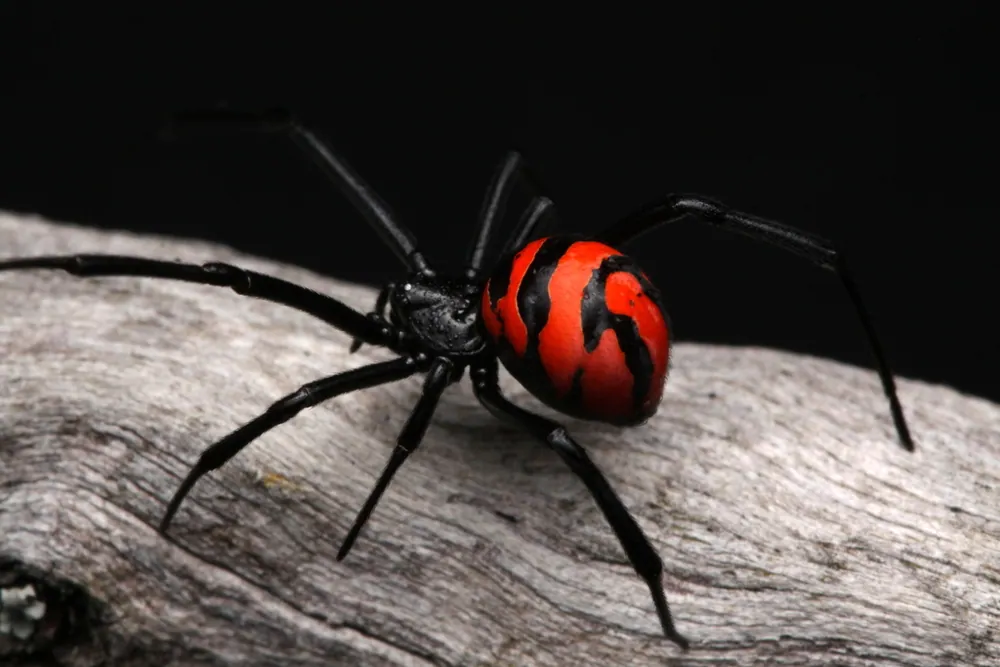
 No anndirte ngal
Doole tooke
Tooke ngal ina yaltira ñiiƴe mum so ina ŋata.
Hol ko tooke ŋatgol mum waɗata?
The venom contains excitatory neurotoxins (alpha-latrotoxins), which overstimulate the nerves. Bites usually deliver only small amounts of venom. Symptoms can include intense pain at the bite, sweating, rapid breathing, a faster heart rate, swollen eyelids, salivation, stiff and painful abdominal muscles, nausea, vomiting and blurred sight. Some cases have also involved muscle spasms, fever and chills, which are common symptoms of latrodectism (the illness caused by black widow venom).1
Hol no bone mum heewiri e yimɓe?
Bone e yimɓe: Ina tiiɗiŊatgol ina sokli doktoor. Maayde ina famɗi sanne.Bites usually deliver only small amounts of venom, but they can cause dangerous symptoms, mostly in children, older people, and people with heart or breathing problems.1
Hol ko ngal waɗata so ina hula?
It is not aggressive to humans, but females will attack to defend their egg sacs.1
 So ina ŋata
- Loot nokku ŋataaɗo oo, waɗ galaas e mum ngam muusu ngu. Heɓ ballal cafrol so muusu ngu ina tiiɗi, ina saakoo walla neɗɗo oo ina wiya wonaa e jam.
Adii fof noddu nimero urgence (112, 000, 911). Ɗum ko anndinal ballal adiingal, wonaa saaraangal doktoor. Ko adii e ballal adiingal
 Reen hoore maa
- Wota a meem, wota a nanngu, wota a ñiŋŋu kullal ladde haa abada, hay so ngal ina famɗi, hay so ina nanndi e ɗaaniingal walla maayngal.
- Accu ngal nokku. So a fotti e ngal, deƴƴu, ruttu ɓaawo seeɗa seeɗa, accu ngal yaha laawol mum.
- So gooto ŋatii ma: deƴƴu, wota a dillu, noddu nimero urgence (112, 000, 911) walla yahu opitaal law. Jogo e hakkille no ngal nanndi, natal ina walla.
Ngal faalaaka gaañde ma. Ina huutoroo tooke mum ngam nanngude ñaamdu walla reenaade, ina ɓuri yiɗde suuɗaade. Ɓeydu anndude no reentortoo
Hol to e aduna?
Hol no mawniri?
Hol no juutiri?
 ɓuri hondu maa tokooso rabbaɗde
Hol no South American black widow mawniri, so fooɗondiraama e AN?
Limgal tan e navigatoor maa. Alaa ko danndetee walla ko neldetee.
Hol no yaawiri?


Humpito
Some reports describe priapism, a painful and prolonged erection in men, after a bite.1
In a case in the Brazilian state of Amazonas, the victim had muscle spasms, fever, chills and heavy sweating.1
Females are much bigger than males, which is common among black widow spiders.1
Males are easy to tell apart from females because of their long legs and white or brown colour.1
This spider is mainly active at night, so most encounters are likely after dark.1
Feññinoowo fenaande
Fenaande: Black widow spiders are aggressive and will attack people.
Goonga: This species is not aggressive to humans. Females only attack when they are defending their egg sacs.1
Ɗo humpito iwri
- Latrodectus curacaviensis (Wikipedia (CC BY-SA 4.0))
- Latrodectus curacaviensis (iNaturalist): inɗe e ceergal.
- Venom Wiki: tolno bone, mawnude heewnde e miijo yaawde ko amen. Yiy no men keɓirta ɗum: No men tolnirta bone.
Kala humpito e ngoo hello ina jogii limoore hollirnde iwdi mum. So men juumii, yaafo, men ko yiɗɓe kulle, wonaa jaaynde ganndal. Wiy men e [email protected], men feewnita.
 Yaare nden ina weelaa! Venom Wiki ko golle neɗɗo gooto: yoɓetaake, alaa ko jeeyetee, alaa rewɓe. Ndokkal seeɗa ina walla ngam heddude e enternet.Ñaam yaare nden
 Brazilian wandering spider
 Brown recluse
 Southern black widow
 Amazon wandering spider
 Chilean recluse
 Northern black widow
 Terciopelo
 Eastern coral snake
 Eastern diamondback rattlesnake
 Eyelash viper
 Timber rattlesnake
 Western diamondback rattlesnake