
 Afrik
Afrik Aazi
Aazi Orop
Orop Amerik Worgo
 Ostaraali e Oseyaani
 Antarktik
 Geec Pasifik
 Geec Atlantik
 Geec Enndo
 Geec Arktik
 Geec Mediteraane
 Geec Boɗeejo
 Geec Karayib
 Geec Korayl
 Geec Siin Worgo
 Geec Filipiin
 Geec Andaman
 Geec Rewo
 Geec Timor e Arafura
 Gulf Bengal
 Gulf Kaliforni
Two-striped forest pitviper
 Ŋatgol
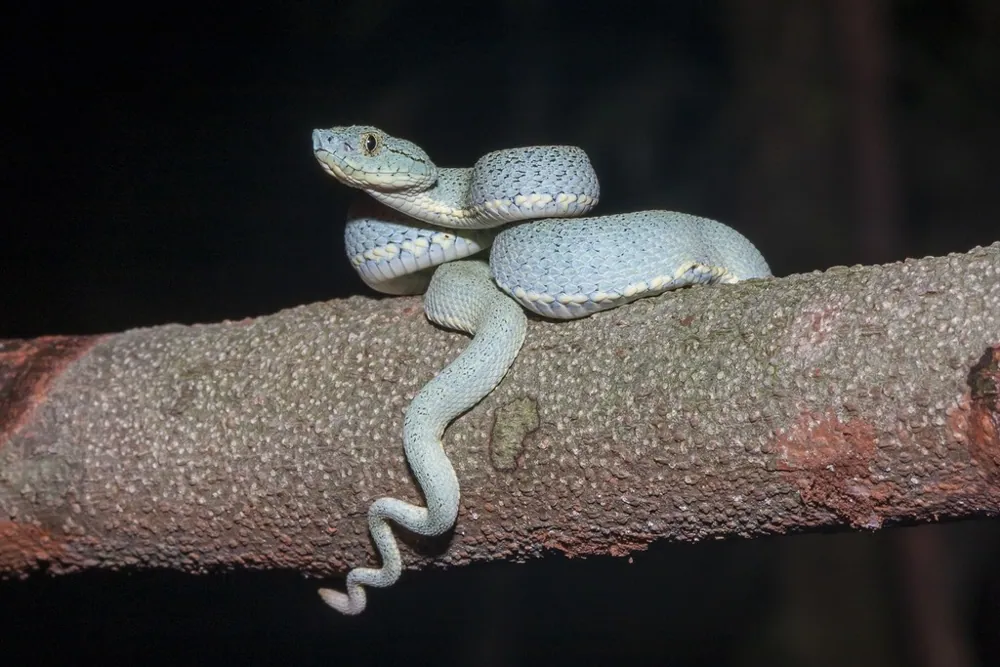
The two-striped forest pitviper is a highly venomous snake that lives mostly in trees and bushes. It is a pale green pit viper found in the Amazon region of South America. It is an important cause of snakebites across the whole Amazon.1



 No anndirte ngal
Doole tooke
Tooke ngal ina yaltira ñiiƴe mum so ina ŋata.
Hol ko tooke ŋatgol mum waɗata?
Its venom disrupts blood clotting, causing profound coagulopathy, bruising and spontaneous bleeding. Reported symptoms include local pain, swelling, bleeding gums, bleeding from the fang punctures, nausea, shock, loss of consciousness and bleeding from the mouth, nose and eyes.1
Hol no bone mum heewiri e yimɓe?
Bone e yimɓe: Bone sanneIna waawi warde neɗɗo mo safraaka.It is highly venomous and an important cause of snakebite throughout the Amazon region. Because it lives in trees, most bites are to the upper body, including the hands, arms and face. At least one death has been reported.1
 So ina ŋata
- Haɗ neɗɗo oo dillaade, deƴƴin mo, jogo terɗe ŋataaɗe ɗee e toownde ɓernde, ittu jabbe e kala ko tiiɗi, yahra mo opitaal law.
Adii fof noddu nimero urgence (112, 000, 911). Ɗum ko anndinal ballal adiingal, wonaa saaraangal doktoor. Ko adii e ballal adiingal
 Reen hoore maa
- Wota a meem, wota a nanngu, wota a ñiŋŋu kullal ladde haa abada, hay so ngal ina famɗi, hay so ina nanndi e ɗaaniingal walla maayngal.
- Accu ngal nokku. So a fotti e ngal, deƴƴu, ruttu ɓaawo seeɗa seeɗa, accu ngal yaha laawol mum.
- So gooto ŋatii ma: deƴƴu, wota a dillu, noddu nimero urgence (112, 000, 911) walla yahu opitaal law. Jogo e hakkille no ngal nanndi, natal ina walla.
Ngal faalaaka gaañde ma. Ina huutoroo tooke mum ngam nanngude ñaamdu walla reenaade, ina ɓuri yiɗde suuɗaade. Ɓeydu anndude no reentortoo
Hol to e aduna?
Hol no mawniri?
Hol no juutiri?
 juutde no ulluuɗi galle 2,5, hinere haa lawol
 juutde no banaanaaji 7 sammondiraaɗi
 ina waawi taƴde 100 meeteer e segonde 100 (neɗɗo ɓurɗo yaawde ina sokli 9,6)
Hol no Two-striped forest pitviper mawniri, so fooɗondiraama e AN?
Limgal tan e navigatoor maa. Alaa ko danndetee walla ko neldetee.
Hol no yaawiri?


Humpito
Its prehensile tail lets it grip branches, so it always rests where it can anchor itself.1
Its venom has been measured in a laboratory with a DL50 of 6.28 mg/kg, a standard measure of how toxic a substance is.1
It is a nocturnal snake that spends the day hidden in thick leaves, tree hollows or at the base of palm fronds.1
Young snakes stay low to the ground, where they hunt small frogs and lizards.1
Ɗo humpito iwri
- Bothrops bilineatus (Wikipedia (CC BY-SA 4.0))
- Bothrops bilineatus (iNaturalist): inɗe e ceergal.
- Venom Wiki: tolno bone, mawnude heewnde e miijo yaawde ko amen. Yiy no men keɓirta ɗum: No men tolnirta bone.
Kala humpito e ngoo hello ina jogii limoore hollirnde iwdi mum. So men juumii, yaafo, men ko yiɗɓe kulle, wonaa jaaynde ganndal. Wiy men e [email protected], men feewnita.
 Yaare nden ina weelaa! Venom Wiki ko golle neɗɗo gooto: yoɓetaake, alaa ko jeeyetee, alaa rewɓe. Ndokkal seeɗa ina walla ngam heddude e enternet.Ñaam yaare nden
Goɗɗe e nder fedde wootere: Ɓoɗɗi wipeer pit
 Terciopelo
 Eyelash viper
 Golden lancehead
 South American bushmaster
 Common lancehead
 Jararaca
Ina wuuri kadi e: Amerik Worgo
 Faaɓru tooke kaŋŋeÑaari tooke, ñaari e newtsBareejoWota a meem
 Brazilian wandering spiderAraañeejiIna waawi warde
 Cane toadÑaari tooke, ñaari e newtsIna sokli doktoorWota a meem
 Peruvian giant centipedeBukka-koyɗeIna sokli doktoor
 Bullet antFurmiijiIna muusi tan
 Common vampire batKulle muynooje jogiiɗe tookeIna muusi tan