
 Afrik
Afrik Aazi
Aazi Orop
Orop Amerik Worgo
 Ostaraali e Oseyaani
 Antarktik
 Geec Pasifik
 Geec Atlantik
 Geec Enndo
 Geec Arktik
 Geec Mediteraane
 Geec Boɗeejo
 Geec Karayib
 Geec Korayl
 Geec Siin Worgo
 Geec Filipiin
 Geec Andaman
 Geec Rewo
 Geec Timor e Arafura
 Gulf Bengal
 Gulf Kaliforni
Variable bush viper
 Ŋatgol
The variable bush viper is a venomous snake that lives in the rainforests of west and central Africa. It is a tree-dwelling viper that blends in well with the leaves of the bushes it hunts in. Its bite can cause serious harm, so it is important to recognise it.1

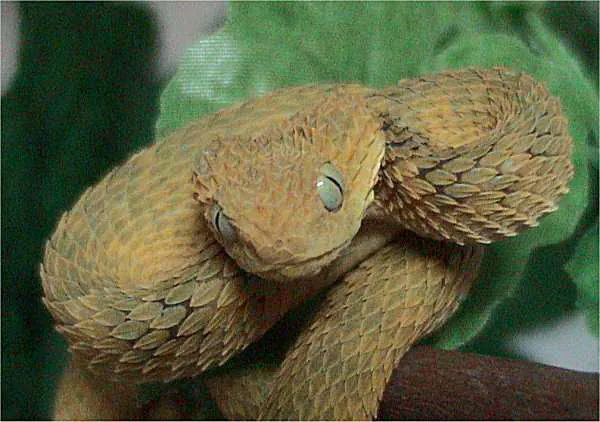
 No anndirte ngal
- Usually green, but the colour varies from sage or light green to dark green, bluish, olive or dark olive brown.1
- Rare individuals may be yellow, reddish or slate grey.1
- Light-coloured crossbands or chevrons (V-shaped marks) run along the body, usually 30 or more.1
- The tail has a clear ivory white tip.1
Doole tooke
Tooke ngal ina yaltira ñiiƴe mum so ina ŋata.
Hol ko tooke ŋatgol mum waɗata?
It has hemotoxic venom, which affects the blood. It is injected through two hollow fangs at the front of the mouth. Bites have caused at least one case of severe haematological (blood) complications. The venom is used to make prey defenceless.1
Hol no bone mum heewiri e yimɓe?
Bone e yimɓe: Ina tiiɗiŊatgol ina sokli doktoor. Maayde ina famɗi sanne.Bites have caused at least one case of severe blood complications and two deaths. No specific antivenom is made for this genus, though antivenom for the genus Echis has been shown to be partly effective against its venom.1
 Kabaaru moƴƴo: doktooruuji ina njogii lekki (sérum antivenimeux) walla safaara ngam ɗum.1
 So ina ŋata
- Haɗ neɗɗo oo dillaade, deƴƴin mo, jogo terɗe ŋataaɗe ɗee e toownde ɓernde, ittu jabbe e kala ko tiiɗi, yahra mo opitaal law.
Adii fof noddu nimero urgence (112, 000, 911). Ɗum ko anndinal ballal adiingal, wonaa saaraangal doktoor. Ko adii e ballal adiingal
 Reen hoore maa
- Wota a meem, wota a nanngu, wota a ñiŋŋu kullal ladde haa abada, hay so ngal ina famɗi, hay so ina nanndi e ɗaaniingal walla maayngal.
- Accu ngal nokku. So a fotti e ngal, deƴƴu, ruttu ɓaawo seeɗa seeɗa, accu ngal yaha laawol mum.
- So gooto ŋatii ma: deƴƴu, wota a dillu, noddu nimero urgence (112, 000, 911) walla yahu opitaal law. Jogo e hakkille no ngal nanndi, natal ina walla.
Ngal faalaaka gaañde ma. Ina huutoroo tooke mum ngam nanngude ñaamdu walla reenaade, ina ɓuri yiɗde suuɗaade. Ɓeydu anndude no reentortoo
Hol to e aduna?
Hol no mawniri?
Hol no juutiri?
 juutde no banaanaaji 4 sammondiraaɗi
 ina waawi taƴde 100 meeteer e segonde 110 (neɗɗo ɓurɗo yaawde ina sokli 9,6)
Hol no Variable bush viper mawniri, so fooɗondiraama e AN?
Limgal tan e navigatoor maa. Alaa ko danndetee walla ko neldetee.
Hol no yaawiri?


Humpito
Newborn snakes are already venomous and fully independent, so their mother leaves them as soon as they are born.1
Young snakes have a dark olive colour with wavy bars. Their adult colours develop within 3 to 4 months.1
Breeding in captivity needs very high humidity.1
Captive keepers and breeders often call it simply a "Squam".1
It is the most widely distributed species in its genus, Atheris.1
Ngam ganduɓe tooke
- Innde ganndal
- Atheris squamigera
- Fedde
- Ɓoɗɗi wipeer
- Ɓesngu
- Viperidae2
- Ordre
- Squamata
- Leyɗe mawɗe
- Afrik
- Ɓiɓɓe tokooso
- It gives birth to live young. A single litter can have up to 19 young, though the average is 7 to 9. The young are venomous at birth and are left by their mother straight away.1
- Bone e yimɓe
- 3 / 5: Ina tiiɗi3
Ɗo humpito iwri
- Atheris squamigera (Wikipedia (CC BY-SA 4.0))
- Atheris squamigera (iNaturalist): inɗe e ceergal.
- Venom Wiki: tolno bone, mawnude heewnde e miijo yaawde ko amen. Yiy no men keɓirta ɗum: No men tolnirta bone.
Kala humpito e ngoo hello ina jogii limoore hollirnde iwdi mum. So men juumii, yaafo, men ko yiɗɓe kulle, wonaa jaaynde ganndal. Wiy men e [email protected], men feewnita.
 Yaare nden ina weelaa! Venom Wiki ko golle neɗɗo gooto: yoɓetaake, alaa ko jeeyetee, alaa rewɓe. Ndokkal seeɗa ina walla ngam heddude e enternet.Ñaam yaare nden
 Mbaa-ndiyam (Puff adder)
 Gaboon viper
 Northeast African carpet viper
 West African carpet viper
 Rhinoceros viper
 West African Gaboon viper
 Black mamba
 Deathstalker
 Egyptian cobra
 Boomslang
 Fat-tailed scorpion
 Western honey bee