
 Afirka
 Asiya
Asiya Turai
Turai Kudancin Amurka
 Ostareliya da Oceania
 Antatika
 Tekun Pasifik
 Tekun Atlantika
 Tekun Indiya
 Tekun Arctic
 Bahar Rum
 Bahar Maliya
 Tekun Caribbean
 Tekun Coral
 Tekun Kudancin China
 Tekun Philippines
 Tekun Andaman
 Tekun Arewa
 Tekun Timor da Arafura
 Gaɓar Tekun Bengal
 Gaɓar Tekun California
Mimic poison frog
 Guba a fatarsa
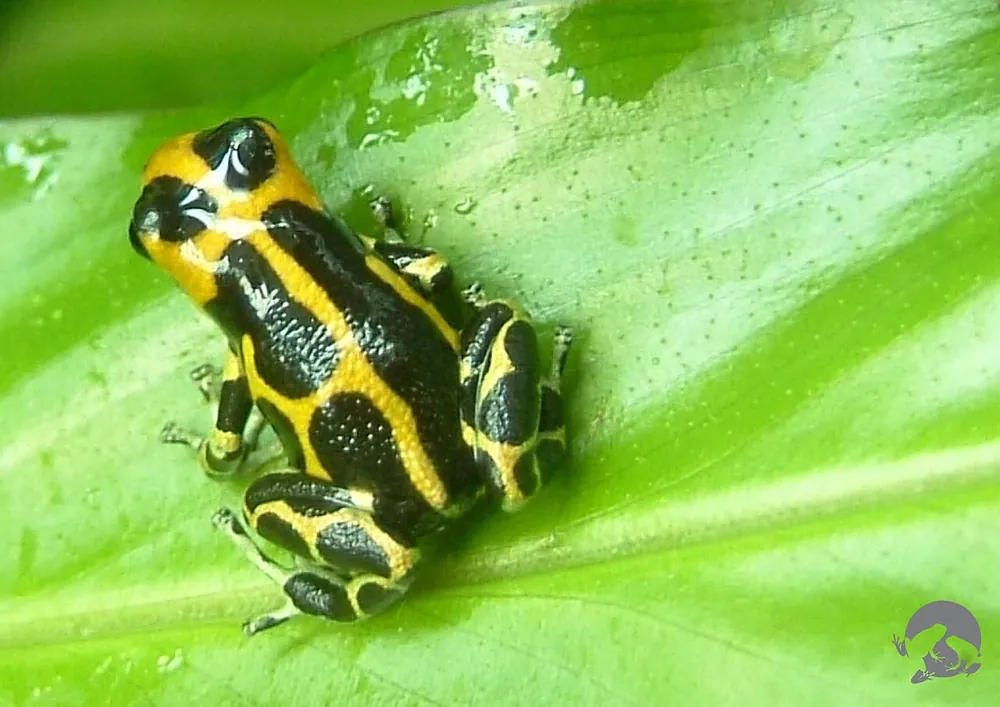
The mimic poison frog is a small, brightly coloured frog from the rainforests of north-central eastern Peru. It is one of the best known dart frogs, and it is special because different populations copy the colours of other poison frogs. Scientists have studied it closely for its unusual family life.1



 Yadda za ka gane shi
- Its colour depends on its population. The striped morph has stripes, the spotted morph is mainly blue-green (sometimes yellow), the banded morph has bands, and the varadero morph is a separate form.1
- Each colour morph copies a different, closely related poison frog that lives in the same area.1
- It is active twice a day, once early in the day and again later on.1
Ana yawan rikita shi da: The striped morph closely resembles the striped Ranitomeya variabilis in colour. The two species differ in family life: this frog provides biparental care and is monogamous, while R. variabilis provides only paternal care and is polygamous.1
Ƙarfin guba
Fatarsa tana da guba. Yana da haɗari a taɓa shi, a lasa shi ko a ci shi.
Me gubarsa take yi?
Its skin contains pumiliotoxin B, a potent toxin. Because the frog is small, it can only secrete a limited amount of poison. Frogs kept in captivity do not make the toxin, so it probably comes from toxic insects and other invertebrates eaten in the wild.1
Yaya haɗarinsa yake ga mutane?
Haɗari ga mutane: Mai sauƙiKamar harbin ƙudan zuma ko ƙasa da haka. Kusan ba shi da lahani ga mutane.Its toxicity is mild compared with other poison dart frogs. Its small size limits how much poison it can secrete.1
 Idan wani ya taɓa shi ko ya ci shi
- Idan wani ya taɓa ɗaya: a wanke hannaye sosai kuma kada a taɓa idanu ko baki. Idan yaro ko dabbar gida ya lasa ko ya ci ɗaya: ka kira cibiyar guba ko lambar gaggawa.
Kullum ka fara kiran lambar gaggawa (112, 000, 911). Wannan jagorar agajin gaggawa ce ta gaba ɗaya, ba shawarar likita ba. Muhimman abubuwan agajin gaggawa
 Kiyaye lafiya
- Kada ka taɓa, kada ka kama, kada ka tsokani dabbar daji, ko da ƙarama ce, kuma ko da tana kama da tana barci ko ta mutu.
- Ka ba shi sarari. Idan ka haɗu da ɗaya, ka natsu, ka koma baya a hankali kuma ka bar shi ya bi hanyarsa.
- Idan ka taɓa shi ko ka ci shi: kada ka goge idanunka ko bakinka, ka wanke hannayenka kuma ka nemi taimakon likita.
Ba ya neman cutar da kai. Gubarsa tana nan ne kawai don kada wani abu ya cinye shi. Ƙarin bayani game da kiyaye lafiya
Yaya girmansa yake?
Yaya tsawonsa yake?
 kusan tsawon kilif ɗin takarda
 zai iya gudun mita 100 cikin daƙiƙa 110 (mutum mafi sauri yana buƙatar 9,6)
Yaya girman Mimic poison frog yake idan aka kwatanta da KAI?
Lissafi ne kawai a cikin burauzarka. Ba a adana komai ko a aika ko'ina.
Yaya saurinsa yake?


Bayanai
It is the first amphibian shown to be monogamous, meaning a pair stays together.1
After the eggs hatch, the female feeds the tadpoles with unfertilised eggs, which are a source of food.1
It evolved biparental care independently, so both parents look after the young.1
Male frogs attack other males that enter their territory.1
Don ƙwararru a kan dafi
- Sunan kimiyya
- Ranitomeya imitator
- Rukuni
- Kwaɗi masu guba, toad da newt
- Iyali
- Dendrobatidae2
- Tsari
- Anura
- Nahiyoyi
- Kudancin Amurka
- Jarirai
- After mating, the female lays fertilised eggs on a plant, and the male guards them and carries each tadpole to a small pool of water in a plant. One study recorded 1 to 4 tadpoles per mated pair reaching the breeding pool.1
- Haɗari ga mutane
- 1 / 5: Mai sauƙi3
Inda bayanan suka fito
- Mimic poison frog (Wikipedia (CC BY-SA 4.0))
- Ranitomeya imitator (iNaturalist): sunaye da rarrabuwa.
- Venom Wiki: matakin haɗari, girman al'ada da ƙiyasin sauri namu ne. Ga yadda muke lissafa su: Yadda muke auna haɗari.
Kowane bayani a wannan shafi yana da lamba da ke nuna tushensa. Idan mun yi kuskure, ka yi haƙuri, mu masoya dabbobi ne, ba mujallar kimiyya ba. Ka gaya mana a [email protected] kuma za mu gyara.
 Kunama tana jin yunwa! Venom Wiki aikin mutum ɗaya ne: kyauta, ba talla kuma ba masu bin diddigi. Ɗan ƙaramin kyauta yana taimakawa wajen ci gaba da kasancewarsa a intanet.Ciyar da kunama
Ƙari daga rukuni ɗaya: Kwaɗi masu guba, toad da newt
 Golden poison frogKwaɗi masu guba, toad da newtMai kisaKada ka taɓa
 Cane toadKwaɗi masu guba, toad da newtYana buƙatar likitaKada ka taɓa
 Dyeing poison dart frogKwaɗi masu guba, toad da newtCiwo kawaiKada ka taɓa
 Black-legged poison frogKwaɗi masu guba, toad da newtNa iya kisaKada ka taɓa
 Bruno's casque-headed frogKwaɗi masu guba, toad da newtYana buƙatar likitaKada ka taɓa
 Harlequin poison frogKwaɗi masu guba, toad da newtYana buƙatar likitaKada ka taɓa
 Terciopelo
 Brazilian wandering spider
 Eyelash viper
 Golden lancehead
 South American bushmaster
 Peruvian giant centipede