
 Afrịka
 Eshia
Eshia Yurop
Yurop Ndịda Amerika
 Ọstrelia na Oshenia
 Antaktika
 Oké Osimiri Pasifik
 Oké Osimiri Atlantik
 Oké Osimiri India
 Oké Osimiri Arktik
 Osimiri Mediterenian
 Osimiri Uhie
 Osimiri Karibịan
 Osimiri Coral
 Osimiri Ndịda China
 Osimiri Filipin
 Osimiri Andaman
 Osimiri Ugwu (North Sea)
 Osimiri Timor na Arafura
 Ọwara Bengal
 Ọwara California
Dog-toothed cat snake
 Ịta
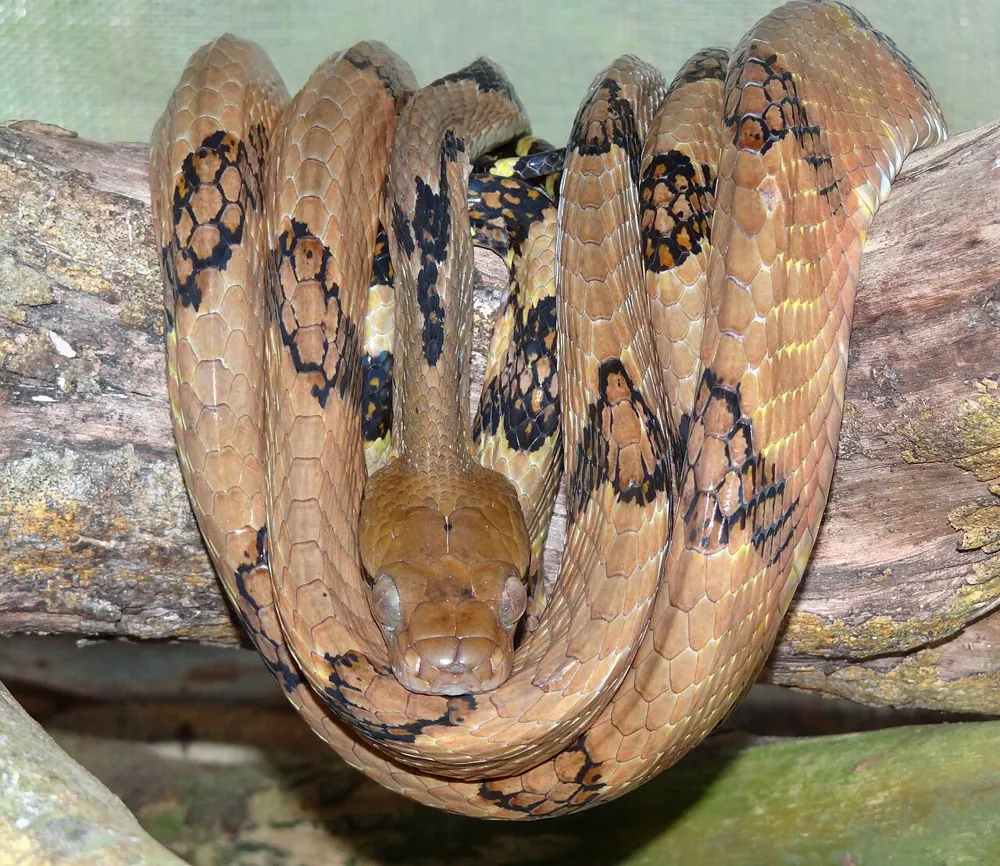
ỊtaThe dog-toothed cat snake is a large, nocturnal snake that is active at night. It lives across Southeast Asia, from southern Thailand to the Philippines and Indonesia, and it is often found in gardens, plantations and towns as well as forests. It is a rear-fanged snake, so its venom is delivered through teeth at the back of its mouth.1


 Otú ị ga-esi mata ya
- A slender, large snake that can reach more than 2 m in total length1
- Yellowish or pale reddish-brown back with dark brown or black crossbars or spots1
- A wavy or irregular dark stripe behind each eye, with a dark streak on each side of the head1
- Yellowish belly, sometimes plain or marbled with brown1
- Strongly enlarged front teeth in the upper and lower jaws. Indonesian populations include black individuals.1
A na-agwakọkarị ya na: Other similar snakes have a more even or nearly even upper and lower line behind the eye, while this species has a distinctly wavy or irregular one. The closely related Boiga hoeseli is found in the Lesser Sundas east of Bali, including Sumbawa and Flores, and not where this species lives.1
Ike nsị
Nsị na-esi n'eze nsị ya ma ọ bụ eze ya apụta mgbe ọ na-ata.
Gịnị ka nsị ọ na-agba na-eme?
It may have a potent neurotoxic venom, which attacks the nerves. Its effects have been shown to be reversible with neostigmine, a drug that affects nerve signalling, so envenoming from this species can be treated with anticholinesterase therapy.1
Kedu otú o si dị egwu nye mmadụ?
Ihe ize ndụ nye mmadụ: Na-afụ ụfụỌ nwere ike ịfụ ụfụ nke ukwuu, mana ọ naghị adịkarị njọ.Its venom may be potent, so any bite should be taken seriously. The effects of the venom have been shown to be reversible with treatment.1
 Ọ bụrụ na ọ tara
- Envenoming from this species is said to be treatable with anticholinesterase therapy, which is a medical treatment.1
- Saa ebe ọ tara, mee ka onye ahụ dị jụụ, chọọkwa enyemaka ọgwụ. Ụfọdụ ụdị (dịka boomslang) nwere ike igbu mmadụ ọtụtụ awa ka e mesịrị.
Na-ebu ụzọ kpọọ nọmba mberede gị mgbe niile (112, 000, 911). Nke a bụ ndụmọdụ enyemaka mbụ n'ozuzu, ọ bụghị ndụmọdụ ọgwụ. Isi ihe enyemaka mbụ
 Nọrọ na nchekwa
- Emetụla anụ ọhịa aka, ejidela ya, emekwala ya ihe ọjọọ, ọbụna obere, ọbụna ma ọ dị ka ọ na-ehi ụra ma ọ bụ nwụọ anwụ.
- Nye ya ohere. Ọ bụrụ na ị zutere otu, dị jụụ, laghachi azụ nwayọ, hapụ ya ka ọ gaa ụzọ ya.
- Ọ bụrụ na otu tara gị: dị jụụ, emegharịla ahụ, kpọọ nọmba mberede gị (112, 000, 911) ma ọ bụ gaa ụlọ ọgwụ ngwa ngwa. Cheta ka o si dị, foto na-enye aka.
Ọ naghị achụ gị. Ọ na-eji nsị ya ejide nri ma ọ bụ chebe onwe ya, ọ ga-akakwa mma n'anya ya ịzo onwe ya. Ihe ndị ọzọ gbasara ịnọ na nchekwa
Ọ hà aṅaa?
Kedu otú o si dị ogologo?
 dị ogologo dị ka nwamba ụlọ 4 site n'imi ruo n'ọdụ
 dị ogologo dị ka unere 11 a tọgbọrọ n'ahịrị
 nwere ike ịgba ọsọ mita 100 n'ime sekọnd 54 (mmadụ kacha ọsọ chọrọ 9,6)
Kedu otú Dog-toothed cat snake si hà ma e jiri ya tụnyere GỊ?
Naanị mgbakọ na mwepụ n'ime browser gị. Ọ dịghị ihe echekwara ma ọ bụ ezigara ebe ọ bụla.
Kedu otú o si agba ọsọ?


Eziokwu
Its venom is neurotoxic, but its effects have been shown to be reversible with a drug called neostigmine.1
It is known to live high in the forest canopy, where it hunts birds, lizards and small bats.1
The eggs often stick together in a clutch, and the young cut a slit from inside the egg about one day before they hatch.1
The black spitting cobra (Naja sumatrana) is known to prey on this snake.1
Maka ndị ọkachamara nsị
- Aha sayensị
- Boiga cynodon
- Otu
- Agwọ nwere eze nsị n'azụ ọnụ
- Ezinụlọ
- Colubridae2
- Usoro
- Squamata
- Kọntinent dị iche iche
- Eshia
- Ụmụ ọhụrụ
- It is egg-laying (oviparous). Females lay 6 to 12 eggs per clutch, and the eggs are about 52 mm long and 24.6 mm wide on average.1
- Otú ọ na-eme n'ọhịa
- Least concern1
- Ihe ize ndụ nye mmadụ
- 2 / 5: Na-afụ ụfụ3
Ebe eziokwu ndị a si
- Boiga cynodon (Wikipedia (CC BY-SA 4.0))
- Boiga cynodon (iNaturalist): aha na nhazi ọkwa.
- Venom Wiki: ọkwa ihe ize ndụ, nha nkịtị na nchepụta ọsọ bụ nke anyị. Lee otú anyị si achọpụta ha: Otú anyị si atụ ihe ize ndụ.
Eziokwu ọ bụla dị na peeji a nwere nọmba na-egosi ebe o si. Ọ bụrụ na anyị mehiere ihe, ndo, anyị bụ ndị hụrụ anụmanụ n'anya, ọ bụghị akwụkwọ akụkọ sayensị. Gwa anyị na [email protected], anyị ga-edozi ya.
 Akpị agụụ na-agụ! Venom Wiki bụ ọrụ otu onye: n'efu, na-enweghị mgbasa ozi na ndị na-esochi gị. Obere onyinye na-enyere aka idebe ya n'ịntanetị.Nye akpị nri
Ndị ọzọ si n'otu ahụ: Agwọ nwere eze nsị n'azụ ọnụ
 Brown tree snakeAgwọ nwere eze nsị n'azụ ọnụNaanị na-afụ ụfụ
 Tiger keelbackAgwọ nwere eze nsị n'azụ ọnụNwere ike igbu mmadụ
 Red-necked keelbackAgwọ nwere eze nsị n'azụ ọnụỌ chọrọ dọkịta
 Green cat snakeAgwọ nwere eze nsị n'azụ ọnụNaanị na-afụ ụfụ
 Mangrove snakeAgwọ nwere eze nsị n'azụ ọnụNaanị na-afụ ụfụ
 Asian vine snakeAgwọ nwere eze nsị n'azụ ọnụAdịghị njọ
 Deathstalker
 Indian cobra
 Indian saw-scaled viper
 King cobra
 Puff adder
 Agwọ Russell