
 Afrịka
 Eshia
Eshia Yurop
Yurop Ndịda Amerika
 Ọstrelia na Oshenia
 Antaktika
 Oké Osimiri Pasifik
 Oké Osimiri Atlantik
 Oké Osimiri India
 Oké Osimiri Arktik
 Osimiri Mediterenian
 Osimiri Uhie
 Osimiri Karibịan
 Osimiri Coral
 Osimiri Ndịda China
 Osimiri Filipin
 Osimiri Andaman
 Osimiri Ugwu (North Sea)
 Osimiri Timor na Arafura
 Ọwara Bengal
 Ọwara California
Hump-nosed viper
 Ịta
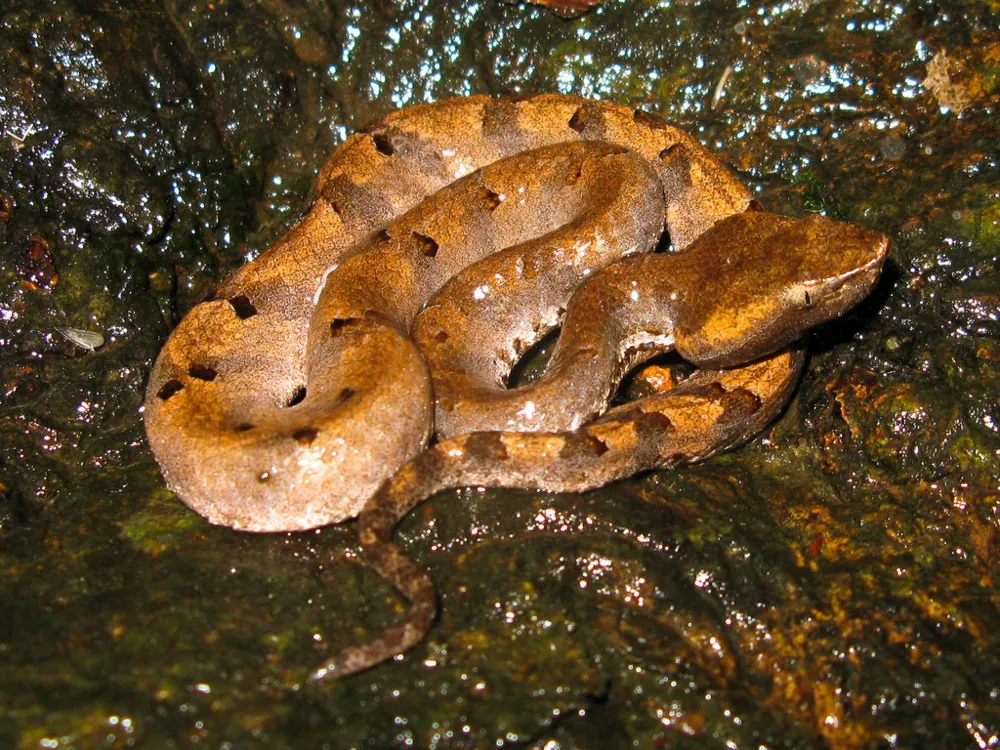
ỊtaThe hump-nosed viper is a small, stout pit viper with an upturned snout that ends in a hump. It lives in India and Sri Lanka, in jungle and coffee plantations. It matters because its bite can cause serious harm, and for a long time it was wrongly thought to be harmless.1
 Otú ị ga-esi mata ya
Ike nsị
Nsị na-esi n'eze nsị ya ma ọ bụ eze ya apụta mgbe ọ na-ata.
Gịnị ka nsị ọ na-agba na-eme?
Its venom causes coagulopathy, a problem with blood clotting, and acute renal failure, which is sudden kidney failure. If a bite is not treated within a few hours, it can be fatal to people.1
Kedu otú o si dị egwu nye mmadụ?
Ihe ize ndụ nye mmadụ: Ọ dị egwu nke ukwuuỌ nwere ike igbu onye na-enwetaghị ọgwụgwọ.Bites were once thought to be harmless, but they are now known to be serious. It is the snake that causes the highest number of recorded snake bites in Sri Lanka. It is now considered highly venomous and is one of the medically important venomous snakes in Sri Lanka and on the south-west coast of India.1
Gịnị ka ọ na-eme mgbe ụjọ tụrụ ya?
When annoyed it vibrates its tail, a warning behaviour it shares with other pit vipers such as rattlesnakes, and it can make fast strikes despite being a slow mover.1
 Ọ bụrụ na ọ tara
- Bites need medical treatment within a few hours. An antivenom is being developed and tested in Sri Lanka.1
- Mee ka onye ahụ ghara imegharị ahụ, dịkwa jụụ, debe aka ma ọ bụ ụkwụ ahụ ọ tara n'ogo obi, wepụ mgbanaka na ihe ndị kekọrọ ahụ ike, kpọga ya ụlọ ọgwụ ngwa ngwa.
Na-ebu ụzọ kpọọ nọmba mberede gị mgbe niile (112, 000, 911). Nke a bụ ndụmọdụ enyemaka mbụ n'ozuzu, ọ bụghị ndụmọdụ ọgwụ. Isi ihe enyemaka mbụ
 Nọrọ na nchekwa
- Emetụla anụ ọhịa aka, ejidela ya, emekwala ya ihe ọjọọ, ọbụna obere, ọbụna ma ọ dị ka ọ na-ehi ụra ma ọ bụ nwụọ anwụ.
- Nye ya ohere. Ọ bụrụ na ị zutere otu, dị jụụ, laghachi azụ nwayọ, hapụ ya ka ọ gaa ụzọ ya.
- Ọ bụrụ na otu tara gị: dị jụụ, emegharịla ahụ, kpọọ nọmba mberede gị (112, 000, 911) ma ọ bụ gaa ụlọ ọgwụ ngwa ngwa. Cheta ka o si dị, foto na-enye aka.
Ọ naghị achụ gị. Ọ na-eji nsị ya ejide nri ma ọ bụ chebe onwe ya, ọ ga-akakwa mma n'anya ya ịzo onwe ya. Ihe ndị ọzọ gbasara ịnọ na nchekwa
Ọ hà aṅaa?
Kedu otú o si dị ogologo?
 dị ogologo dị ka unere 2.5 a tọgbọrọ n'ahịrị
 dị ogologo dị ka blọk egwuregwu 14 n'ahịrị
 nwere ike ịgba ọsọ mita 100 n'ime sekọnd 110 (mmadụ kacha ọsọ chọrọ 9,6)
Kedu otú Hump-nosed viper si hà ma e jiri ya tụnyere GỊ?
Naanị mgbakọ na mwepụ n'ime browser gị. Ọ dịghị ihe echekwara ma ọ bụ ezigara ebe ọ bụla.
Kedu otú o si agba ọsọ?


Eziokwu
For a long time its bites were thought to be harmless, but they are now known to cause serious complications.1
It causes more recorded snake bites in Sri Lanka than any other snake.1
It vibrates its tail when annoyed, a behaviour it shares with rattlesnakes.1
Although it is a slow mover, it can make fast strikes.1
Females give birth to live young, with broods of 4 to 17 newborns.1
Onye na-ekpughe akụkọ ụgha
Akụkọ ụgha: Its bites are harmless.
Eziokwu: Its bites can cause serious complications, including blood clotting problems and kidney failure, and can be fatal if not treated within a few hours.1
Ebe eziokwu ndị a si
- Hypnale hypnale (Wikipedia (CC BY-SA 4.0))
- Hypnale hypnale (iNaturalist): aha na nhazi ọkwa.
- Venom Wiki: ọkwa ihe ize ndụ, nha nkịtị na nchepụta ọsọ bụ nke anyị. Lee otú anyị si achọpụta ha: Otú anyị si atụ ihe ize ndụ.
Eziokwu ọ bụla dị na peeji a nwere nọmba na-egosi ebe o si. Ọ bụrụ na anyị mehiere ihe, ndo, anyị bụ ndị hụrụ anụmanụ n'anya, ọ bụghị akwụkwọ akụkọ sayensị. Gwa anyị na [email protected], anyị ga-edozi ya.
 Akpị agụụ na-agụ! Venom Wiki bụ ọrụ otu onye: n'efu, na-enweghị mgbasa ozi na ndị na-esochi gị. Obere onyinye na-enyere aka idebe ya n'ịntanetị.Nye akpị nri
 Brown spotted pit viper
 Habu
Habu Hundred-pace viper
 Malayan pit viper
 Mamushi
 Mangshan pit viper
 Deathstalker
 Indian cobra
 Indian saw-scaled viper
 King cobra
 Puff adder
 Agwọ Russell