
 Afrịka
 Eshia
Eshia Yurop
Yurop Ndịda Amerika
 Ọstrelia na Oshenia
 Antaktika
 Oké Osimiri Pasifik
 Oké Osimiri Atlantik
 Oké Osimiri India
 Oké Osimiri Arktik
 Osimiri Mediterenian
 Osimiri Uhie
 Osimiri Karibịan
 Osimiri Coral
 Osimiri Ndịda China
 Osimiri Filipin
 Osimiri Andaman
 Osimiri Ugwu (North Sea)
 Osimiri Timor na Arafura
 Ọwara Bengal
 Ọwara California
Large velvet ant
 Ịgba
ỊgbaThe large velvet ant is not really an ant. It is a wasp, and the females have no wings and look like fuzzy ants. It lives in parts of Europe, Asia and North Africa, in heaths, moors, grasslands and woodland. Its sting is painful, but it is not aggressive.1


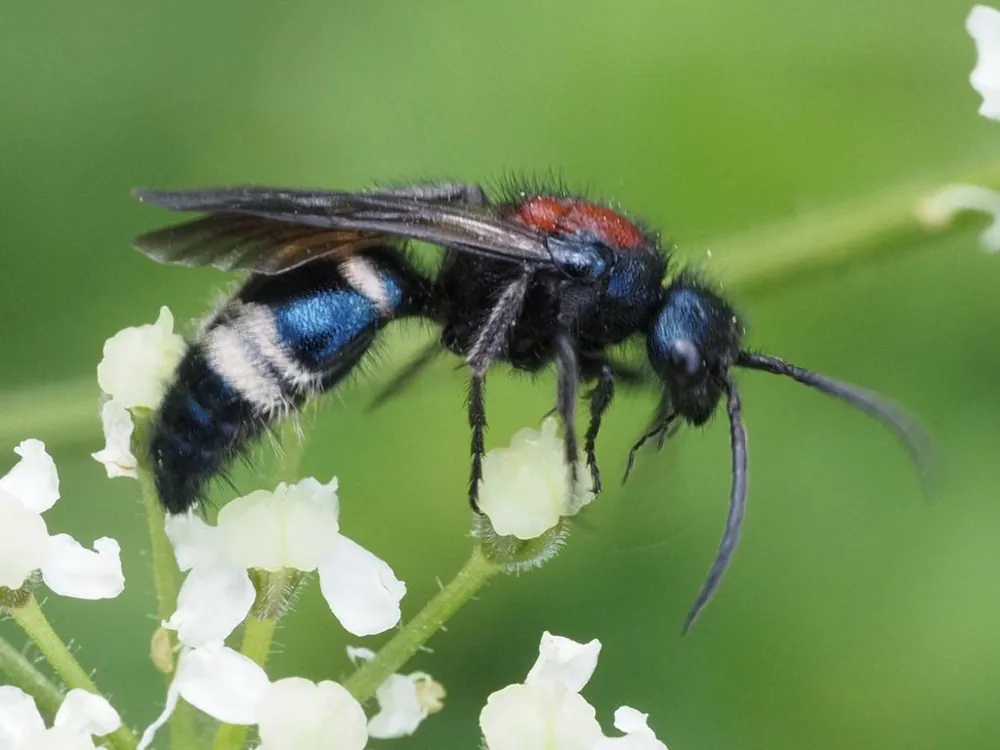
 Otú ị ga-esi mata ya
- Males are dark red on the tip of the mandibles (jaws) and on the thorax.1
- The first and second segments of the abdomen have bands of long silver bristles.1
- The tip of the abdomen and much of the body are covered in long black bristles.1
- Females have a red mesonotum (the upper middle part of the thorax) and silver-spotted flanks along the abdomen.1
- Some males are completely black, and colour varies between individuals.1
Ike nsị
Nsị na-esi na ndụdụ ya apụta.
Gịnị ka nsị ọ na-agba na-eme?
The sting is painful. Its venom is much less toxic than the venom of a honeybee.1
Kedu otú o si dị egwu nye mmadụ?
Ihe ize ndụ nye mmadụ: Na-afụ ụfụỌ nwere ike ịfụ ụfụ nke ukwuu, mana ọ naghị adịkarị njọ.The wasp is not aggressive and only stings people when handled. Its sting is painful but less toxic than a honeybee's.1
Gịnị ka ọ na-eme mgbe ụjọ tụrụ ya?
When threatened, it stridulates by rubbing a raised structure called the plectrum over ridges on its abdomen, which makes a sound.1
 Ọ bụrụ na ọ gbaa
- Kọpụta ndụdụ aṅụ ahụ hapụrụ, mee ka ebe ahụ jụọ oyi.
- Ọ bụrụ na o siri onye ahụ ike iku ume, ihu ya ma ọ bụ akpịrị ya na-aza, ma ọ bụ na ọ dị ya ka ọ ga-ada mbà, ọ bụ mberede allergy: kpọọ nọmba mberede gị, jirikwa adrenaline pen ya (adrenaline auto-injector) ma ọ bụrụ na o nwere otu.
Na-ebu ụzọ kpọọ nọmba mberede gị mgbe niile (112, 000, 911). Nke a bụ ndụmọdụ enyemaka mbụ n'ozuzu, ọ bụghị ndụmọdụ ọgwụ. Isi ihe enyemaka mbụ
 Nọrọ na nchekwa
- Emetụla anụ ọhịa aka, ejidela ya, emekwala ya ihe ọjọọ, ọbụna obere, ọbụna ma ọ dị ka ọ na-ehi ụra ma ọ bụ nwụọ anwụ.
- Nye ya ohere. Ọ bụrụ na ị zutere otu, dị jụụ, laghachi azụ nwayọ, hapụ ya ka ọ gaa ụzọ ya.
- Ọ bụrụ na otu gbaa gị: dị jụụ, emegharịla ahụ, kpọọ nọmba mberede gị (112, 000, 911) ma ọ bụ gaa ụlọ ọgwụ ngwa ngwa. Cheta ka o si dị, foto na-enye aka.
Ọ naghị achụ gị. Ọ na-eji nsị ya ejide nri ma ọ bụ chebe onwe ya, ọ ga-akakwa mma n'anya ya ịzo onwe ya. Ihe ndị ọzọ gbasara ịnọ na nchekwa
Ọ hà aṅaa?
Kedu otú o si dị ogologo?
 dị obere nke na ọ nwere ike ịnọdụ n'elu mbọ aka gị
Kedu otú Large velvet ant si hà ma e jiri ya tụnyere GỊ?
Naanị mgbakọ na mwepụ n'ime browser gị. Ọ dịghị ihe echekwara ma ọ bụ ezigara ebe ọ bụla.
Kedu otú o si agba ọsọ?


Eziokwu
Their thick, armoured skin is so strong that related species in North America have been reported to escape from the mouths of lizards and frogs.1
Females can sneak into the nests of paper wasps and steal their food stores, possibly because they can disguise their scent so the paper wasps cannot detect them.1
The size of the adult wasp depends partly on the size of its host: wasps raised in honeybees are smaller than those raised in bumblebees.1
Females are wingless, but males have wings.1
Males die soon after emerging in autumn, while females hibernate over winter, sometimes in the host nest or at the roots of low plants.1
Onye na-ekpughe akụkọ ụgha
Akụkọ ụgha: The nickname "cow killer" means the sting can kill cows.
Eziokwu: The nickname is inappropriate. Its sting is painful, but its venom is much less toxic than a honeybee's, and it is not aggressive.1
Ebe eziokwu ndị a si
- Mutilla europaea (Wikipedia (CC BY-SA 4.0))
- Mutilla europaea (iNaturalist): aha na nhazi ọkwa.
- Venom Wiki: ọkwa ihe ize ndụ, nha nkịtị na nchepụta ọsọ bụ nke anyị. Lee otú anyị si achọpụta ha: Otú anyị si atụ ihe ize ndụ.
Eziokwu ọ bụla dị na peeji a nwere nọmba na-egosi ebe o si. Ọ bụrụ na anyị mehiere ihe, ndo, anyị bụ ndị hụrụ anụmanụ n'anya, ọ bụghị akwụkwọ akụkọ sayensị. Gwa anyị na [email protected], anyị ga-edozi ya.
 Akpị agụụ na-agụ! Venom Wiki bụ ọrụ otu onye: n'efu, na-enweghị mgbasa ozi na ndị na-esochi gị. Obere onyinye na-enyere aka idebe ya n'ịntanetị.Nye akpị nri
Ndị ọzọ si n'otu ahụ: Aṅụ, ebu na ebu ukwu
 Asian giant hornetAṅụ, ebu na ebu ukwuNwere ike igbu mmadụ
 Common waspAṅụ, ebu na ebu ukwuNaanị na-afụ ụfụ
 European hornetAṅụ, ebu na ebu ukwuNaanị na-afụ ụfụ
 Western honey beeAṅụ, ebu na ebu ukwuNaanị na-afụ ụfụ
 Giant honey beeAṅụ, ebu na ebu ukwuỌ chọrọ dọkịta
 Asian hornetAṅụ, ebu na ebu ukwuNaanị na-afụ ụfụ
Ọ na-ebikwa na: Yurop
 Common European adderViper na adderỌ chọrọ dọkịta
 Spanish flyAnụmanụ ndị ọzọ nwere nsị n'ahụỌ chọrọ dọkịtaEmetụla ya aka
 Fire salamanderAwọ nsị, awọ ala na newtNaanị na-afụ ụfụEmetụla ya aka
 Blunt-nosed viperViper na adderNwere ike igbu mmadụ
 Nose-horned viperViper na adderNwere ike igbu mmadụ
 Ottoman viperViper na adderNwere ike igbu mmadụ