
 Afrịka
 Eshia
Eshia Yurop
Yurop Ndịda Amerika
 Ọstrelia na Oshenia
 Antaktika
 Oké Osimiri Pasifik
 Oké Osimiri Atlantik
 Oké Osimiri India
 Oké Osimiri Arktik
 Osimiri Mediterenian
 Osimiri Uhie
 Osimiri Karibịan
 Osimiri Coral
 Osimiri Ndịda China
 Osimiri Filipin
 Osimiri Andaman
 Osimiri Ugwu (North Sea)
 Osimiri Timor na Arafura
 Ọwara Bengal
 Ọwara California
Red-striped oil beetle
 Nsị n'akpụkpọ ahụ ya
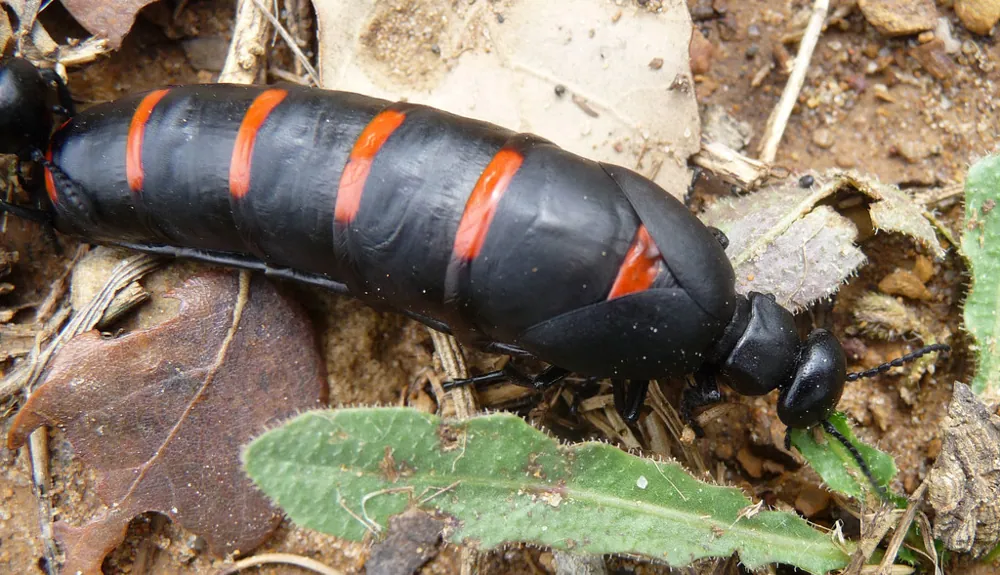
The red-striped oil beetle is a large beetle, about 5 cm long, with bright red bands across its body. It lives in dry, sunny places around the western Mediterranean, including Portugal, Spain and North Africa. It is special because it can squirt a caustic liquid when it is attacked.1



 Otú ị ga-esi mata ya
Ike nsị
Akpụkpọ ahụ ya nwere nsị. Ọ dị egwu imetụ ya aka, iracha ya ma ọ bụ iri ya.
Gịnị ka nsị dị n'ahụ ya na-eme?
When attacked, it can squirt a caustic liquid, the same defence used by other oil and blister beetles in the family Meloidae.1
Kedu otú o si dị egwu nye mmadụ?
Ihe ize ndụ nye mmadụ: Na-afụ ụfụỌ nwere ike ịfụ ụfụ nke ukwuu, mana ọ naghị adịkarị njọ.Gịnị ka ọ na-eme mgbe ụjọ tụrụ ya?
When attacked, it squirts a caustic liquid, and its bright red bands warn predators of this.1
 Ọ bụrụ na mmadụ metụrụ ya aka ma ọ bụ rie ya
- Ọ bụrụ na mmadụ riri ya ma ọ bụ nwee mgbaàmà mgbe o risịrị ya: kpọọ nọmba mberede gị ma ọ bụ ụlọ ọrụ ndụmọdụ nsị (poison centre) ozugbo.
Na-ebu ụzọ kpọọ nọmba mberede gị mgbe niile (112, 000, 911). Nke a bụ ndụmọdụ enyemaka mbụ n'ozuzu, ọ bụghị ndụmọdụ ọgwụ. Isi ihe enyemaka mbụ
 Nọrọ na nchekwa
- Emetụla anụ ọhịa aka, ejidela ya, emekwala ya ihe ọjọọ, ọbụna obere, ọbụna ma ọ dị ka ọ na-ehi ụra ma ọ bụ nwụọ anwụ.
- Nye ya ohere. Ọ bụrụ na ị zutere otu, dị jụụ, laghachi azụ nwayọ, hapụ ya ka ọ gaa ụzọ ya.
- Ọ bụrụ na i metụrụ ya aka ma ọ bụ rie ya: ehichala anya gị ma ọ bụ ọnụ gị, saa aka gị, chọọkwa enyemaka ọgwụ.
Ọ naghị achụ gị. Nsị ya dị naanị ka ihe ọ bụla ghara iri ya. Ihe ndị ọzọ gbasara ịnọ na nchekwa
Ọ hà aṅaa?
Kedu otú o si dị ogologo?
 dị mkpụmkpụ karịa obere mkpịsị aka gị
Kedu otú Red-striped oil beetle si hà ma e jiri ya tụnyere GỊ?
Naanị mgbakọ na mwepụ n'ime browser gị. Ọ dịghị ihe echekwara ma ọ bụ ezigara ebe ọ bụla.
Kedu otú o si agba ọsọ?


Eziokwu
If a larva picks a honey bee as its host, it dies in the hive.1
The larvae change form several times during development, which is called hypermetamorphosis.1
Unlike some related beetles, the first larval stage does not wait on a host. It actively searches for one.1
Its larvae are only about 3 mm long, far smaller than the adult beetle.1
Entirely black and red-striped beetles are equally poisonous.1
Maka ndị ọkachamara nsị
Ebe eziokwu ndị a si
- Berberomeloe majalis (Wikipedia (CC BY-SA 4.0))
- Berberomeloe majalis (iNaturalist): aha na nhazi ọkwa.
- Venom Wiki: ọkwa ihe ize ndụ, nha nkịtị na nchepụta ọsọ bụ nke anyị. Lee otú anyị si achọpụta ha: Otú anyị si atụ ihe ize ndụ.
Eziokwu ọ bụla dị na peeji a nwere nọmba na-egosi ebe o si. Ọ bụrụ na anyị mehiere ihe, ndo, anyị bụ ndị hụrụ anụmanụ n'anya, ọ bụghị akwụkwọ akụkọ sayensị. Gwa anyị na [email protected], anyị ga-edozi ya.
 Akpị agụụ na-agụ! Venom Wiki bụ ọrụ otu onye: n'efu, na-enweghị mgbasa ozi na ndị na-esochi gị. Obere onyinye na-enyere aka idebe ya n'ịntanetị.Nye akpị nri
Ndị ọzọ si n'otu ahụ: Anụmanụ ndị ọzọ nwere nsị n'ahụ
 Spanish flyAnụmanụ ndị ọzọ nwere nsị n'ahụỌ chọrọ dọkịtaEmetụla ya aka
 African crested ratAnụmanụ ndị ọzọ nwere nsị n'ahụỌ chọrọ dọkịtaEmetụla ya aka
 Common quailAnụmanụ ndị ọzọ nwere nsị n'ahụNaanị na-afụ ụfụ
 Spur-winged gooseAnụmanụ ndị ọzọ nwere nsị n'ahụNaanị na-afụ ụfụ
 Cinnabar mothAnụmanụ ndị ọzọ nwere nsị n'ahụAdịghị njọ
 Fahaka pufferfishAnụmanụ ndị ọzọ nwere nsị n'ahụNwere ike igbu mmadụ
Ọ na-ebikwa na: Yurop
 Common European adderViper na adderỌ chọrọ dọkịta
 Common waspAṅụ, ebu na ebu ukwuNaanị na-afụ ụfụ
 European hornetAṅụ, ebu na ebu ukwuNaanị na-afụ ụfụ
 Fire salamanderAwọ nsị, awọ ala na newtNaanị na-afụ ụfụEmetụla ya aka
 Western honey beeAṅụ, ebu na ebu ukwuNaanị na-afụ ụfụ
 Blunt-nosed viperViper na adderNwere ike igbu mmadụ