
 Afrịka
 Eshia
Eshia Yurop
Yurop Ndịda Amerika
 Ọstrelia na Oshenia
 Antaktika
 Oké Osimiri Pasifik
 Oké Osimiri Atlantik
 Oké Osimiri India
 Oké Osimiri Arktik
 Osimiri Mediterenian
 Osimiri Uhie
 Osimiri Karibịan
 Osimiri Coral
 Osimiri Ndịda China
 Osimiri Filipin
 Osimiri Andaman
 Osimiri Ugwu (North Sea)
 Osimiri Timor na Arafura
 Ọwara Bengal
 Ọwara California
Sri Lanka cat snake
 Ịta
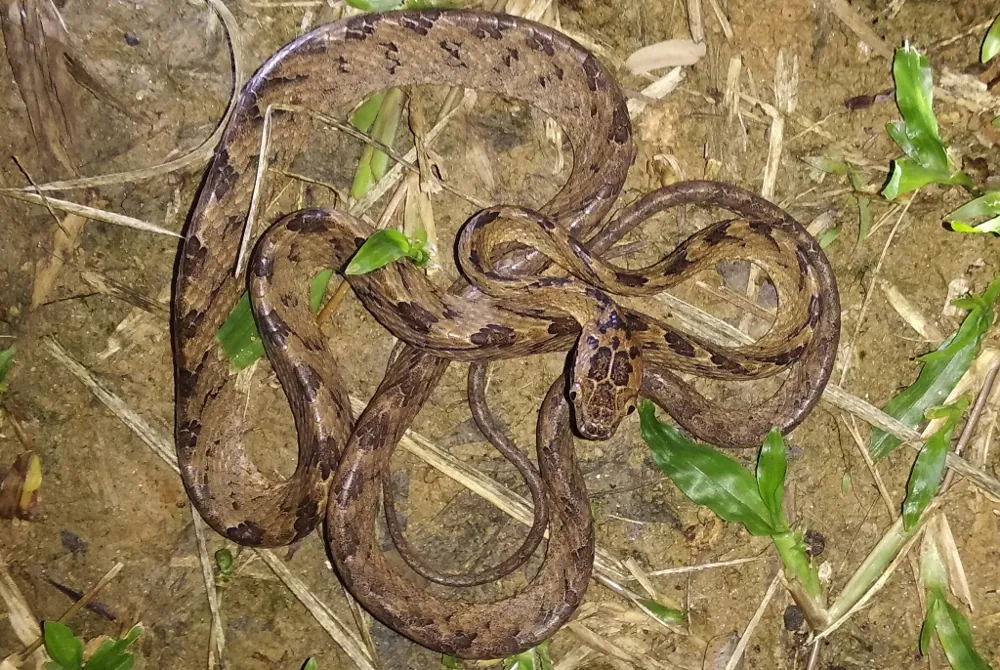
ỊtaThe Sri Lanka cat snake is a slim, brown tree snake that is active at night. It lives only in Sri Lanka, and it often comes into houses to hunt geckos. It is rear-fanged and mildly venomous, so it is worth knowing about if you live in or visit Sri Lanka.1

 Otú ị ga-esi mata ya
- Thin, slim, elongated body with a tree-snake shape1
- Brown or greyish upper body with a series of blackish cross bands1
- Brown crown marking on top of the head and a thick dark streak from the eye to the corner of the mouth1
- Yellowish underside dotted with brown, often with a row of small brown dots along the sides1
- Adults are about 122 cm from tip to tip, including a tail of about 25 cm1
Ike nsị
Nsị na-esi n'eze nsị ya ma ọ bụ eze ya apụta mgbe ọ na-ata.
Gịnị ka nsị ọ na-agba na-eme?
It is rear-fanged, meaning its fangs are at the back of the mouth, and it is mildly venomous.1
Kedu otú o si dị egwu nye mmadụ?
Ihe ize ndụ nye mmadụ: ObereDị ka ịgba aṅụ ma ọ bụ nke na-erughị ya. Ọ fọrọ nke nta ka ọ ghara ịdị njọ nye mmadụ.It is described as mildly venomous and has a somewhat aggressive temperament. It boldly strikes out when disturbed or cornered. Because it enters homes, people may come across it there.1
Gịnị ka ọ na-eme mgbe ụjọ tụrụ ya?
When disturbed or cornered, it boldly strikes out.1
 Ọ bụrụ na ọ tara
- Saa ebe ọ tara, mee ka onye ahụ dị jụụ, chọọkwa enyemaka ọgwụ. Ụfọdụ ụdị (dịka boomslang) nwere ike igbu mmadụ ọtụtụ awa ka e mesịrị.
Na-ebu ụzọ kpọọ nọmba mberede gị mgbe niile (112, 000, 911). Nke a bụ ndụmọdụ enyemaka mbụ n'ozuzu, ọ bụghị ndụmọdụ ọgwụ. Isi ihe enyemaka mbụ
 Nọrọ na nchekwa
- Emetụla anụ ọhịa aka, ejidela ya, emekwala ya ihe ọjọọ, ọbụna obere, ọbụna ma ọ dị ka ọ na-ehi ụra ma ọ bụ nwụọ anwụ.
- Nye ya ohere. Ọ bụrụ na ị zutere otu, dị jụụ, laghachi azụ nwayọ, hapụ ya ka ọ gaa ụzọ ya.
- Ọ bụrụ na otu tara gị: dị jụụ, emegharịla ahụ, kpọọ nọmba mberede gị (112, 000, 911) ma ọ bụ gaa ụlọ ọgwụ ngwa ngwa. Cheta ka o si dị, foto na-enye aka.
Ọ naghị achụ gị. Ọ na-eji nsị ya ejide nri ma ọ bụ chebe onwe ya, ọ ga-akakwa mma n'anya ya ịzo onwe ya. Ihe ndị ọzọ gbasara ịnọ na nchekwa
Ọ hà aṅaa?
Kedu otú o si dị ogologo?
 dị ogologo dị ka nwamba ụlọ 2.5 site n'imi ruo n'ọdụ
 dị ogologo dị ka unere 7 a tọgbọrọ n'ahịrị
 nwere ike ịgba ọsọ mita 100 n'ime sekọnd 68 (mmadụ kacha ọsọ chọrọ 9,6)
Kedu otú Sri Lanka cat snake si hà ma e jiri ya tụnyere GỊ?
Naanị mgbakọ na mwepụ n'ime browser gị. Ọ dịghị ihe echekwara ma ọ bụ ezigara ebe ọ bụla.
Kedu otú o si agba ọsọ?


Eziokwu
Onye na-ekpughe akụkọ ụgha
Akụkọ ụgha: It lives in the Western Ghats of India.
Eziokwu: It was once believed to occur in the Western Ghats of India, but recent studies showed this was wrong. It is endemic to Sri Lanka.1
Ebe eziokwu ndị a si
- Boiga ceylonensis (Wikipedia (CC BY-SA 4.0))
- Boiga ceylonensis (iNaturalist): aha na nhazi ọkwa.
- Venom Wiki: ọkwa ihe ize ndụ, nha nkịtị na nchepụta ọsọ bụ nke anyị. Lee otú anyị si achọpụta ha: Otú anyị si atụ ihe ize ndụ.
Eziokwu ọ bụla dị na peeji a nwere nọmba na-egosi ebe o si. Ọ bụrụ na anyị mehiere ihe, ndo, anyị bụ ndị hụrụ anụmanụ n'anya, ọ bụghị akwụkwọ akụkọ sayensị. Gwa anyị na [email protected], anyị ga-edozi ya.
 Akpị agụụ na-agụ! Venom Wiki bụ ọrụ otu onye: n'efu, na-enweghị mgbasa ozi na ndị na-esochi gị. Obere onyinye na-enyere aka idebe ya n'ịntanetị.Nye akpị nri
Ndị ọzọ si n'otu ahụ: Agwọ nwere eze nsị n'azụ ọnụ
 Brown tree snakeAgwọ nwere eze nsị n'azụ ọnụNaanị na-afụ ụfụ
 Tiger keelbackAgwọ nwere eze nsị n'azụ ọnụNwere ike igbu mmadụ
 Red-necked keelbackAgwọ nwere eze nsị n'azụ ọnụỌ chọrọ dọkịta
 Green cat snakeAgwọ nwere eze nsị n'azụ ọnụNaanị na-afụ ụfụ
 Mangrove snakeAgwọ nwere eze nsị n'azụ ọnụNaanị na-afụ ụfụ
 Asian vine snakeAgwọ nwere eze nsị n'azụ ọnụAdịghị njọ
 Deathstalker
 Indian cobra
 Indian saw-scaled viper
 King cobra
 Puff adder
 Agwọ Russell