
 Africa
 Asia
Asia Ulaya
Ulaya Amereka ya Kumwera
 Australia ndi Oceania
 Antarctica
 Nyanja ya Pacific
 Nyanja ya Atlantic
 Nyanja ya Indian
 Nyanja ya Arctic
 Nyanja ya Mediterranean
 Nyanja Yofiira
 Nyanja ya Caribbean
 Nyanja ya Coral
 Nyanja ya South China
 Nyanja ya Philippine
 Nyanja ya Andaman
 Nyanja ya Kumpoto (North Sea)
 Nyanja ya Timor ndi Arafura
 Nyanja ya Bengal
 Gulf ya California
Black oil beetle
 Poizoni pakhungu lake
The black oil beetle is a European beetle with an unusual life. It lives in meadows, field edges and other warm places in most of the continent, except the far north. Its young get a ride to a bee's nest, where they feed on the bee's eggs and food stores.1



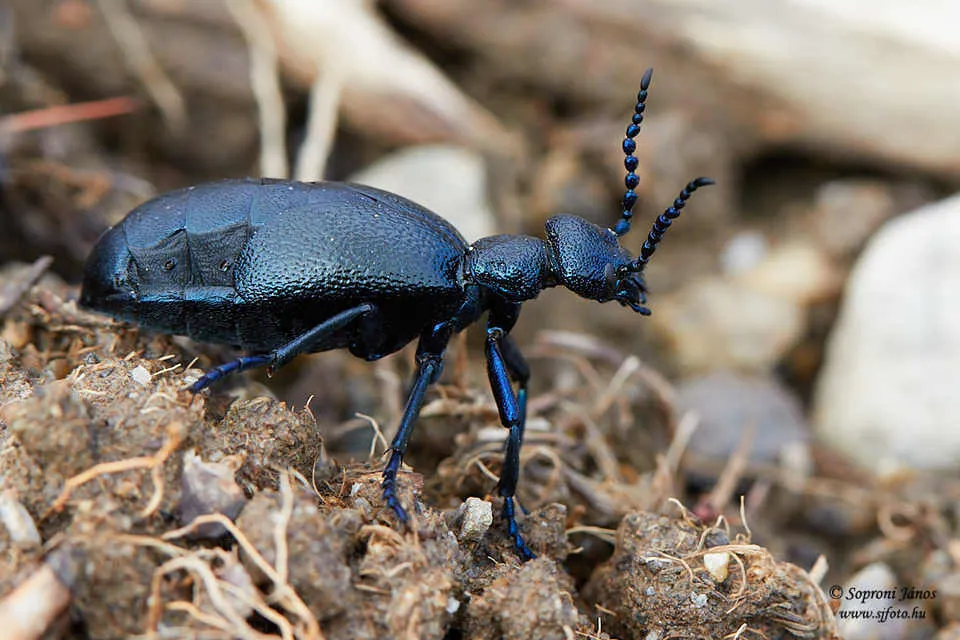
 Mmene ungaizindikirire
Mphamvu ya poizoni
Khungu lake lili ndi poizoni. Ndi yoopsa kuikhudza, kuinyambita kapena kuidya.
Ndi yoopsa bwanji kwa anthu?
Ngozi kwa anthu: YopwetekaIngathe kupweteka kwambiri, koma pafupifupi nthawi zonse si vuto lalikulu. Ngati munthu waikhudza kapena waidya
- Ngati munthu waidya kapena ali ndi zizindikiro ataidya: imbira nambala yadzidzidzi kapena malo othandiza pa za poizoni (poison centre) nthawi yomweyo.
Nthawi zonse yamba wayimbira nambala yadzidzidzi (112, 000, 911). Awa ndi malangizo wamba a chithandizo choyamba, osati malangizo a dokotala. Zoyambira za chithandizo choyamba
 Khala wotetezeka
- Usakhudze, kugwira kapena kuseweretsa nyama yakuthengo, ngakhale yaing'ono, ndipo ngakhale ikuoneka ngati yagona kapena yafa.
- Ipatse malo. Ukakumana nayo, khala chete, bwerera m'mbuyo pang'onopang'ono ndipo uilole ipite njira yake.
- Ngati unaikhudza kapena kuidya: usasisite maso kapena pakamwa, sambitsa m'manja ndipo peza thandizo la dokotala.
Sikufuna kukuvulaza. Poizoni wake ulipo kuti pasapezeke choidya. Zambiri za kukhala wotetezeka
Kuti padziko lapansi?
Ndi yaikulu bwanji?
Ndi yaitali bwanji?
 yaitali pafupifupi ngati kachitsulo komangira mapepala
Black oil beetle ndi yaikulu bwanji poyerekeza ndi IWE?
Ndi masamu chabe mu msakatuli wako. Palibe chomwe chimasungidwa kapena kutumizidwa kwina.
Imathamanga bwanji?


Mfundo
The larvae can attract bees without a flower by producing a flowery scent, even when they are outside a flower.1
The larvae use well-developed claws to attach themselves to a visiting bee and travel back to its nest.1
Inside the bee's nest, the larva eats the bee's eggs and the pollen and nectar the bee has stored.1
The author Gerald Durrell describes this beetle's life cycle in detail in his autobiographical book My Family and Other Animals.1
After it leaves the bee's nest as an adult, it seeks a mate straight away.1
Za akatswiri a ululu
- Dzina la sayansi
- Meloe proscarabaeus
- Gulu
- Nyama zina za poizoni
- Banja
- Meloidae2
- Dongosolo
- Coleoptera
- Makontinenti
- Ulaya, Asia
- Ana akhanda
- Females lay eggs in the soil. The larvae hatch and climb into a flower to wait for solitary bees. After feeding in the bee's nest, the larva pupates there and leaves to seek a mate.1
- Ngozi kwa anthu
- 2 / 5: Yopweteka3
Kumene mfundo zimachokera
- Meloe proscarabaeus (Wikipedia (CC BY-SA 4.0))
- Meloe proscarabaeus (iNaturalist): mayina ndi magulu a sayansi.
- Venom Wiki: mlingo wa ngozi, kukula wamba ndi kuyerekeza kwa liwiro ndi zathu. Ona mmene timazipezera: Mmene timayezera ngozi.
Mfundo iliyonse patsamba lino ili ndi nambala yosonyeza kochokera. Ngati talakwitsa, pepani, ndife okonda nyama, osati magazini a sayansi. Tiuze pa [email protected] ndipo tikonza.
 Chinkhanira chili ndi njala! Venom Wiki ndi ntchito ya munthu mmodzi: yaulere, yopanda zotsatsa ndi zokutsatira. Mphatso yaing'ono imathandiza kuti ikhalebe pa intaneti.Dyetsa chinkhanira
Zina za gulu lomwelo: Nyama zina za poizoni
 Spanish flyNyama zina za poizoniIkufuna dokotalaUsakhudze
 Green spotted pufferNyama zina za poizoniIkufuna dokotala
 Common quailNyama zina za poizoniImangopweteka
 Cinnabar mothNyama zina za poizoniYosavulaza
 Red-striped oil beetleNyama zina za poizoniImangopwetekaUsakhudze
 Six-spot burnetNyama zina za poizoniYosavulaza
Imakhalanso ku: Ulaya
 Common European adderMa viper ndi adderIkufuna dokotala
 Common waspNjuchi, mavu ndi mavu akuluakulu (hornets)Imangopweteka
 European hornetNjuchi, mavu ndi mavu akuluakulu (hornets)Imangopweteka
 Fire salamanderAchule a poizoni, achule a mphini (toads) ndi ma newtImangopwetekaUsakhudze
 Western honey beeNjuchi, mavu ndi mavu akuluakulu (hornets)Imangopweteka
 Blunt-nosed viperMa viper ndi adderIngathe kupha