
 Africa
 Asia
Asia Ulaya
Ulaya Amereka ya Kumwera
 Australia ndi Oceania
 Antarctica
 Nyanja ya Pacific
 Nyanja ya Atlantic
 Nyanja ya Indian
 Nyanja ya Arctic
 Nyanja ya Mediterranean
 Nyanja Yofiira
 Nyanja ya Caribbean
 Nyanja ya Coral
 Nyanja ya South China
 Nyanja ya Philippine
 Nyanja ya Andaman
 Nyanja ya Kumpoto (North Sea)
 Nyanja ya Timor ndi Arafura
 Nyanja ya Bengal
 Gulf ya California
Bluebottle
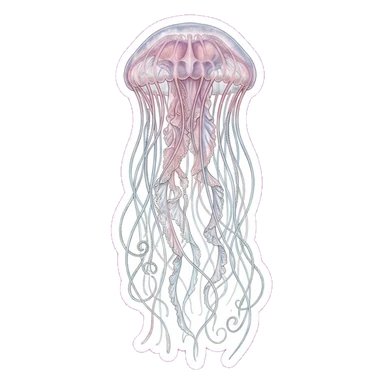 Minyewa yolasa (tentacles)
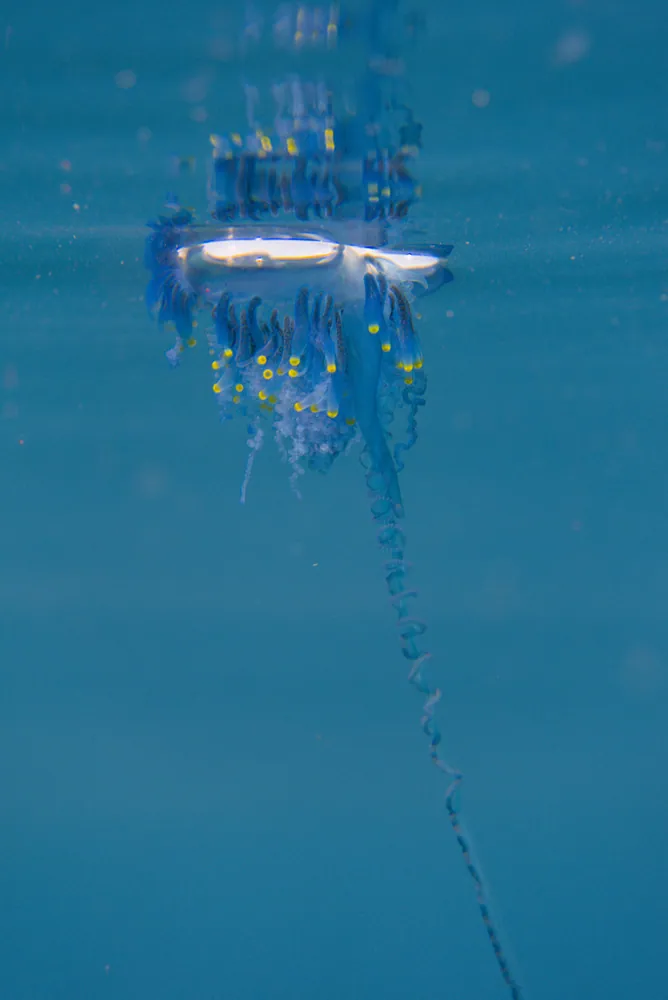
The bluebottle is a floating sea creature that looks like a jellyfish, but it is actually a colony of many linked animals that work together. It drifts on the surface of warm oceans and often washes up on beaches in large numbers. Its long tentacle can cause painful stings, so it is important to know what it looks like.1
 Mmene ungaizindikirire
- A gas-filled float that sits on the surface, with a sail on top of it1
- A single long tentacle hanging below the float1
- A float about 16 cm across, smaller than the Atlantic Portuguese man o' war, whose float is about 30 cm1
- Often found in large groups called swarms1
- Often washed up in large numbers on beaches after strong winds1
Nthawi zambiri imasokonezedwa ndi: The Atlantic Portuguese man o' war (Physalia physalis) is closely related and looks similar. It has a larger float, about 30 cm across, while the bluebottle's float is about 16 cm. The bluebottle has a single long fishing tentacle.1
Mphamvu ya ululu
Maselo ang'onoang'ono olasa masauzande amawombera chinachake chikawakhudza.
Ululu wake umachita chiyani?
Its tentacle is covered in venomous cells called cnidocytes, which fire stinging threads called nematocysts. These toxic stinging cells cause painful injuries when they touch human skin. The stings can cause painful injuries at the beach.1
Ndi yoopsa bwanji kwa anthu?
Ngozi kwa anthu: YopwetekaIngathe kupweteka kwambiri, koma pafupifupi nthawi zonse si vuto lalikulu.On Australia's east coast, 10,000 to 30,000 stings per year from animals of the genus Physalia are reported, and most incidents happen on the eastern coast. No deaths have been recorded from stings by this species. The Atlantic Portuguese man o' war has caused at least three deaths.1
 Ikalasa
- Tuluka m'madzi ndipo chotsa minyewa yolasa (tentacles) iliyonse (ndi magolovesi kapena nsalu).
- Pa jellyfish ya bokosi (box jellyfish) ya kumadera otentha: thira viniga pamene walasidwa kwa masekondi 30 osachepera, itana thandizo ndipo ukhale wokonzeka kuchita CPR. Pa bluebottle ndi zina zambiri: tsuka ndi madzi a m'nyanja, kenako madzi otentha kuti uchepetse kupweteka.
Nthawi zonse yamba wayimbira nambala yadzidzidzi (112, 000, 911). Awa ndi malangizo wamba a chithandizo choyamba, osati malangizo a dokotala. Zoyambira za chithandizo choyamba
 Khala wotetezeka
- Usakhudze, kugwira kapena kuseweretsa nyama yakuthengo, ngakhale yaing'ono, ndipo ngakhale ikuoneka ngati yagona kapena yafa.
- Ipatse malo. Ukakumana nayo, khala chete, bwerera m'mbuyo pang'onopang'ono ndipo uilole ipite njira yake.
- Ikakulasa: khala chete, usasunthe, imbira nambala yadzidzidzi (112, 000, 911) kapena pita kuchipatala mwachangu. Kumbukira m'mene inkaonekera, chithunzi chimathandiza.
Sikufuna kukuvulaza. Imagwiritsa ntchito ululu wake kugwira chakudya kapena kudziteteza, ndipo imakonda kwambiri kubisala. Zambiri za kukhala wotetezeka
Kuti padziko lapansi?
Ndi yaikulu bwanji?
Ndi yaitali bwanji?
 yaitali ngati zidutswa zomangira zoseweretsa 2 pamzere
 ingasambire kutalika kwa dziwe lalikulu losambira (50 m) m'masekondi 180
Bluebottle ndi yaikulu bwanji poyerekeza ndi IWE?
Ndi masamu chabe mu msakatuli wako. Palibe chomwe chimasungidwa kapena kutumizidwa kwina.
Imathamanga bwanji?

Mfundo
It is not a single animal. It is a colony of four separate types of polyps and medusoids that work together.1
Its stinging cells can remain harmful on beaches for weeks or months if the sand stays moist.1
It moves across the sea using the wind, currents and tides, helped by the sail on top of its float.1
Za akatswiri a ululu
- Dzina la sayansi
- Physalia utriculus
- Gulu
- Jellyfish ndi zolasa za m'nyanja
- Banja
- Physaliidae2
- Dongosolo
- Siphonophorae
- Makontinenti
- Nyanja ya Pacific, Nyanja ya Indian, Nyanja ya Atlantic, Nyanja ya Kumwera (Southern Ocean), Nyanja ya Coral, Antarctica, Nyanja ya Timor ndi Arafura, Nyanja ya Bengal, Nyanja zikuluzikulu
- Ana akhanda
- Its reproductive parts, called gonozooids, release eggs or sperm into the water.1
- Ngozi kwa anthu
- 2 / 5: Yopweteka3
Kumene mfundo zimachokera
- Physalia utriculus (Wikipedia (CC BY-SA 4.0))
- Physalia utriculus (iNaturalist): mayina ndi magulu a sayansi.
- Venom Wiki: mlingo wa ngozi, kukula wamba ndi kuyerekeza kwa liwiro ndi zathu. Ona mmene timazipezera: Mmene timayezera ngozi.
Mfundo iliyonse patsamba lino ili ndi nambala yosonyeza kochokera. Ngati talakwitsa, pepani, ndife okonda nyama, osati magazini a sayansi. Tiuze pa [email protected] ndipo tikonza.
 Chinkhanira chili ndi njala! Venom Wiki ndi ntchito ya munthu mmodzi: yaulere, yopanda zotsatsa ndi zokutsatira. Mphatso yaing'ono imathandiza kuti ikhalebe pa intaneti.Dyetsa chinkhanira
Zina za gulu lomwelo: Jellyfish ndi zolasa za m'nyanja
 Australian box jellyfishJellyfish ndi zolasa za m'nyanjaYakuphaUsakhudze
 Irukandji jellyfishJellyfish ndi zolasa za m'nyanjaIngathe kuphaUsakhudze
 Portuguese man o' warJellyfish ndi zolasa za m'nyanjaIkufuna dokotalaUsakhudze
 Lion's mane jellyfishJellyfish ndi zolasa za m'nyanjaImangopwetekaUsakhudze
 Moon jellyfishJellyfish ndi zolasa za m'nyanjaYosavulaza
 Common kingslayerJellyfish ndi zolasa za m'nyanjaIngathe kuphaUsakhudze
Imakhalanso ku: Nyanja ya Pacific
 Geography coneNkhono za cone ndi ma octopusYakupha
 Greater blue-ringed octopusNkhono za cone ndi ma octopusYakupha
 Japanese pufferfishNyama zina za poizoniYakupha
 Southern blue-ringed octopusNkhono za cone ndi ma octopusYakupha
 Hawksbill sea turtleNyama zina za poizoniIngathe kupha
 Reef stonefishNsomba zaululuIngathe kuphaUsakhudze