
 Africa
 Asia
Asia Ulaya
Ulaya Amereka ya Kumwera
 Australia ndi Oceania
 Antarctica
 Nyanja ya Pacific
 Nyanja ya Atlantic
 Nyanja ya Indian
 Nyanja ya Arctic
 Nyanja ya Mediterranean
 Nyanja Yofiira
 Nyanja ya Caribbean
 Nyanja ya Coral
 Nyanja ya South China
 Nyanja ya Philippine
 Nyanja ya Andaman
 Nyanja ya Kumpoto (North Sea)
 Nyanja ya Timor ndi Arafura
 Nyanja ya Bengal
 Gulf ya California
Coastal taipan
 Imaluma
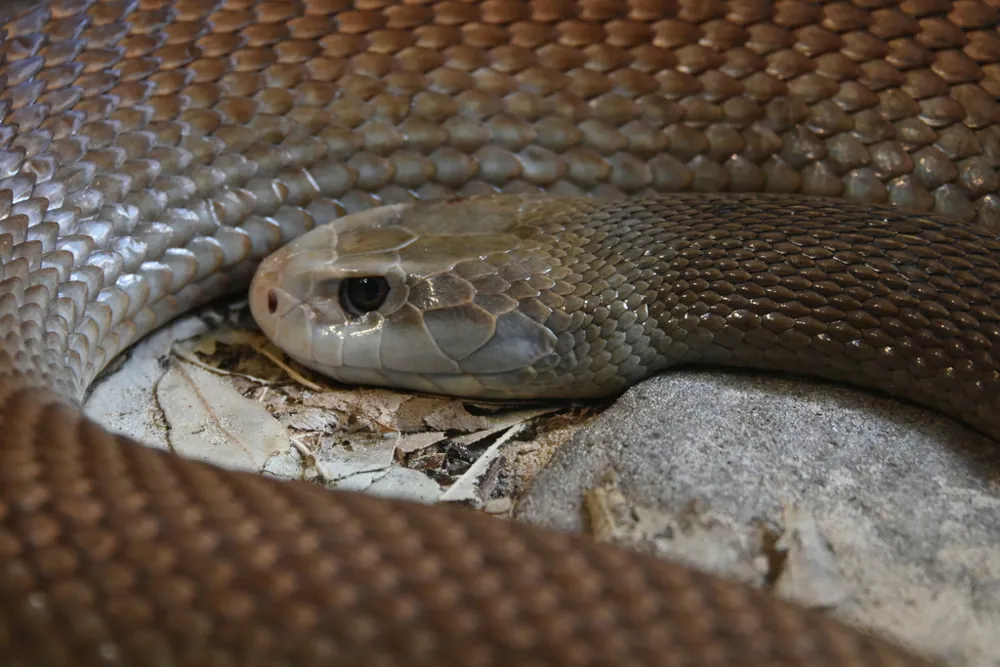
The coastal taipan is one of the most feared snakes in Australia. It is a large, fast snake with a powerful venom, and it lives along the coasts of northern and eastern Australia and on the island of New Guinea. It is one of the reasons snake bite safety matters so much in these areas.1



 Mmene ungaizindikirire
- Light olive or reddish-brown upperparts, sometimes dark grey to black1
- Paler sides and a creamy-white to pale yellow belly, often marked with orange or pink flecks1
- Long, narrow head with an angular brow and a lighter-coloured face1
- Large, round, light brown or hazel eyes with large pupils1
- Typically about 2.0 m long as an adult, with a slender body1
Nthawi zambiri imasokonezedwa ndi: It is often confused with the eastern brown snake, northern brown snake and king brown snake. The coastal taipan has a larger head and a narrow neck, and a lighter face and snout. In the other species, the head and neck are the same width.1
Mphamvu ya ululu
Ululu umatuluka kudzera m'mano ake ikaluma.
Ululu wake umachita chiyani?
Its venom is mainly neurotoxic, which means it attacks the nerves, and it is also coagulopathic, which means it disturbs blood clotting. In a recorded bite case, the victim became unwell within 15 to 30 minutes, with drooping eyelids, nausea and difficulty breathing. Some victims have also lost their sense of smell for a time.1
Ndi yoopsa bwanji kwa anthu?
Ngozi kwa anthu: YakuphaImodzi mwa nyama zoopsa kwambiri padziko lonse.It is considered one of the most dangerous snakes in the region and is classified by the World Health Organization as a snake of medical importance. Several deaths were recorded from its bites in the 1930s and 1940s, and more were added later as historical cases.1
 Nkhani yabwino: madokotala ali ndi mankhwala (antivenom) kapena chithandizo cha ichi.1
Imachita chiyani ikachita mantha?
It tends to avoid confrontation but becomes highly defensive if provoked.1
 Ikaluma
- Any suspected bite needs urgent medical care. In one recorded case, the bitten man was taken to hospital, where he was given fluids and tiger snake antivenom, and he recovered after 19 days in hospital.1
- Kumanga ndi kusasuntha (pressure immobilisation): manga bandeji yotanuka mwamphamvu pamene walumidwa kenako mmwamba chiwalo chonse, ika chogwiriziza (splint), ndipo munthuyo akhale chete osasuntha konse mpaka thandizo litafika.
- Usasambitse pamene walumidwa: zipatala zingathe kuyeza ululu wotsala pakhungu kuti zisankhe antivenom (mankhwala a ululu) yoyenera.
Nthawi zonse yamba wayimbira nambala yadzidzidzi (112, 000, 911). Awa ndi malangizo wamba a chithandizo choyamba, osati malangizo a dokotala. Zoyambira za chithandizo choyamba
 Khala wotetezeka
- Usakhudze, kugwira kapena kuseweretsa nyama yakuthengo, ngakhale yaing'ono, ndipo ngakhale ikuoneka ngati yagona kapena yafa.
- Ipatse malo. Ukakumana nayo, khala chete, bwerera m'mbuyo pang'onopang'ono ndipo uilole ipite njira yake.
- Ikakuluma: khala chete, usasunthe, imbira nambala yadzidzidzi (112, 000, 911) kapena pita kuchipatala mwachangu. Kumbukira m'mene inkaonekera, chithunzi chimathandiza.
Sikufuna kukuvulaza. Imagwiritsa ntchito ululu wake kugwira chakudya kapena kudziteteza, ndipo imakonda kwambiri kubisala. Zambiri za kukhala wotetezeka
Kuti padziko lapansi?
Ndi yaikulu bwanji?
Ndi yaitali bwanji?
Ndi yolemera bwanji?
 yaitali ngati agalu 3 mphuno ndi mchira motsatizana
 yaitali ngati nthochi 16 zoyalidwa motsatizana
 yolemera pafupifupi ngati mphaka wapakhomo
 ingathamange mamita 100 m'masekondi 41 (munthu wothamanga kwambiri amafunika 9.6)
Coastal taipan ndi yaikulu bwanji poyerekeza ndi IWE?
Ndi masamu chabe mu msakatuli wako. Palibe chomwe chimasungidwa kapena kutumizidwa kwina.
Imathamanga bwanji?


Mfundo
The longest recorded coastal taipan was 2.9 m long and weighed 6.5 kg, and larger specimens of up to 3.3 m are widely believed to exist.1
Its hunting method, freezing, striking and releasing prey, is similar to that of the African black mamba.1
It is the second-longest venomous snake in Australia, after the king brown snake.1
Newly hatched young grow quickly, reaching about 1.0 m in their first year.1
It may have become more common since cane toads were introduced to Australia in 1935.1
Kuthetsa nthano zabodza
Nthano yabodza: The snake hides in trees and drops onto people, and it chases people for hours.
Zoona: Stories of it hiding in trees and dropping on victims were spread in newspapers and books, but snake handlers say it is shy and avoids confrontation. It only becomes highly defensive when provoked.1
Za akatswiri a ululu
- Dzina la sayansi
- Oxyuranus scutellatus
- Gulu
- Njoka za ku Australia
- Banja
- Elapidae2
- Dongosolo
- Squamata
- Makontinenti
- Australia ndi Oceania
- Ana akhanda
- It lays a clutch of 7 to 20 eggs. The eggs take 60 to 80 days to hatch, and the young are 30 to 34 cm long.1
- Mmene ilili kuthengo
- Least Concern (IUCN)1
- Ngozi kwa anthu
- 5 / 5: Yakupha3
Kumene mfundo zimachokera
- Coastal taipan (Wikipedia (CC BY-SA 4.0))
- Oxyuranus scutellatus (iNaturalist): mayina ndi magulu a sayansi.
- Venom Wiki: mlingo wa ngozi, kukula wamba ndi kuyerekeza kwa liwiro ndi zathu. Ona mmene timazipezera: Mmene timayezera ngozi.
Mfundo iliyonse patsamba lino ili ndi nambala yosonyeza kochokera. Ngati talakwitsa, pepani, ndife okonda nyama, osati magazini a sayansi. Tiuze pa [email protected] ndipo tikonza.
 Chinkhanira chili ndi njala! Venom Wiki ndi ntchito ya munthu mmodzi: yaulere, yopanda zotsatsa ndi zokutsatira. Mphatso yaing'ono imathandiza kuti ikhalebe pa intaneti.Dyetsa chinkhanira
Zina za gulu lomwelo: Njoka za ku Australia
 Common death adder
 Eastern brown snake
 Taipani wa kumtunda
 Njoka ya mizere ngati nyalugwe
 Collett's snake
 Desert death adder
Imakhalanso ku: Australia ndi Oceania
 Sydney funnel-web spiderMa tarantula ndi funnel-webYakupha
 Redback spiderAkangaudeIkufuna dokotala
 Brown tree snakeNjoka za mano akumbuyoImangopweteka
 Hooded pitohuiNyama zina za poizoniImangopwetekaUsakhudze
 PlatypusNyama zoyamwitsa zaululuImangopweteka
 Northern tree-dwelling funnel-web spiderMa tarantula ndi funnel-webYakupha