
 Africa
 Asia
Asia Ulaya
Ulaya Amereka ya Kumwera
 Australia ndi Oceania
 Antarctica
 Nyanja ya Pacific
 Nyanja ya Atlantic
 Nyanja ya Indian
 Nyanja ya Arctic
 Nyanja ya Mediterranean
 Nyanja Yofiira
 Nyanja ya Caribbean
 Nyanja ya Coral
 Nyanja ya South China
 Nyanja ya Philippine
 Nyanja ya Andaman
 Nyanja ya Kumpoto (North Sea)
 Nyanja ya Timor ndi Arafura
 Nyanja ya Bengal
 Gulf ya California
Common eastern bumble bee
 Imalasa
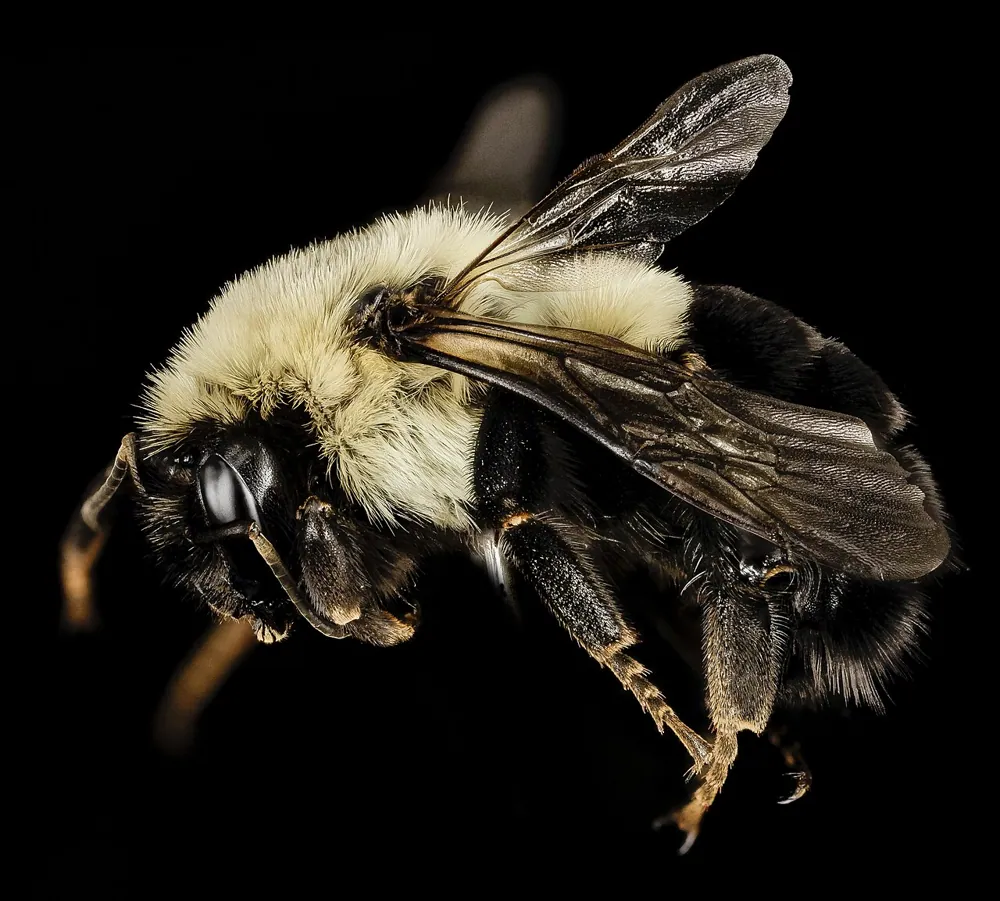
The common eastern bumblebee is a furry, black and yellow bee. It is the most commonly seen bumblebee across much of eastern North America, including towns, cities and fields. Its visits to flowers help pollinate many crops, so it matters to farmers and gardeners.1


 Mmene ungaizindikirire
- Queens and workers are black with a yellow thorax (the middle part of the body) and a yellow first abdominal segment (the first part of the rear body).1
- Males have a yellow face and head, and their coloring is slightly different from queens and workers.1
- They have short, even hair and a long, rectangular body.1
- Queens are the largest, at 17 to 23 mm long. Workers measure 8.5 to 16 mm and males 12 to 18 mm.1
Nthawi zambiri imasokonezedwa ndi: They look similar to Bombus bimaculatus, B. perplexus, B. vagans, B. sandersoni and B. separatus.1
Mphamvu ya ululu
Ululu umatuluka kudzera mu mbola.
Ndi yoopsa bwanji kwa anthu?
Ngozi kwa anthu: YofatsaNgati kulasidwa ndi njuchi kapena pang'ono kuposa pamenepo. Pafupifupi yosavulaza anthu. Ikalasa
- Chotsa mbola ya njuchi poikwangula ndipo ziziritsa pamalopo.
- Ngati munthuyo akuvutika kupuma, nkhope kapena khosi zikutupa, kapena akumva ngati akomoka, ndi vuto ladzidzidzi la ziwengo (allergy): imbira nambala yadzidzidzi ndipo gwiritsa ntchito jakisoni wake wa adrenaline (adrenaline pen) ngati ali nawo.
Nthawi zonse yamba wayimbira nambala yadzidzidzi (112, 000, 911). Awa ndi malangizo wamba a chithandizo choyamba, osati malangizo a dokotala. Zoyambira za chithandizo choyamba
 Khala wotetezeka
- Usakhudze, kugwira kapena kuseweretsa nyama yakuthengo, ngakhale yaing'ono, ndipo ngakhale ikuoneka ngati yagona kapena yafa.
- Ipatse malo. Ukakumana nayo, khala chete, bwerera m'mbuyo pang'onopang'ono ndipo uilole ipite njira yake.
- Ikakulasa: khala chete, usasunthe, imbira nambala yadzidzidzi (112, 000, 911) kapena pita kuchipatala mwachangu. Kumbukira m'mene inkaonekera, chithunzi chimathandiza.
Sikufuna kukuvulaza. Imagwiritsa ntchito ululu wake kugwira chakudya kapena kudziteteza, ndipo imakonda kwambiri kubisala. Zambiri za kukhala wotetezeka
Kuti padziko lapansi?
Ndi yaikulu bwanji?
Ndi yaitali bwanji?
 yaitali pafupifupi ngati kachitsulo komangira mapepala
 ingauluke kudutsa bwalo lonse la mpira m'masekondi 15
Common eastern bumble bee ndi yaikulu bwanji poyerekeza ndi IWE?
Ndi masamu chabe mu msakatuli wako. Palibe chomwe chimasungidwa kapena kutumizidwa kwina.
Imathamanga bwanji?


.jpg)
Mfundo
Queen bees can stay underwater for up to a week without drowning, which may help them survive floods or wet winters.1
Foragers use traplining, visiting flowers in the same repeatable order. This saves time and energy.1
Foraging bees share information about good food sources with other bees in the nest.1
Inside the nest, smaller workers stay near the centre and feed the young, while bigger workers work as foragers and guards on the outside.1
Commercially raised colonies are used to pollinate tomatoes, blueberries, raspberries and pumpkins in greenhouses.1
Za akatswiri a ululu
- Dzina la sayansi
- Bombus impatiens
- Gulu
- Njuchi, mavu ndi mavu akuluakulu (hornets)
- Banja
- Apidae2
- Dongosolo
- Hymenoptera
- Makontinenti
- Amereka ya Kumpoto
- Ana akhanda
- A queen can lay about 2000 eggs in one season, but only about half of them survive to become adults. The eggs are laid in clumps throughout the nest.1
- Ngozi kwa anthu
- 1 / 5: Yofatsa3
Kumene mfundo zimachokera
- Bombus impatiens (Wikipedia (CC BY-SA 4.0))
- Bombus impatiens (iNaturalist): mayina ndi magulu a sayansi.
- Venom Wiki: mlingo wa ngozi, kukula wamba ndi kuyerekeza kwa liwiro ndi zathu. Ona mmene timazipezera: Mmene timayezera ngozi.
Mfundo iliyonse patsamba lino ili ndi nambala yosonyeza kochokera. Ngati talakwitsa, pepani, ndife okonda nyama, osati magazini a sayansi. Tiuze pa [email protected] ndipo tikonza.
 Chinkhanira chili ndi njala! Venom Wiki ndi ntchito ya munthu mmodzi: yaulere, yopanda zotsatsa ndi zokutsatira. Mphatso yaing'ono imathandiza kuti ikhalebe pa intaneti.Dyetsa chinkhanira
Zina za gulu lomwelo: Njuchi, mavu ndi mavu akuluakulu (hornets)
 Tarantula hawkNjuchi, mavu ndi mavu akuluakulu (hornets)Imangopweteka
 Executioner waspNjuchi, mavu ndi mavu akuluakulu (hornets)Ikufuna dokotala
 Warrior waspNjuchi, mavu ndi mavu akuluakulu (hornets)Ikufuna dokotala
 Bald-faced hornetNjuchi, mavu ndi mavu akuluakulu (hornets)Imangopweteka
 Cow killer velvet antNjuchi, mavu ndi mavu akuluakulu (hornets)Imangopweteka
 Eastern cicada killerNjuchi, mavu ndi mavu akuluakulu (hornets)Yosavulaza
Imakhalanso ku: Amereka ya Kumpoto
 TerciopeloNjoka za pit viperYakupha
 Eastern coral snakeNjoka za coralIngathe kupha
 Eastern diamondback rattlesnakeNjoka za rattlesnakeIngathe kupha
 Eyelash viperNjoka za pit viperIngathe kupha
 Timber rattlesnakeNjoka za rattlesnakeIngathe kupha
 Western diamondback rattlesnakeNjoka za rattlesnakeIngathe kupha