
 Africa
 Asia
Asia Ulaya
Ulaya Amereka ya Kumwera
 Australia ndi Oceania
 Antarctica
 Nyanja ya Pacific
 Nyanja ya Atlantic
 Nyanja ya Indian
 Nyanja ya Arctic
 Nyanja ya Mediterranean
 Nyanja Yofiira
 Nyanja ya Caribbean
 Nyanja ya Coral
 Nyanja ya South China
 Nyanja ya Philippine
 Nyanja ya Andaman
 Nyanja ya Kumpoto (North Sea)
 Nyanja ya Timor ndi Arafura
 Nyanja ya Bengal
 Gulf ya California
Garden tiger moth
 Ubweya wolasa
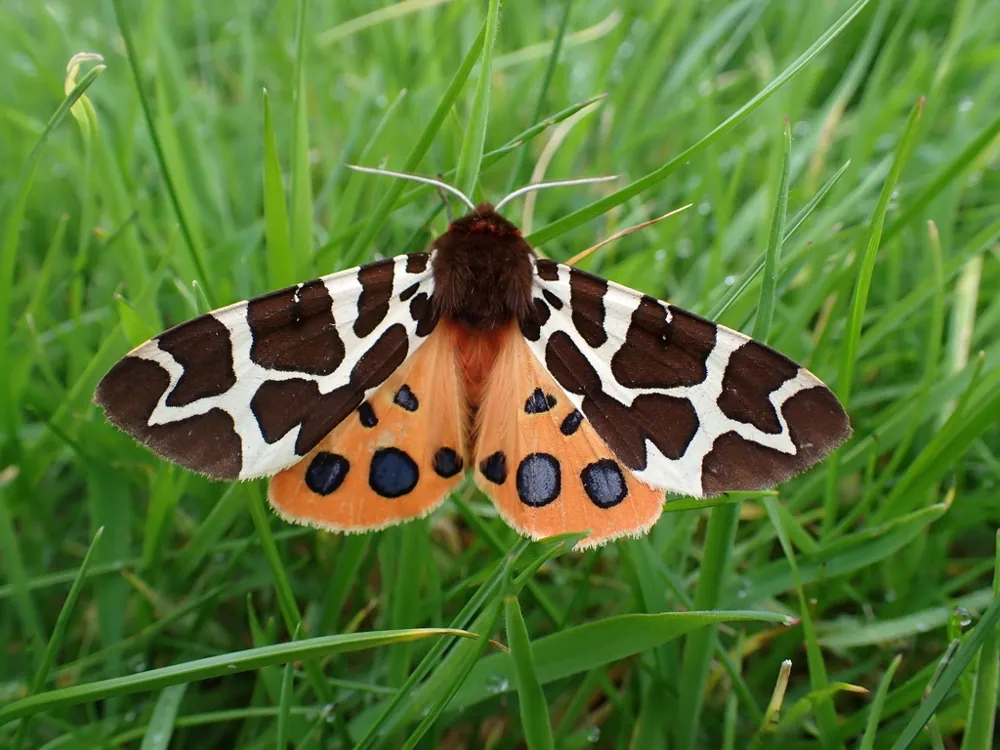
The garden tiger moth is a moth with bold patterned wings that warn predators it is unsafe to eat. It lives in cool, temperate parts of the northern United States, Canada, Europe and Asia. Its caterpillars are known as 'woolly bears' because of their fuzzy look.1

 Mmene ungaizindikirire
- Adults have a wingspan of 4.5 to 6.5 cm.1
- The front wings are brown with a white pattern, which is sometimes missing.1
- The back wings are orange with dark blue dots that have black outlines.1
- The moth often hides its orange hindwings under its brown forewings when resting.1
- Caterpillars are fuzzy and can grow up to 6 cm long.1
Mphamvu ya ululu
Ubweya waung'ono kapena tsitsi laminga zimadukira pakhungu ndi kulasa.
Ululu wake umachita chiyani?
This moth does not inject venom. Its body fluids are poisonous and contain neurotoxic choline esters, which are nerve-affecting chemicals that interfere with the acetylcholine receptor. The full effects of these toxins are not yet known. Caterpillars have hollow hairs that often contain irritating compounds.1
Ndi yoopsa bwanji kwa anthu?
Ngozi kwa anthu: YofatsaNgati kulasidwa ndi njuchi kapena pang'ono kuposa pamenepo. Pafupifupi yosavulaza anthu.Imachita chiyani ikachita mantha?
When threatened, adults can spray an irritating compound from glands that are exposed at that moment, and their bright wing patterns warn predators.1
 Ukakhudza ubweya wake
- Pa ubweya wa mbozi zolasa: uchotse ndi tepi yomata, kenako sambitsa khungu. Usasisite.
- Polumidwa: sambitsa ndi kuziziritsa. Peza thandizo la dokotala ngati munthuyo sakumva bwino kapena akutuluka magazi mosavuta.
Nthawi zonse yamba wayimbira nambala yadzidzidzi (112, 000, 911). Awa ndi malangizo wamba a chithandizo choyamba, osati malangizo a dokotala. Zoyambira za chithandizo choyamba
 Khala wotetezeka
- Usakhudze, kugwira kapena kuseweretsa nyama yakuthengo, ngakhale yaing'ono, ndipo ngakhale ikuoneka ngati yagona kapena yafa.
- Ipatse malo. Ukakumana nayo, khala chete, bwerera m'mbuyo pang'onopang'ono ndipo uilole ipite njira yake.
- Ukakhudza ubweya wake: khala chete, usasunthe, imbira nambala yadzidzidzi (112, 000, 911) kapena pita kuchipatala mwachangu. Kumbukira m'mene inkaonekera, chithunzi chimathandiza.
Sikufuna kukuvulaza. Imagwiritsa ntchito ululu wake kugwira chakudya kapena kudziteteza, ndipo imakonda kwambiri kubisala. Zambiri za kukhala wotetezeka
Kuti padziko lapansi?
Ndi yaikulu bwanji?
Ndi yaitali bwanji?
 yaitali ngati zidutswa zomangira zoseweretsa 2 pamzere
 yochedwa kuposa nkhono ya m'munda
Garden tiger moth ndi yaikulu bwanji poyerekeza ndi IWE?
Ndi masamu chabe mu msakatuli wako. Palibe chomwe chimasungidwa kapena kutumizidwa kwina.
Imathamanga bwanji?

Mfundo
Adults can make rasping sounds with their wings and high-pitched squeaks that people can hear, and bats tend to avoid them.1
Caterpillars can break down the toxins in their host plants and reuse them in altered form for their own protection.1
The French entomologist Oberthür described about 500 different wing pattern and colour variants.1
Adults are mostly active at night, from June to September.1
Za akatswiri a ululu
- Dzina la sayansi
- Arctia caja
- Gulu
- Mbozi ndi tizilombo
- Banja
- Erebidae2
- Dongosolo
- Lepidoptera
- Makontinenti
- Ulaya, Asia, Amereka ya Kumpoto
- Ana akhanda
- Eggs are laid on the surfaces of leaves, and the caterpillars hatch and begin feeding soon after.1
- Mmene ilili kuthengo
- Protected in the UK under the Biodiversity Action Plan, after its UK numbers fell by 89% over 30 years1
- Ngozi kwa anthu
- 1 / 5: Yofatsa3
Kumene mfundo zimachokera
- Garden tiger moth (Wikipedia (CC BY-SA 4.0))
- Arctia caja (iNaturalist): mayina ndi magulu a sayansi.
- Venom Wiki: mlingo wa ngozi, kukula wamba ndi kuyerekeza kwa liwiro ndi zathu. Ona mmene timazipezera: Mmene timayezera ngozi.
Mfundo iliyonse patsamba lino ili ndi nambala yosonyeza kochokera. Ngati talakwitsa, pepani, ndife okonda nyama, osati magazini a sayansi. Tiuze pa [email protected] ndipo tikonza.
 Chinkhanira chili ndi njala! Venom Wiki ndi ntchito ya munthu mmodzi: yaulere, yopanda zotsatsa ndi zokutsatira. Mphatso yaing'ono imathandiza kuti ikhalebe pa intaneti.Dyetsa chinkhanira
Zina za gulu lomwelo: Mbozi ndi tizilombo
 Giant water bugMbozi ndi tizilomboImangopweteka
 Oak processionaryMbozi ndi tizilomboImangopwetekaUsakhudze
 Pine processionaryMbozi ndi tizilomboImangopwetekaUsakhudze
 Puss caterpillarMbozi ndi tizilomboImangopwetekaUsakhudze
 Saddleback caterpillarMbozi ndi tizilomboImangopwetekaUsakhudze
 Wheel bugMbozi ndi tizilomboImangopweteka
Imakhalanso ku: Ulaya
 Common European adderMa viper ndi adderIkufuna dokotala
 Spanish flyNyama zina za poizoniIkufuna dokotalaUsakhudze
 Common waspNjuchi, mavu ndi mavu akuluakulu (hornets)Imangopweteka
 European hornetNjuchi, mavu ndi mavu akuluakulu (hornets)Imangopweteka
 Fire salamanderAchule a poizoni, achule a mphini (toads) ndi ma newtImangopwetekaUsakhudze
 Western honey beeNjuchi, mavu ndi mavu akuluakulu (hornets)Imangopweteka