
 Africa
 Asia
Asia Ulaya
Ulaya Amereka ya Kumwera
 Australia ndi Oceania
 Antarctica
 Nyanja ya Pacific
 Nyanja ya Atlantic
 Nyanja ya Indian
 Nyanja ya Arctic
 Nyanja ya Mediterranean
 Nyanja Yofiira
 Nyanja ya Caribbean
 Nyanja ya Coral
 Nyanja ya South China
 Nyanja ya Philippine
 Nyanja ya Andaman
 Nyanja ya Kumpoto (North Sea)
 Nyanja ya Timor ndi Arafura
 Nyanja ya Bengal
 Gulf ya California
Hickory tussock moth
 Ubweya wolasa
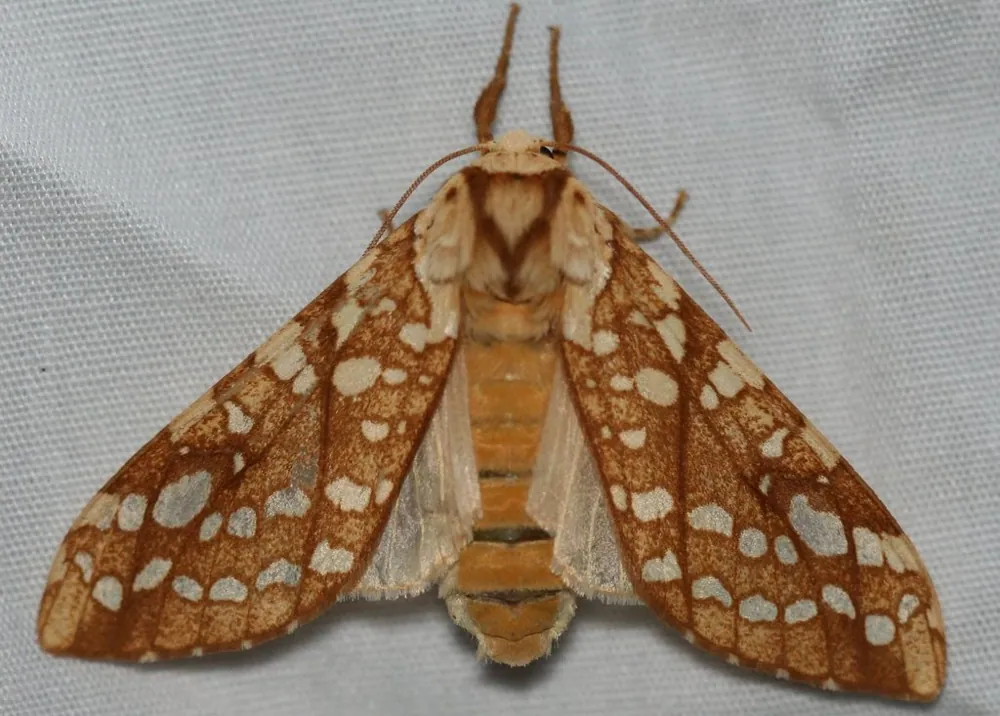
The hickory tussock moth is a moth whose caterpillars are covered in long, hairy tufts. It lives across the eastern half of North America. Its hairs can cause an itchy rash, but no venom has been found in it.1

 Mmene ungaizindikirire
- The caterpillar is completely covered in long, hairlike setae arranged in spreading tufts, and most are white.1
- The caterpillar has black tufts along the middle of its back and four long black hair pencils, two near the front and two near the back.1
- The caterpillar has black spots along its sides and a black head capsule.1
- The adult moth has yellowish-brown forewings marked with white splotches, which look like stained glass.1
- The adult moth has mostly white hindwings and a hairy, pale brown body.1
Mphamvu ya ululu
Ubweya waung'ono kapena tsitsi laminga zimadukira pakhungu ndi kulasa.
Ululu wake umachita chiyani?
No venom has yet been isolated or identified in this moth. Its hairs cause irritant contact dermatitis, an itchy rash, in many people, especially those prone to allergies. The rash can resemble exposure to urushiol, the irritant found in poison ivy.1
Ndi yoopsa bwanji kwa anthu?
Ngozi kwa anthu: YofatsaNgati kulasidwa ndi njuchi kapena pang'ono kuposa pamenepo. Pafupifupi yosavulaza anthu.In over 350 documented cases, most people had no symptoms within 24 hours. No case involved anaphylaxis, a severe allergic reaction. The hairs are microscopically barbed, and if they are transferred from the hands to the eyes they may rarely cause serious medical complications.1
 Ukakhudza ubweya wake
- Pa ubweya wa mbozi zolasa: uchotse ndi tepi yomata, kenako sambitsa khungu. Usasisite.
- Polumidwa: sambitsa ndi kuziziritsa. Peza thandizo la dokotala ngati munthuyo sakumva bwino kapena akutuluka magazi mosavuta.
Nthawi zonse yamba wayimbira nambala yadzidzidzi (112, 000, 911). Awa ndi malangizo wamba a chithandizo choyamba, osati malangizo a dokotala. Zoyambira za chithandizo choyamba
 Khala wotetezeka
- Usakhudze, kugwira kapena kuseweretsa nyama yakuthengo, ngakhale yaing'ono, ndipo ngakhale ikuoneka ngati yagona kapena yafa.
- Ipatse malo. Ukakumana nayo, khala chete, bwerera m'mbuyo pang'onopang'ono ndipo uilole ipite njira yake.
- Ukakhudza ubweya wake: khala chete, usasunthe, imbira nambala yadzidzidzi (112, 000, 911) kapena pita kuchipatala mwachangu. Kumbukira m'mene inkaonekera, chithunzi chimathandiza.
Sikufuna kukuvulaza. Imagwiritsa ntchito ululu wake kugwira chakudya kapena kudziteteza, ndipo imakonda kwambiri kubisala. Zambiri za kukhala wotetezeka
Kuti padziko lapansi?
Ndi yaikulu bwanji?
Ndi yaitali bwanji?
 yaifupi kuposa chala chako chaching'ono
 yochedwa kuposa nkhono ya m'munda
Hickory tussock moth ndi yaikulu bwanji poyerekeza ndi IWE?
Ndi masamu chabe mu msakatuli wako. Palibe chomwe chimasungidwa kapena kutumizidwa kwina.
Imathamanga bwanji?

Mfundo
The hairs of the caterpillar are microscopically barbed, which is why they can irritate the skin.1
Young caterpillars feed in groups of about 100, but older caterpillars are solitary.1
The adult's forewings are marked with white splotches that look like stained glass.1
The loose cocoon has hairs woven into it and overwinters in leaf litter.1
Kuthetsa nthano zabodza
Nthano yabodza: The hickory tussock moth is venomous, as some anecdotal claims say.
Zoona: No venom has been isolated or identified in this species. Its hairs cause an irritant skin rash in many people.1
Kumene mfundo zimachokera
- Lophocampa caryae (Wikipedia (CC BY-SA 4.0))
- Lophocampa caryae (iNaturalist): mayina ndi magulu a sayansi.
- Venom Wiki: mlingo wa ngozi, kukula wamba ndi kuyerekeza kwa liwiro ndi zathu. Ona mmene timazipezera: Mmene timayezera ngozi.
Mfundo iliyonse patsamba lino ili ndi nambala yosonyeza kochokera. Ngati talakwitsa, pepani, ndife okonda nyama, osati magazini a sayansi. Tiuze pa [email protected] ndipo tikonza.
 Chinkhanira chili ndi njala! Venom Wiki ndi ntchito ya munthu mmodzi: yaulere, yopanda zotsatsa ndi zokutsatira. Mphatso yaing'ono imathandiza kuti ikhalebe pa intaneti.Dyetsa chinkhanira
Zina za gulu lomwelo: Mbozi ndi tizilombo
 Giant water bugMbozi ndi tizilomboImangopweteka
 Puss caterpillarMbozi ndi tizilomboImangopwetekaUsakhudze
 Saddleback caterpillarMbozi ndi tizilomboImangopwetekaUsakhudze
 Wheel bugMbozi ndi tizilomboImangopweteka
 Giant vinegaroonMbozi ndi tizilomboYosavulaza
 Rhodnius kissing bugMbozi ndi tizilomboIkufuna dokotala
Imakhalanso ku: Amereka ya Kumpoto
 TerciopeloNjoka za pit viperYakupha
 Eastern coral snakeNjoka za coralIngathe kupha
 Eastern diamondback rattlesnakeNjoka za rattlesnakeIngathe kupha
 Eyelash viperNjoka za pit viperIngathe kupha
 Timber rattlesnakeNjoka za rattlesnakeIngathe kupha
 Western diamondback rattlesnakeNjoka za rattlesnakeIngathe kupha