
 Africa
 Asia
Asia Ulaya
Ulaya Amereka ya Kumwera
 Australia ndi Oceania
 Antarctica
 Nyanja ya Pacific
 Nyanja ya Atlantic
 Nyanja ya Indian
 Nyanja ya Arctic
 Nyanja ya Mediterranean
 Nyanja Yofiira
 Nyanja ya Caribbean
 Nyanja ya Coral
 Nyanja ya South China
 Nyanja ya Philippine
 Nyanja ya Andaman
 Nyanja ya Kumpoto (North Sea)
 Nyanja ya Timor ndi Arafura
 Nyanja ya Bengal
 Gulf ya California
Indochinese spitting cobra
 Imapopera kapena kulavulira
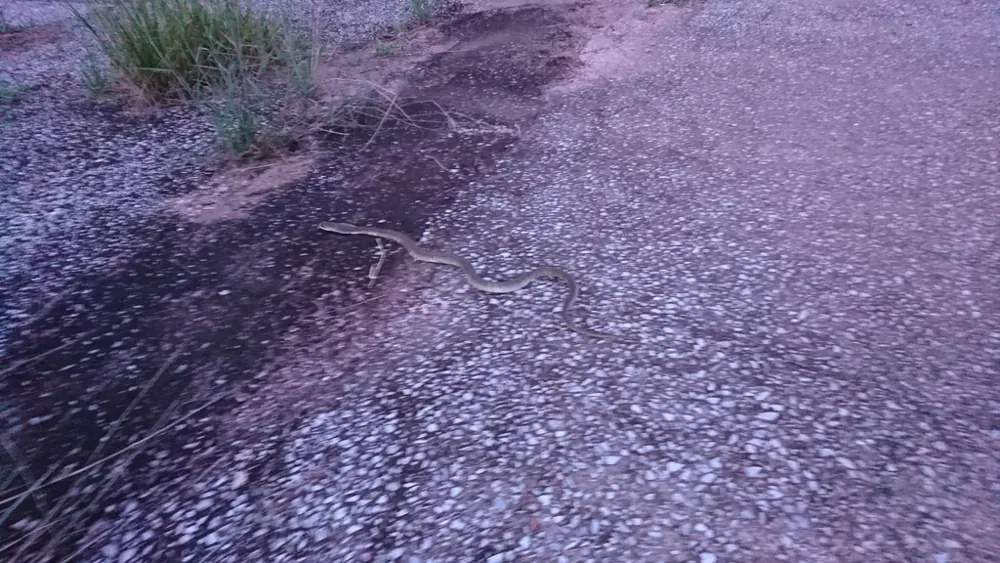
The Siamese spitting cobra is a medium-sized snake that can spray venom from a distance. It lives in Southeast Asia, including Thailand, Cambodia, Vietnam and Laos. It is special because it is a 'true spitter' that sprays venom into the face of a threat, and its bite can be dangerous to people.1



 Mmene ungaizindikirire
- Body colour ranges from grey to brown to black, with white spots or stripes.1
- The black and white colour form is common in central Thailand. Snakes from western Thailand are mostly black, and those from elsewhere are usually brown.1
- The hood mark may be spectacle-shaped or irregular, or missing altogether, especially in adults.1
- It is medium-sized with a more slender build than most other cobras in the genus Naja.1
Nthawi zambiri imasokonezedwa ndi: The monocled cobra (Naja kaouthia) has a similar habitat, size and appearance, so it is easy to confuse with this species. This species is a 'true spitter' that sprays a mist, rather than the stream that many other spitting cobras produce.1
Mphamvu ya ululu
Imapopera kapena kulavulira madzi olasa kwa omwe akuiukira.
Ululu wake umachita chiyani?
Its venom is mainly a postsynaptic neurotoxin, which attacks the nerves, and a cytotoxin, which kills tissue. A bite causes pain, swelling and necrosis (death of tissue) around the wound. Neurotoxic effects can lead to paralysis and difficulty breathing. If venom is spat into the eyes, it causes immediate, severe pain and can cause temporary or sometimes permanent blindness.1
Ndi yoopsa bwanji kwa anthu?
Ngozi kwa anthu: Yoopsa kwambiriIngathe kupha munthu amene sanalandire chithandizo.The bite is potentially lethal to an adult human. Deaths usually happen through paralysis and asphyxiation (suffocation), mainly in rural areas where antivenin is hard to obtain. In one Thai hospital survey, neurotoxic signs appeared in 12 of 114 cases (10.5%).1
 Nkhani yabwino: madokotala ali ndi mankhwala (antivenom) kapena chithandizo cha ichi.1
Imachita chiyani ikachita mantha?
At night it is aggressive: it stands its ground, rears up, displays its hood and spits venom, and it bites as a last resort. In daylight it is usually timid and seeks shelter in the nearest burrow.1
 Ikaluma kapena kulavulira
- Munthuyo akhale chete ndi wodekha, chotsa mphete ndi zinthu zothina, ndipo mufikitse kuchipatala mwachangu: antivenom ndiye mankhwala ake.
- Ngati ululu walavuliridwa m'maso, tsuka maso ndi madzi ambiri aukhondo nthawi yomweyo.
Nthawi zonse yamba wayimbira nambala yadzidzidzi (112, 000, 911). Awa ndi malangizo wamba a chithandizo choyamba, osati malangizo a dokotala. Zoyambira za chithandizo choyamba
 Khala wotetezeka
- Usakhudze, kugwira kapena kuseweretsa nyama yakuthengo, ngakhale yaing'ono, ndipo ngakhale ikuoneka ngati yagona kapena yafa.
- Ipatse malo. Ukakumana nayo, khala chete, bwerera m'mbuyo pang'onopang'ono ndipo uilole ipite njira yake.
- Ikakuluma kapena kukulavulira ululu m'maso: khala chete, usasunthe, imbira nambala yadzidzidzi (112, 000, 911) kapena pita kuchipatala mwachangu. Kumbukira m'mene inkaonekera, chithunzi chimathandiza.
Sikufuna kukuvulaza. Imagwiritsa ntchito ululu wake kugwira chakudya kapena kudziteteza, ndipo imakonda kwambiri kubisala. Zambiri za kukhala wotetezeka
Kuti padziko lapansi?
Ndi yaikulu bwanji?
Ndi yaitali bwanji?
Ndi yolemera bwanji?
 yaitali ngati amphaka apakhomo 3 mphuno ndi mchira motsatizana
 yaitali ngati nthochi 9 zoyalidwa motsatizana
 ingathamange mamita 100 m'masekondi 51 (munthu wothamanga kwambiri amafunika 9.6)
Indochinese spitting cobra ndi yaikulu bwanji poyerekeza ndi IWE?
Ndi masamu chabe mu msakatuli wako. Palibe chomwe chimasungidwa kapena kutumizidwa kwina.
Imathamanga bwanji?


Mfundo
Some hatchlings are about 32 cm long, and they are venomous from the moment they hatch.1
Its reported spitting range is about 1 metre, the shortest of any spitting cobra, although one researcher reports it may reach about 2 metres in a stream.1
It has been reported in Taiwan, where it was released into the wild as part of folklore Buddhist practices.1
The black and white form is so distinctive that it is the best-known colour phase, especially in central Thailand.1
Kuthetsa nthano zabodza
Nthano yabodza: It is the same animal as the monocled cobra or the Chinese cobra.
Zoona: It was once confused with these snakes, but it has been confirmed as a distinct species.1
Za akatswiri a ululu
- Dzina la sayansi
- Naja siamensis
- Gulu
- Ma cobra, mamba ndi krait
- Banja
- Elapidae2
- Dongosolo
- Squamata
- Makontinenti
- Asia
- Ana akhanda
- It lays eggs. A female lays 13 to 19 eggs, which hatch after 48 to 70 days depending on temperature. Hatchlings are independent and already have working venom systems, so they should be treated with the same respect as adults.1
- Ngozi kwa anthu
- 4 / 5: Yoopsa kwambiri3
Kumene mfundo zimachokera
- Siamese spitting cobra (Wikipedia (CC BY-SA 4.0))
- Naja siamensis (iNaturalist): mayina ndi magulu a sayansi.
- Venom Wiki: mlingo wa ngozi, kukula wamba ndi kuyerekeza kwa liwiro ndi zathu. Ona mmene timazipezera: Mmene timayezera ngozi.
Mfundo iliyonse patsamba lino ili ndi nambala yosonyeza kochokera. Ngati talakwitsa, pepani, ndife okonda nyama, osati magazini a sayansi. Tiuze pa [email protected] ndipo tikonza.
 Chinkhanira chili ndi njala! Venom Wiki ndi ntchito ya munthu mmodzi: yaulere, yopanda zotsatsa ndi zokutsatira. Mphatso yaing'ono imathandiza kuti ikhalebe pa intaneti.Dyetsa chinkhanira
 Indian cobra
 King cobra
 Caspian cobra
 Common krait
 Malayan krait
 Many-banded krait
 Deathstalker
 Indian saw-scaled viper
 Puff adder
 Njoka ya Russell (Russell's viper)
 Asian giant hornet
 Komodo dragon