
 Africa
 Asia
Asia Ulaya
Ulaya Amereka ya Kumwera
 Australia ndi Oceania
 Antarctica
 Nyanja ya Pacific
 Nyanja ya Atlantic
 Nyanja ya Indian
 Nyanja ya Arctic
 Nyanja ya Mediterranean
 Nyanja Yofiira
 Nyanja ya Caribbean
 Nyanja ya Coral
 Nyanja ya South China
 Nyanja ya Philippine
 Nyanja ya Andaman
 Nyanja ya Kumpoto (North Sea)
 Nyanja ya Timor ndi Arafura
 Nyanja ya Bengal
 Gulf ya California
Israeli mole viper
 Imaluma
The Israeli mole viper is a small, dark, venomous snake that lives in deserts in the Middle East. It spends most of its time underground or hidden under rocks, and it is active mainly at night. It is one of the most venomous snakes in its region, but bites to people are rare.1



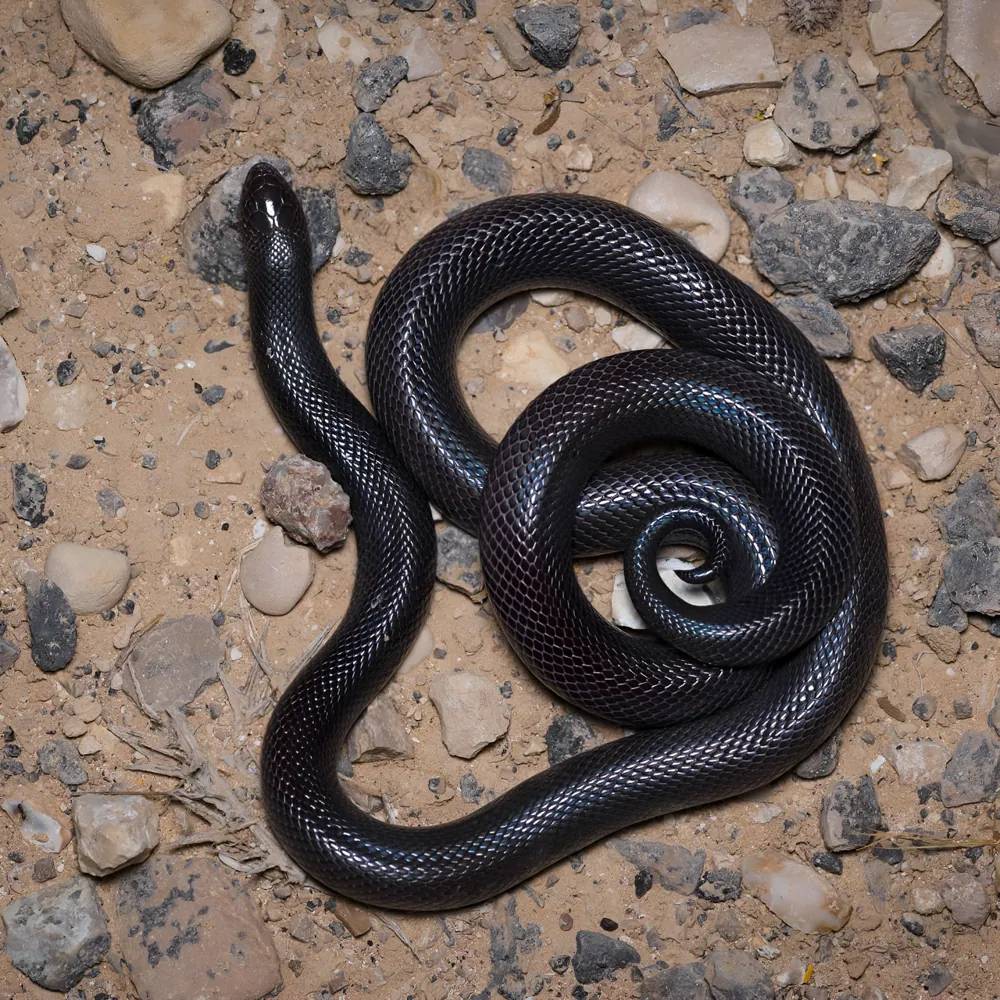
 Mmene ungaizindikirire
Mphamvu ya ululu
Ululu umatuluka kudzera m'mano ake ikaluma.
Ululu wake umachita chiyani?
Its venom contains three toxins called sarafotoxins, which act strongly on the heart. The venom affects the heart's electrical rhythm, causing an A-V block, which means the signal between the upper and lower chambers of the heart is interrupted. Death from very high doses is rapid and seems to result from effects on the nerves.1
Ndi yoopsa bwanji kwa anthu?
Ngozi kwa anthu: Yoopsa kwambiriIngathe kupha munthu amene sanalandire chithandizo.It is an extremely venomous snake. Bites are rare because it lives mostly in deserts and underground and is slow to react. Most people survive a bite with little or no lasting damage, even small children with proper treatment. Only 2 to 3 fatal cases have been recorded since its discovery in 1950, the most recent in 2002, when a man tried to capture a snake near his house.1
Imachita chiyani ikachita mantha?
When threatened, it rolls up with its tail raised and its head hidden under its body.1
 Ikaluma
- Sambitsa polumidwapo, munthuyo akhale wodekha ndipo peza thandizo la dokotala. Mitundu ina (monga boomslang) ingathe kupha patapita maola.
Nthawi zonse yamba wayimbira nambala yadzidzidzi (112, 000, 911). Awa ndi malangizo wamba a chithandizo choyamba, osati malangizo a dokotala. Zoyambira za chithandizo choyamba
 Khala wotetezeka
- Usakhudze, kugwira kapena kuseweretsa nyama yakuthengo, ngakhale yaing'ono, ndipo ngakhale ikuoneka ngati yagona kapena yafa.
- Ipatse malo. Ukakumana nayo, khala chete, bwerera m'mbuyo pang'onopang'ono ndipo uilole ipite njira yake.
- Ikakuluma: khala chete, usasunthe, imbira nambala yadzidzidzi (112, 000, 911) kapena pita kuchipatala mwachangu. Kumbukira m'mene inkaonekera, chithunzi chimathandiza.
Sikufuna kukuvulaza. Imagwiritsa ntchito ululu wake kugwira chakudya kapena kudziteteza, ndipo imakonda kwambiri kubisala. Zambiri za kukhala wotetezeka
Kuti padziko lapansi?
Ndi yaikulu bwanji?
Ndi yaitali bwanji?
 yaitali ngati amphaka apakhomo 1,5 mphuno ndi mchira motsatizana
 yaitali ngati nthochi 4 zoyalidwa motsatizana
 ingathamange mamita 100 m'masekondi 75 (munthu wothamanga kwambiri amafunika 9.6)
Israeli mole viper ndi yaikulu bwanji poyerekeza ndi IWE?
Ndi masamu chabe mu msakatuli wako. Palibe chomwe chimasungidwa kapena kutumizidwa kwina.
Imathamanga bwanji?


Mfundo
Its fangs can be turned to point outside its mouth, so it can stab sideways even with its mouth closed.1
Capturing this snake is dangerous, because it can bite sideways even when held by the head. Zoologist Heinrich Mendelssohn was bitten this way when he first captured one in 1944.1
There is currently no antivenom available for this snake.1
Its eggs are large compared with its body size and with snakes in general.1
It mates in July and August, which is late compared with other snakes and may point to a tropical origin.1
It is relatively non-aggressive and slow to react, even when disturbed.1
Za akatswiri a ululu
- Dzina la sayansi
- Atractaspis engaddensis
- Gulu
- Njoka za mano akumbuyo
- Banja
- Atractaspididae2
- Dongosolo
- Squamata
- Makontinenti
- Asia
- Ana akhanda
- Between the end of September and November, the female lays 2 to 3 large, elongated eggs, about 7.5 cm long, in humid conditions. The young hatch after about 3 months already equipped with venom.1
- Ngozi kwa anthu
- 4 / 5: Yoopsa kwambiri3
Kumene mfundo zimachokera
- Atractaspis engaddensis (Wikipedia (CC BY-SA 4.0))
- Atractaspis engaddensis (iNaturalist): mayina ndi magulu a sayansi.
- Venom Wiki: mlingo wa ngozi, kukula wamba ndi kuyerekeza kwa liwiro ndi zathu. Ona mmene timazipezera: Mmene timayezera ngozi.
Mfundo iliyonse patsamba lino ili ndi nambala yosonyeza kochokera. Ngati talakwitsa, pepani, ndife okonda nyama, osati magazini a sayansi. Tiuze pa [email protected] ndipo tikonza.
 Chinkhanira chili ndi njala! Venom Wiki ndi ntchito ya munthu mmodzi: yaulere, yopanda zotsatsa ndi zokutsatira. Mphatso yaing'ono imathandiza kuti ikhalebe pa intaneti.Dyetsa chinkhanira
Zina za gulu lomwelo: Njoka za mano akumbuyo
 Brown tree snakeNjoka za mano akumbuyoImangopweteka
 Tiger keelbackNjoka za mano akumbuyoIngathe kupha
 Red-necked keelbackNjoka za mano akumbuyoIkufuna dokotala
 Green cat snakeNjoka za mano akumbuyoImangopweteka
 Mangrove snakeNjoka za mano akumbuyoImangopweteka
 Asian vine snakeNjoka za mano akumbuyoYosavulaza
 Deathstalker
 Indian cobra
 Indian saw-scaled viper
 King cobra
 Puff adder
 Njoka ya Russell (Russell's viper)
.png)