
 Africa
 Asia
Asia Ulaya
Ulaya Amereka ya Kumwera
 Australia ndi Oceania
 Antarctica
 Nyanja ya Pacific
 Nyanja ya Atlantic
 Nyanja ya Indian
 Nyanja ya Arctic
 Nyanja ya Mediterranean
 Nyanja Yofiira
 Nyanja ya Caribbean
 Nyanja ya Coral
 Nyanja ya South China
 Nyanja ya Philippine
 Nyanja ya Andaman
 Nyanja ya Kumpoto (North Sea)
 Nyanja ya Timor ndi Arafura
 Nyanja ya Bengal
 Gulf ya California
Pinktoe tarantula
 Imaluma
The pinktoe tarantula is a large spider that lives in the rainforests of northern South America. It spends much of its life high in trees, where it hunts insects and small tree frogs. It is often seen as one of the gentlest tarantulas, and it is a popular pet for beginners.1



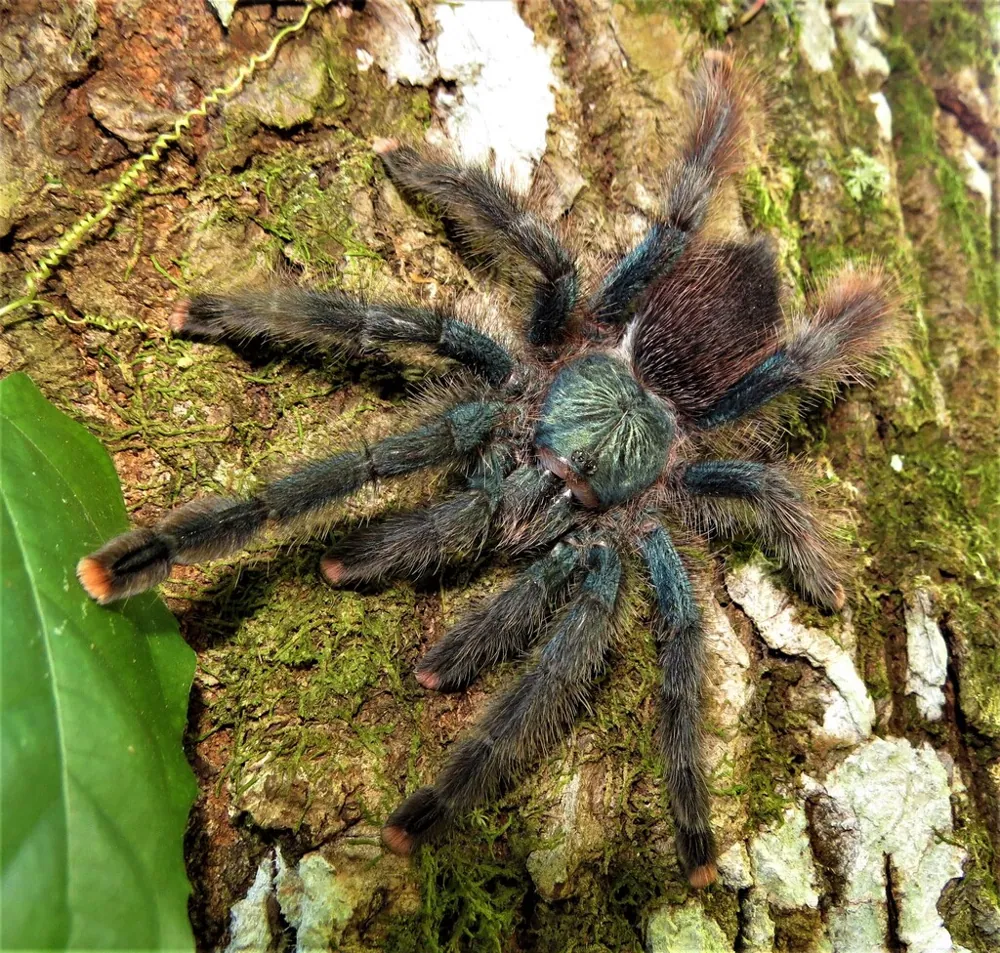
 Mmene ungaizindikirire
Mphamvu ya ululu
Ululu umatuluka kudzera m'mano ake ikaluma.
Ululu wake umachita chiyani?
The spider has a bite that injects venom. Its venom is considered mild, even compared with other New World tarantulas.1
Ndi yoopsa bwanji kwa anthu?
Ngozi kwa anthu: YofatsaNgati kulasidwa ndi njuchi kapena pang'ono kuposa pamenepo. Pafupifupi yosavulaza anthu.It is not very defensive, and it is considered one of the safest tarantulas to handle, although handling is still not recommended. Its venom is mild, so it is a much lower risk than more toxic tarantulas such as those in the genera Psalmopoeus and Poecilotheria.1
Imachita chiyani ikachita mantha?
When threatened it usually runs or leaps away, but it may adopt a threat posture, flick its faeces at the threat, or bite if provoked.1
 Ikaluma
- Sambitsa polumidwapo ndi kuziziritsa. Peza thandizo la dokotala ngati kupweteka kuli kwakukulu kapena munthuyo sakumva bwino.
Nthawi zonse yamba wayimbira nambala yadzidzidzi (112, 000, 911). Awa ndi malangizo wamba a chithandizo choyamba, osati malangizo a dokotala. Zoyambira za chithandizo choyamba
 Khala wotetezeka
- Usakhudze, kugwira kapena kuseweretsa nyama yakuthengo, ngakhale yaing'ono, ndipo ngakhale ikuoneka ngati yagona kapena yafa.
- Ipatse malo. Ukakumana nayo, khala chete, bwerera m'mbuyo pang'onopang'ono ndipo uilole ipite njira yake.
- Ikakuluma: khala chete, usasunthe, imbira nambala yadzidzidzi (112, 000, 911) kapena pita kuchipatala mwachangu. Kumbukira m'mene inkaonekera, chithunzi chimathandiza.
Sikufuna kukuvulaza. Imagwiritsa ntchito ululu wake kugwira chakudya kapena kudziteteza, ndipo imakonda kwambiri kubisala. Zambiri za kukhala wotetezeka
Kuti padziko lapansi?
Ndi yaikulu bwanji?
Ndi yaitali bwanji?
 yaitali ngati zidutswa zomangira zoseweretsa 5 pamzere
 ingathamange mamita 100 m'masekondi 220 (munthu wothamanga kwambiri amafunika 9.6)
Pinktoe tarantula ndi yaikulu bwanji poyerekeza ndi IWE?
Ndi masamu chabe mu msakatuli wako. Palibe chomwe chimasungidwa kapena kutumizidwa kwina.
Imathamanga bwanji?


Mfundo
Females of this species may eat males after mating, a behaviour called sexual cannibalism.1
Its urticating hairs, which can irritate skin, are released by direct contact rather than being kicked into the air.1
Adult males live about 2 to 3 years, while females live about 6 to 9 years.1
In captivity, the spider can build nests and tunnels using nearby debris when its enclosure is enriched.1
Mature males have a pair of hooks on the last segment of their pedipalps, which they use to build sperm webs and during courtship.1
Kuthetsa nthano zabodza
Nthano yabodza: Pinktoe tarantulas need high humidity to survive.
Zoona: Outdated advice says they need high humidity, but in captivity they should be kept on dry substrate with a water dish. Too much moisture and stagnant air can be fatal to them.1
Kumene mfundo zimachokera
- Avicularia avicularia (Wikipedia (CC BY-SA 4.0))
- Avicularia avicularia (iNaturalist): mayina ndi magulu a sayansi.
- Venom Wiki: mlingo wa ngozi, kukula wamba ndi kuyerekeza kwa liwiro ndi zathu. Ona mmene timazipezera: Mmene timayezera ngozi.
Mfundo iliyonse patsamba lino ili ndi nambala yosonyeza kochokera. Ngati talakwitsa, pepani, ndife okonda nyama, osati magazini a sayansi. Tiuze pa [email protected] ndipo tikonza.
 Chinkhanira chili ndi njala! Venom Wiki ndi ntchito ya munthu mmodzi: yaulere, yopanda zotsatsa ndi zokutsatira. Mphatso yaing'ono imathandiza kuti ikhalebe pa intaneti.Dyetsa chinkhanira
Zina za gulu lomwelo: Ma tarantula ndi funnel-web
 Goliath birdeaterMa tarantula ndi funnel-webImangopweteka
 Brazilian salmon pink birdeaterMa tarantula ndi funnel-webYosavulaza
 Chilean rose tarantulaMa tarantula ndi funnel-webYosavulaza
 Greenbottle blue tarantulaMa tarantula ndi funnel-webYosavulaza
 Brazilian funnel-web spiderMa tarantula ndi funnel-webIkufuna dokotala
 Burgundy goliath birdeaterMa tarantula ndi funnel-webImangopweteka
Imakhalanso ku: Amereka ya Kumwera
 Golden poison frogAchule a poizoni, achule a mphini (toads) ndi ma newtYakuphaUsakhudze
 TerciopeloNjoka za pit viperYakupha
 Brazilian wandering spiderAkangaudeIngathe kupha
 Eyelash viperNjoka za pit viperIngathe kupha
 Golden lanceheadNjoka za pit viperIngathe kupha
 South American bushmasterNjoka za pit viperIngathe kupha