
 Africa
 Asia
Asia Ulaya
Ulaya Amereka ya Kumwera
 Australia ndi Oceania
 Antarctica
 Nyanja ya Pacific
 Nyanja ya Atlantic
 Nyanja ya Indian
 Nyanja ya Arctic
 Nyanja ya Mediterranean
 Nyanja Yofiira
 Nyanja ya Caribbean
 Nyanja ya Coral
 Nyanja ya South China
 Nyanja ya Philippine
 Nyanja ya Andaman
 Nyanja ya Kumpoto (North Sea)
 Nyanja ya Timor ndi Arafura
 Nyanja ya Bengal
 Gulf ya California
Tadpole madtom
 Minga yaululu
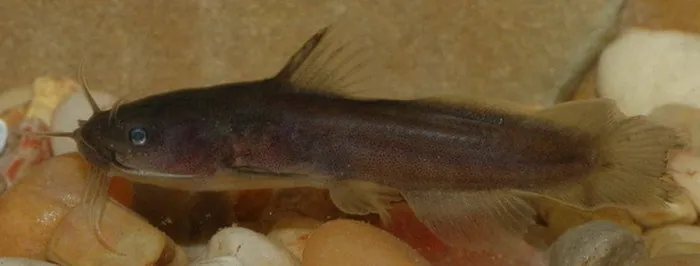
The tadpole madtom is a small freshwater fish that lives in slow, weedy waters in Canada and the United States. It has two spines near its chest that carry a venom, which it uses to defend itself from predators. Its name comes partly from its rounded tail fin, which makes it look a little like a tadpole.1



 Mmene ungaizindikirire
- Dark brown back with lighter brown sides and a yellow or white belly1
- A dark horizontal streak along each side, from bands of dark pigment on the jaws1
- A large, round tail fin that is joined to the small fin on its back, giving it a tadpole-like shape1
- Two spines on the pectoral (chest) fins, which carry venom1
Mphamvu ya ululu
Minga yakuthwa imanyamula ululu. Kuiponda kapena kuigwira kumapweteka.
Ululu wake umachita chiyani?
Two pectoral spines transmit an anti-predatory venom. The spines are used to deter predators that get stuck by them.1
Ndi yoopsa bwanji kwa anthu?
Ngozi kwa anthu: YopwetekaIngathe kupweteka kwambiri, koma pafupifupi nthawi zonse si vuto lalikulu.Imachita chiyani ikachita mantha?
When startled, it darts about in all directions, and it uses its venomous spines against predators.1
 Minga yake ikakubaya
- Ika bala m'madzi otentha, otentha monga momwe munthuyo angapirire osapsa (yesa ndi dzanja lako), kwa mphindi 30 mpaka 90. Peza thandizo la dokotala, makamaka pa stonefish ndi stingray.
Nthawi zonse yamba wayimbira nambala yadzidzidzi (112, 000, 911). Awa ndi malangizo wamba a chithandizo choyamba, osati malangizo a dokotala. Zoyambira za chithandizo choyamba
 Khala wotetezeka
- Usakhudze, kugwira kapena kuseweretsa nyama yakuthengo, ngakhale yaing'ono, ndipo ngakhale ikuoneka ngati yagona kapena yafa.
- Ipatse malo. Ukakumana nayo, khala chete, bwerera m'mbuyo pang'onopang'ono ndipo uilole ipite njira yake.
- Minga yake ikakubaya: khala chete, usasunthe, imbira nambala yadzidzidzi (112, 000, 911) kapena pita kuchipatala mwachangu. Kumbukira m'mene inkaonekera, chithunzi chimathandiza.
Sikufuna kukuvulaza. Imagwiritsa ntchito ululu wake kugwira chakudya kapena kudziteteza, ndipo imakonda kwambiri kubisala. Zambiri za kukhala wotetezeka
Kuti padziko lapansi?
Ndi yaikulu bwanji?
Ndi yaitali bwanji?
 yaitali ngati zidutswa zomangira zoseweretsa 4 pamzere
 ingasambire kutalika kwa dziwe lalikulu losambira (50 m) m'masekondi 47
Tadpole madtom ndi yaikulu bwanji poyerekeza ndi IWE?
Ndi masamu chabe mu msakatuli wako. Palibe chomwe chimasungidwa kapena kutumizidwa kwina.
Imathamanga bwanji?
Mfundo
It does not build a nest. It sometimes lays its eggs on submerged rubbish such as drink cans.1
Males sometimes use abandoned crayfish burrows as places to house eggs.1
Breeding males develop swollen lips and enlarged muscles on top of the head.1
Researchers in Wisconsin found that its stomach contents were about 44% insects and 28% small crustaceans.1
Kuthetsa nthano zabodza
Nthano yabodza: It is a tadpole.
Zoona: It is a fish. Its rounded tail fin gives it the appearance of a tadpole, which is where part of its name comes from.1
Za akatswiri a ululu
- Dzina la sayansi
- Noturus gyrinus
- Gulu
- Nsomba zaululu
- Banja
- Ictaluridae2
- Dongosolo
- Siluriformes
- Makontinenti
- Amereka ya Kumpoto
- Ana akhanda
- The female lays several clutches of 75 to 200 eggs during the breeding season, usually in June or July. The eggs are attached to solid objects such as rocks, logs or vegetation, and the male guards them until they hatch.1
- Mmene ilili kuthengo
- Secure in most areas. Critically endangered in Pennsylvania, and considered vulnerable in several other regions.1
- Ngozi kwa anthu
- 2 / 5: Yopweteka3
Kumene mfundo zimachokera
- Tadpole madtom (Wikipedia (CC BY-SA 4.0))
- Noturus gyrinus (iNaturalist): mayina ndi magulu a sayansi.
- Venom Wiki: mlingo wa ngozi, kukula wamba ndi kuyerekeza kwa liwiro ndi zathu. Ona mmene timazipezera: Mmene timayezera ngozi.
Mfundo iliyonse patsamba lino ili ndi nambala yosonyeza kochokera. Ngati talakwitsa, pepani, ndife okonda nyama, osati magazini a sayansi. Tiuze pa [email protected] ndipo tikonza.
 Chinkhanira chili ndi njala! Venom Wiki ndi ntchito ya munthu mmodzi: yaulere, yopanda zotsatsa ndi zokutsatira. Mphatso yaing'ono imathandiza kuti ikhalebe pa intaneti.Dyetsa chinkhanira
Zina za gulu lomwelo: Nsomba zaululu
 Channel catfish
 Brown bullhead
 Carolina madtom
 Margined madtom
 Stonecat
 Reef stonefish
Imakhalanso ku: Amereka ya Kumpoto
 TerciopeloNjoka za pit viperYakupha
 Eastern coral snakeNjoka za coralIngathe kupha
 Eastern diamondback rattlesnakeNjoka za rattlesnakeIngathe kupha
 Eyelash viperNjoka za pit viperIngathe kupha
 Timber rattlesnakeNjoka za rattlesnakeIngathe kupha
 Western diamondback rattlesnakeNjoka za rattlesnakeIngathe kupha