
 Africa
 Asia
Asia Ulaya
Ulaya Amereka ya Kumwera
 Australia ndi Oceania
 Antarctica
 Nyanja ya Pacific
 Nyanja ya Atlantic
 Nyanja ya Indian
 Nyanja ya Arctic
 Nyanja ya Mediterranean
 Nyanja Yofiira
 Nyanja ya Caribbean
 Nyanja ya Coral
 Nyanja ya South China
 Nyanja ya Philippine
 Nyanja ya Andaman
 Nyanja ya Kumpoto (North Sea)
 Nyanja ya Timor ndi Arafura
 Nyanja ya Bengal
 Gulf ya California
Tiger rattlesnake
 Imaluma
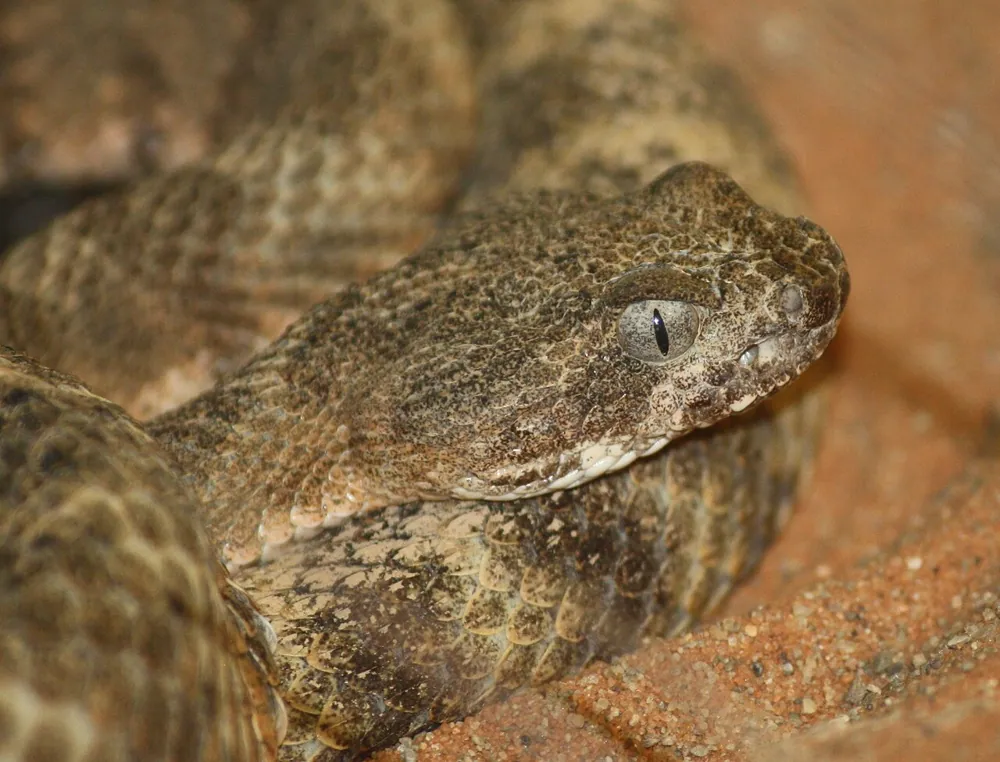
The tiger rattlesnake is a small rattlesnake with a very venomous bite. It lives in the deserts and rocky hills of the southwestern United States and northwestern Mexico. Its venom is among the most toxic of any rattlesnake, so it is important to recognise it and give the right first aid after a bite.1



 Mmene ungaizindikirire
- It has a small, spade-shaped head. It is the smallest head of any rattlesnake, and it is about 1/25 of its total body length.1
- It has 35 to 52 narrow gray, olive or brown crossbands along the back. These are the only crossbands on the front part of a rattlesnake's body, and they can look like vertical stripes from the side.1
- The ground colour is gray, lavender, blue-gray, pink or buff, and it often turns pink, pale orange or cream on the sides.1
- A dark cheek strip is the most distinct mark on the head.1
- It has a large rattle.1
Mphamvu ya ululu
Ululu umatuluka kudzera m'mano ake ikaluma.
Ululu wake umachita chiyani?
Its venom contains a myotoxin, which damages muscle tissue and can cause muscle necrosis (death of muscle cells). It also contains a neurotoxin, which attacks the nerves and is similar to Mojave toxin. In recorded human bites, there was little local pain or swelling, and no significant whole-body (systemic) symptoms.1
Ndi yoopsa bwanji kwa anthu?
Ngozi kwa anthu: YoopsaKulumidwa kumafuna dokotala. Imfa ndi zosowa kwambiri.Human bites by this snake are infrequent, and few cases have been recorded. Its venom is very toxic, but its low venom yield and short fangs probably prevent severe envenoming in adults. The clinical picture could be much more serious for children or for people of slight build.1
 Nkhani yabwino: madokotala ali ndi mankhwala (antivenom) kapena chithandizo cha ichi.1
Imachita chiyani ikachita mantha?
If disturbed, it rapidly shakes its rattle and may strike in defence, and it has an irascible (easily angered) temperament.1
 Ikaluma
- Early use of antivenom is important if significant envenoming is suspected. Get medical help straight away after any bite, even if the bite seems mild.1
- Munthuyo akhale chete ndi wodekha, chiwalo cholumidwacho chikhale pamlingo wa mtima, chotsa mphete ndi zinthu zothina, ndipo mufikitse kuchipatala mwachangu.
Nthawi zonse yamba wayimbira nambala yadzidzidzi (112, 000, 911). Awa ndi malangizo wamba a chithandizo choyamba, osati malangizo a dokotala. Zoyambira za chithandizo choyamba
 Khala wotetezeka
- Usakhudze, kugwira kapena kuseweretsa nyama yakuthengo, ngakhale yaing'ono, ndipo ngakhale ikuoneka ngati yagona kapena yafa.
- Ipatse malo. Ukakumana nayo, khala chete, bwerera m'mbuyo pang'onopang'ono ndipo uilole ipite njira yake.
- Ikakuluma: khala chete, usasunthe, imbira nambala yadzidzidzi (112, 000, 911) kapena pita kuchipatala mwachangu. Kumbukira m'mene inkaonekera, chithunzi chimathandiza.
Sikufuna kukuvulaza. Imagwiritsa ntchito ululu wake kugwira chakudya kapena kudziteteza, ndipo imakonda kwambiri kubisala. Zambiri za kukhala wotetezeka
Kuti padziko lapansi?
Ndi yaikulu bwanji?
Ndi yaitali bwanji?
Ndi yolemera bwanji?
 yaitali ngati amphaka apakhomo 2 mphuno ndi mchira motsatizana
 yaitali ngati nthochi 5 zoyalidwa motsatizana
 ingathamange mamita 100 m'masekondi 100 (munthu wothamanga kwambiri amafunika 9.6)
Tiger rattlesnake ndi yaikulu bwanji poyerekeza ndi IWE?
Ndi masamu chabe mu msakatuli wako. Palibe chomwe chimasungidwa kapena kutumizidwa kwina.
Imathamanga bwanji?


Mfundo
Its venom yield is small, but its toxicity is considered second highest of all rattlesnake venoms, after the Mojave rattlesnake.1
It has the smallest head of any rattlesnake, which helps it reach into small crevices to pull out prey that has crawled into them.1
Although it is a ground-dweller, it swims readily and has been found in bushes about 60 cm above the ground.1
Rattlesnake venom is used in biomedical research into neurological diseases.1
It is nocturnal during the hot summer, but becomes active during the day and at dusk in the autumn.1
Kuthetsa nthano zabodza
Nthano yabodza: Its small head and short fangs mean its bite is harmless.
Zoona: Its venom is very toxic. Its small size and low venom yield probably prevent severe harm in adults, but children and slightly built people could be seriously affected.1
Za akatswiri a ululu
- Dzina la sayansi
- Crotalus tigris
- Gulu
- Njoka za rattlesnake
- Banja
- Viperidae2
- Dongosolo
- Squamata
- Makontinenti
- Amereka ya Kumpoto
- Ana akhanda
- It gives birth to live young, with an average litter of five. The young develop inside eggs in a thin sac in the mother's body, and they are well developed at birth.1
- Mmene ilili kuthengo
- Least Concern1
- Ngozi kwa anthu
- 3 / 5: Yoopsa3
Kumene mfundo zimachokera
- Tiger rattlesnake (Wikipedia (CC BY-SA 4.0))
- Crotalus tigris (iNaturalist): mayina ndi magulu a sayansi.
- Venom Wiki: mlingo wa ngozi, kukula wamba ndi kuyerekeza kwa liwiro ndi zathu. Ona mmene timazipezera: Mmene timayezera ngozi.
Mfundo iliyonse patsamba lino ili ndi nambala yosonyeza kochokera. Ngati talakwitsa, pepani, ndife okonda nyama, osati magazini a sayansi. Tiuze pa [email protected] ndipo tikonza.
 Chinkhanira chili ndi njala! Venom Wiki ndi ntchito ya munthu mmodzi: yaulere, yopanda zotsatsa ndi zokutsatira. Mphatso yaing'ono imathandiza kuti ikhalebe pa intaneti.Dyetsa chinkhanira
Zina za gulu lomwelo: Njoka za rattlesnake
 Eastern diamondback rattlesnakeNjoka za rattlesnakeIngathe kupha
 Timber rattlesnakeNjoka za rattlesnakeIngathe kupha
 Western diamondback rattlesnakeNjoka za rattlesnakeIngathe kupha
 SidewinderNjoka za rattlesnakeIkufuna dokotala
 Mojave rattlesnakeNjoka za rattlesnakeIngathe kupha
 Aruba rattlesnakeNjoka za rattlesnakeIkufuna dokotala
 Terciopelo
 Eastern coral snake
 Eyelash viper
 Arizona bark scorpion
 Brown recluse
 Cane toad