
 Afurika
 Aziya
Aziya Uburayi
 Amerika y'Amajyepfo
 Ositaraliya na Oseyaniya
 Antaragitika
 Inyanja ya Pasifika
 Inyanja ya Atalantika
 Inyanja y'Abahinde
 Inyanja ya Arigitika
 Inyanja ya Mediterane
 Inyanja Itukura
 Inyanja ya Karayibe
 Inyanja ya Korali
 Inyanja y'Amajyepfo y'u Bushinwa
 Inyanja ya Filipine
 Inyanja ya Andamani
 Inyanja y'Amajyaruguru
 Inyanja ya Timor na Arafura
 Ikigobe cya Bengali
 Ikigobe cya Kaliforuniya
Black-necked spitting cobra
 Itera cyangwa icira
The black-necked spitting cobra is a venomous snake found mostly in sub-Saharan Africa. It can squirt venom from its fangs at a threat, and that venom can cause permanent blindness if it gets into the eyes. Its colours vary a lot from place to place.1



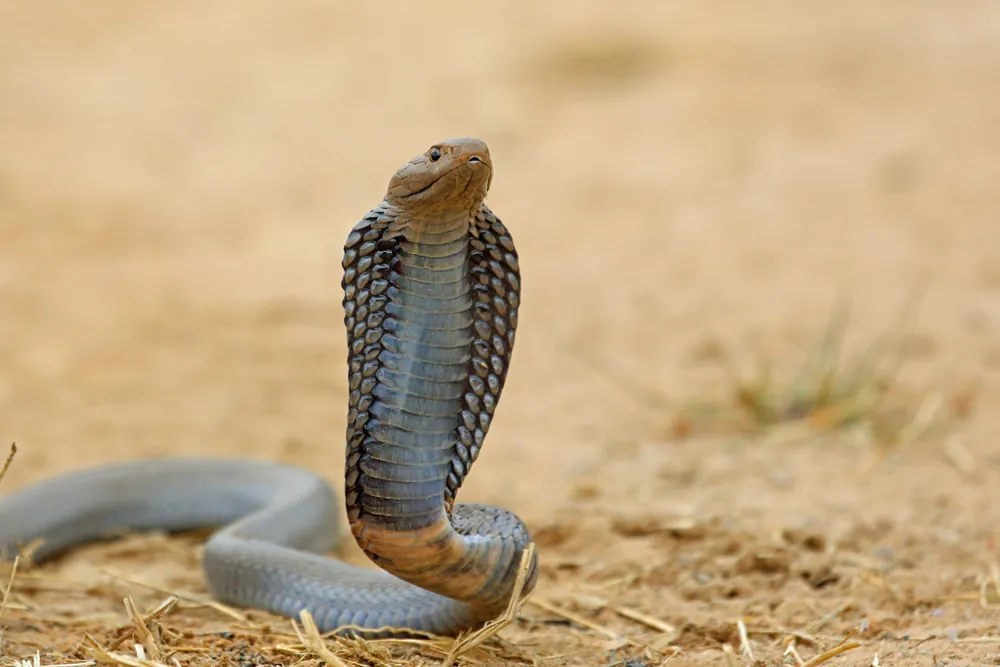
 Uko wayimenya
- Moderately sized, with a moderately distinct head, and grows to 1.2 to 2.2 metres.1
- Many specimens have a broad black neck band, often with an orange or pinkish bar on the neck.1
- Colours vary by region: black or pale grey, yellowish-brown, deep reddish-brown, olive brown, striped black and white, or totally white with dark eyes.1
- Some have a yellow or reddish belly, while others lack the neck bands and belly colour.1
Imbaraga z'ubumara
Itera cyangwa icira abayitera amazi aryana.
Ubumara bwayo bukora iki?
Its venom is mostly cytotoxic, meaning it destroys cells, and it also has typical elapid neurotoxic (nerve-attacking) effects and cardiotoxic (heart-damaging) components. A bite causes severe bleeding from the wound, tissue death around the bite, and difficulty breathing. Venom in the eyes causes extreme burning pain, loss of coordination, partial loss of vision, and permanent blindness.1
Iteje akaga kangana iki ku bantu?
Akaga ku bantu: Iteje akaga cyaneIshobora kwica umuntu utavuwe.Its venom is medically significant. The death rate for untreated bites is about 5 to 10%, and under 1% in areas where it is common. When death occurs, it is usually from paralysis of the diaphragm, the muscle used for breathing.1
Ikora iki iyo ifite ubwoba?
It spits venom from its fangs at a threat, reaching up to 7 metres with good accuracy. It also bites readily, even with only slight provocation.1
 Niba iruma cyangwa icira ubumara
- If venom gets into the eyes, it should be washed off, because permanent blindness can follow if it is not. Anyone bitten should get medical treatment, as untreated bites carry a much higher risk of death.1
- Umuntu agume atanyeganyega kandi atuje, mukuremo impeta n'ibindi bintu bifashe cyane, kandi mujye ku bitaro vuba: umuti urwanya ubumara (antivenom) ni wo muti.
- Niba ubumara bwaciriwe mu maso, yoze ako kanya ukoresheje amazi menshi meza.
Buri gihe banza uhamagare nimero y'ubutabazi (112, 000, 911). Izi ni inama rusange z'ubutabazi bw'ibanze, si inama za muganga. Ibanze by'ubutabazi bw'ibanze
 Irinde akaga
- Ntuzigere ukora, ufata cyangwa ushotora inyamaswa yo mu gasozi, nubwo yaba ntoya, kandi nubwo yasa n'isinziriye cyangwa yapfuye.
- Yihe umwanya. Niba uhuye n'imwe, tuza, usubire inyuma buhoro buhoro kandi uyireke yigendere.
- Niba imwe ikurumye cyangwa ikagucira ubumara mu maso: tuza, ntunyeganyege, hamagara nimero y'ubutabazi (112, 000, 911) cyangwa ujye ku bitaro vuba. Ibuka uko yasaga, ifoto irafasha.
Ntigushakisha ngo ikugirire nabi. Ikoresha ubumara bwayo kugira ngo ifate ibyo kurya cyangwa yirinde, kandi ikunda cyane kwihisha. Ibindi ku kwirinda
Ingana gute?
Ireshya ite?
 ireshya n'injangwe zo mu rugo 4 zikurikiranye kuva ku zuru kugeza ku murizo
 ireshya n'imineke 12 ikurikiranye
 yakwiruka metero 100 mu masegonda 46 (umuntu wihuta kurusha abandi akenera 9,6)
Black-necked spitting cobra ingana ite ugereranyije NAWE?
Ni imibare gusa ikorerwa muri mudasobwa yawe. Nta kintu kibikwa cyangwa cyoherezwa ahandi.
Yihuta gute?


Ibintu by'ukuri
It can spit venom accurately more than 7 metres away.1
In 1944, a British eye surgeon, Major Harold Ridley, described eye damage from a spit from this cobra in Ghana. He treated the man and followed his case until the eye fully recovered.1
A single bite can deliver 200 to 350 mg of venom (dry weight), according to a 1974 study by Minton.1
It is an excellent tree climber and can live in trees at times.1
Wild-caught individuals tend to be nervous and spit readily, while captive-bred animals are much calmer.1
It can be active at night or during the day, depending on the season, location and temperature.1
Usenya ibinyoma
Ikinyoma: Spitting cobras only spit venom and do not bite.
Ukuri: The black-necked spitting cobra also bites, and it will do so with only slight provocation.1
Ku bahanga mu by'ubumara
- Izina rya siyansi
- Naja nigricollis
- Itsinda
- Cobra, mamba na krait
- Umuryango
- Elapidae2
- Itsinda rinini (order)
- Squamata
- Imigabane
- Afurika
- Abana bato
- Females usually lay 10 to 15 eggs, though they can lay between 8 and 22. The young are about 20 to 25 cm long at birth and are fully independent.1
- Akaga ku bantu
- 4 / 5: Iteje akaga cyane3
Aho ibintu bivugwa bituruka
- Black-necked spitting cobra (Wikipedia (CC BY-SA 4.0))
- Naja nigricollis (iNaturalist): amazina n'ibyiciro.
- Venom Wiki: urwego rw'akaga, ingano isanzwe n'ikigereranyo cy'umuvuduko ni ibyacu bwite. Reba uko tubibara: Uko tugena akaga.
Buri kintu kivugwa kuri iyi paji gifite nimero yerekana aho cyavuye. Niba twibeshye, tubabarire, turi abakunzi b'inyamaswa, ntituri ikinyamakuru cya siyansi. Tubwire kuri [email protected] tuzabikosora.
 Sikorupiyo irashonje! Venom Wiki ni umushinga w'umuntu umwe: ni ubuntu, nta matangazo kandi nta bikurikirana abantu. Impano ntoya ifasha kugira ngo ikomeze kuboneka kuri interineti.Gaburira sikorupiyo
 Black mamba
 Egyptian cobra
 Cape cobra
 Eastern green mamba
 Jameson's mamba
 Western green mamba
 Deathstalker
 Puff adder
 Boomslang
 Fat-tailed scorpion
 Gaboon viper
 Western honey bee