
 Afurika
 Aziya
Aziya Uburayi
 Amerika y'Amajyepfo
 Ositaraliya na Oseyaniya
 Antaragitika
 Inyanja ya Pasifika
 Inyanja ya Atalantika
 Inyanja y'Abahinde
 Inyanja ya Arigitika
 Inyanja ya Mediterane
 Inyanja Itukura
 Inyanja ya Karayibe
 Inyanja ya Korali
 Inyanja y'Amajyepfo y'u Bushinwa
 Inyanja ya Filipine
 Inyanja ya Andamani
 Inyanja y'Amajyaruguru
 Inyanja ya Timor na Arafura
 Ikigobe cya Bengali
 Ikigobe cya Kaliforuniya
Eastern green mamba
 Iraruma
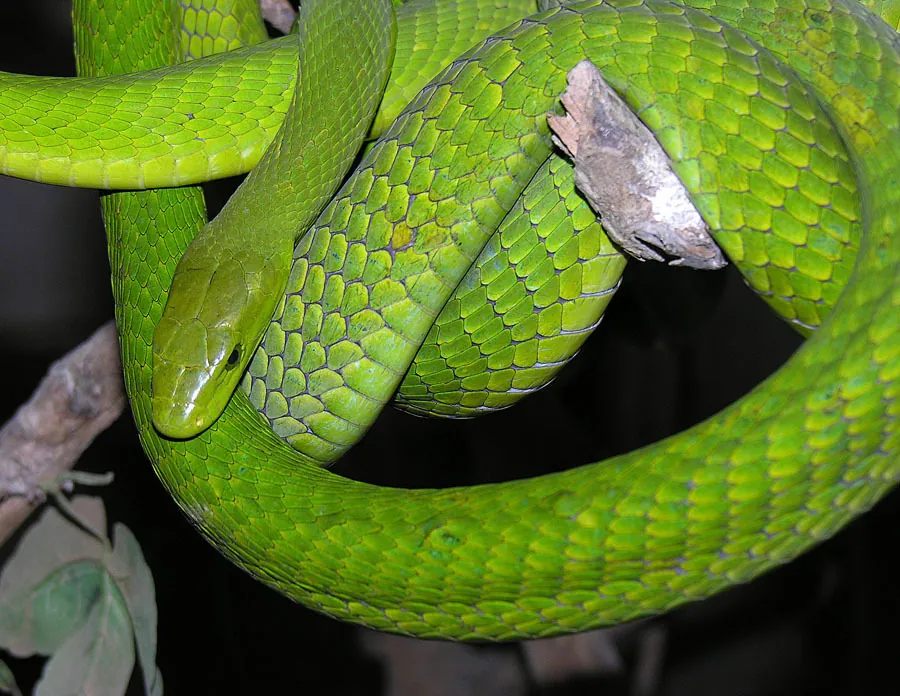
The eastern green mamba is a highly venomous snake with a slender body and bright green back. It lives in trees along the coasts of southern and East Africa. Although it is one of the most common green mambas, it is shy and usually hidden in leaves, so it is rarely seen.1



 Uko wayimenya
- Bright green upperparts, sometimes with a few isolated yellow scales.1
- Pale yellow-green belly.1
- Juveniles are blue-green and turn bright green at about 75 cm long.1
- Long, slender, coffin-shaped head. It can flatten its neck into a slight hood when threatened.1
- The inside of the mouth is white or bluish-white.1
Ikunze kwitiranywa na: Green forms of the boomslang are often called green mambas in Southern Africa. They have larger eyes and shorter heads. Green bush snakes of the genus Philothamnus are often confused with smaller eastern green mambas. The boomslang is also venomous.1
Imbaraga z'ubumara
Ubumara busohokera mu menyo yayo y'ubumara cyangwa mu yandi menyo iyo iriye.
Ubumara bwayo bukora iki?
Its venom contains neurotoxins, which attack the nerves, and cardiotoxins, which damage the heart. Symptoms include swelling at the bite, dizziness, nausea, dehydration, laboured breathing and difficulty swallowing. These can progress to irregular heartbeat, convulsions and respiratory paralysis, which stops breathing and can be fatal. Paralysis may be mild or absent.1
Iteje akaga kangana iki ku bantu?
Akaga ku bantu: YicaImwe mu nyamaswa ziteje akaga kurusha izindi ku isi.A survey in southern Africa from 1957 to 1979 recorded 17 bites confirmed as eastern green mambas. Ten of these caused systemic envenomation, and no victims died. Bites are most common from September to February, the breeding season, when the snake is most irritable. The average dose able to kill a human is about 18 to 20 mg of venom, and one bite can deliver 60 to 95 mg (dry weight). In 2024, a YouTuber died after being bitten, following anaphylactic shock.1
Ikora iki iyo ifite ubwoba?
It is shy and avoids people and predators, attacking only when it feels threatened, and it can flatten its neck into a hood.1
 Niba iruma
- Severe bites must be treated immediately on site, as they can quickly prove deadly.1
- Umuntu agume atanyeganyega kandi atuje, mukuremo impeta n'ibindi bintu bifashe cyane, kandi mujye ku bitaro vuba: umuti urwanya ubumara (antivenom) ni wo muti.
Buri gihe banza uhamagare nimero y'ubutabazi (112, 000, 911). Izi ni inama rusange z'ubutabazi bw'ibanze, si inama za muganga. Ibanze by'ubutabazi bw'ibanze
 Irinde akaga
- Ntuzigere ukora, ufata cyangwa ushotora inyamaswa yo mu gasozi, nubwo yaba ntoya, kandi nubwo yasa n'isinziriye cyangwa yapfuye.
- Yihe umwanya. Niba uhuye n'imwe, tuza, usubire inyuma buhoro buhoro kandi uyireke yigendere.
- Niba imwe ikurumye: tuza, ntunyeganyege, hamagara nimero y'ubutabazi (112, 000, 911) cyangwa ujye ku bitaro vuba. Ibuka uko yasaga, ifoto irafasha.
Ntigushakisha ngo ikugirire nabi. Ikoresha ubumara bwayo kugira ngo ifate ibyo kurya cyangwa yirinde, kandi ikunda cyane kwihisha. Ibindi ku kwirinda
Ingana gute?
Ireshya ite?
 ireshya n'imbwa 2,5 zikurikiranye kuva ku zuru kugeza ku murizo
 ireshya n'imineke 14 ikurikiranye
 yakwiruka metero 100 mu masegonda 43 (umuntu wihuta kurusha abandi akenera 9,6)
Eastern green mamba ingana ite ugereranyije NAWE?
Ni imibare gusa ikorerwa muri mudasobwa yawe. Nta kintu kibikwa cyangwa cyoherezwa ahandi.
Yihuta gute?


Ibintu by'ukuri
Males fight each other during the breeding season, usually entwining and pushing to pin each other's heads down. These fights can last several hours, but the snakes do not bite each other.1
Unlike most elapid snakes, which hunt actively, it often waits in ambush for its prey, a style more common among vipers.1
On average, an individual moves only about 5.4 metres per day, and it can stay in the same place for days.1
It has the least toxic venom of the three green mamba species, but it is still highly venomous.1
The oldest recorded eastern green mamba was a captive snake that lived 18.8 years.1
Usenya ibinyoma
Ikinyoma: It is an aggressive, fast-moving 'people-chaser'.
Ukuri: It is shy and elusive, usually hidden in trees, and it generally avoids people. It attacks only when it feels threatened.1
Ku bahanga mu by'ubumara
- Izina rya siyansi
- Dendroaspis angusticeps
- Itsinda
- Cobra, mamba na krait
- Umuryango
- Elapidae2
- Itsinda rinini (order)
- Squamata
- Imigabane
- Afurika
- Abana bato
- The female lays 4 to 17 eggs, usually 10 to 15, in leaf litter in hollow trees, from October to November. The young measure about 30 to 45 cm in the wild.1
- Igihe ibaho
- hafi imyaka 18,81
- Akaga ku bantu
- 5 / 5: Yica3
Aho ibintu bivugwa bituruka
- Eastern green mamba (Wikipedia (CC BY-SA 4.0))
- Dendroaspis angusticeps (iNaturalist): amazina n'ibyiciro.
- Venom Wiki: urwego rw'akaga, ingano isanzwe n'ikigereranyo cy'umuvuduko ni ibyacu bwite. Reba uko tubibara: Uko tugena akaga.
Buri kintu kivugwa kuri iyi paji gifite nimero yerekana aho cyavuye. Niba twibeshye, tubabarire, turi abakunzi b'inyamaswa, ntituri ikinyamakuru cya siyansi. Tubwire kuri [email protected] tuzabikosora.
 Sikorupiyo irashonje! Venom Wiki ni umushinga w'umuntu umwe: ni ubuntu, nta matangazo kandi nta bikurikirana abantu. Impano ntoya ifasha kugira ngo ikomeze kuboneka kuri interineti.Gaburira sikorupiyo
 Black mamba
 Egyptian cobra
 Cape cobra
 Jameson's mamba
 Western green mamba
 Ashe's spitting cobra
 Deathstalker
 Puff adder
 Boomslang
 Fat-tailed scorpion
 Gaboon viper
 Western honey bee