
 Afurika
 Aziya
Aziya Uburayi
 Amerika y'Amajyepfo
 Ositaraliya na Oseyaniya
 Antaragitika
 Inyanja ya Pasifika
 Inyanja ya Atalantika
 Inyanja y'Abahinde
 Inyanja ya Arigitika
 Inyanja ya Mediterane
 Inyanja Itukura
 Inyanja ya Karayibe
 Inyanja ya Korali
 Inyanja y'Amajyepfo y'u Bushinwa
 Inyanja ya Filipine
 Inyanja ya Andamani
 Inyanja y'Amajyaruguru
 Inyanja ya Timor na Arafura
 Ikigobe cya Bengali
 Ikigobe cya Kaliforuniya
Cape cobra
 Iraruma
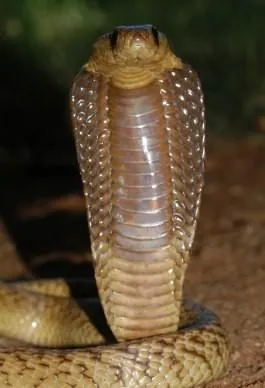
The Cape cobra is a medium-sized, highly venomous cobra. It lives in many kinds of land across southern Africa, and it often comes close to people. It is regarded as one of the most dangerous cobras in all of Africa.1



 Uko wayimenya
- Colour ranges from yellow through golden brown and dark brown to black.1
- Many individuals have black or pale stippling and blotches.1
- Juveniles have a dark throat that continues down the belly.1
- Adults are typically 1.2 to 1.4 m long.1
- When threatened, it raises the front of its body and spreads a broad hood.1
Ikunze kwitiranywa na: Juvenile Cape cobras have dark throats, which often leads people to confuse them with the rinkhals, a spitting cobra. The dark throat fades during the first year or two of life.1
Imbaraga z'ubumara
Ubumara busohokera mu menyo yayo y'ubumara cyangwa mu yandi menyo iyo iriye.
Ubumara bwayo bukora iki?
Its venom is thick and syrupy, and contains potent neurotoxins that act on the nerves, and possibly cardiotoxins that affect the heart. The venom can affect the respiratory system, nervous system and heart. When death occurs, it normally takes one to ten hours, or more, and is often caused by respiratory failure due to paralysis.1
Iteje akaga kangana iki ku bantu?
Akaga ku bantu: YicaImwe mu nyamaswa ziteje akaga kurusha izindi ku isi.It is regarded as one of the most dangerous cobras in Africa because of its potent venom and its frequent presence around houses. The mortality rate for untreated bites is not exactly known, but is thought to be high, around 50%. Outcomes depend on factors such as the amount of venom injected and the bitten person's state of mind.1
 Inkuru nziza: abaganga bafite umuti (umuti urwanya ubumara, antivenom) cyangwa uburyo bwo kuvura ibi.1
Ikora iki iyo ifite ubwoba?
When threatened, it raises its forebody, spreads a broad hood, may hiss loudly and strikes readily.1
 Niba iruma
- Mechanical ventilation (a machine that helps the person breathe) and symptom management are often enough to save a life. Serious cases need antivenom, which is a polyvalent antivenom produced by the South African Institute of Medical Research.1
- Umuntu agume atanyeganyega kandi atuje, mukuremo impeta n'ibindi bintu bifashe cyane, kandi mujye ku bitaro vuba: umuti urwanya ubumara (antivenom) ni wo muti.
Buri gihe banza uhamagare nimero y'ubutabazi (112, 000, 911). Izi ni inama rusange z'ubutabazi bw'ibanze, si inama za muganga. Ibanze by'ubutabazi bw'ibanze
 Irinde akaga
- Ntuzigere ukora, ufata cyangwa ushotora inyamaswa yo mu gasozi, nubwo yaba ntoya, kandi nubwo yasa n'isinziriye cyangwa yapfuye.
- Yihe umwanya. Niba uhuye n'imwe, tuza, usubire inyuma buhoro buhoro kandi uyireke yigendere.
- Niba imwe ikurumye: tuza, ntunyeganyege, hamagara nimero y'ubutabazi (112, 000, 911) cyangwa ujye ku bitaro vuba. Ibuka uko yasaga, ifoto irafasha.
Ntigushakisha ngo ikugirire nabi. Ikoresha ubumara bwayo kugira ngo ifate ibyo kurya cyangwa yirinde, kandi ikunda cyane kwihisha. Ibindi ku kwirinda
Ingana gute?
Ireshya ite?
 ireshya n'injangwe zo mu rugo 3 zikurikiranye kuva ku zuru kugeza ku murizo
 ireshya n'imineke 9 ikurikiranye
 yakwiruka metero 100 mu masegonda 48 (umuntu wihuta kurusha abandi akenera 9,6)
Cape cobra ingana ite ugereranyije NAWE?
Ni imibare gusa ikorerwa muri mudasobwa yawe. Nta kintu kibikwa cyangwa cyoherezwa ahandi.
Yihuta gute?


Ibintu by'ukuri
Aho ibintu bivugwa bituruka
- Cape cobra (Wikipedia (CC BY-SA 4.0))
- Naja nivea (iNaturalist): amazina n'ibyiciro.
- Venom Wiki: urwego rw'akaga, ingano isanzwe n'ikigereranyo cy'umuvuduko ni ibyacu bwite. Reba uko tubibara: Uko tugena akaga.
Buri kintu kivugwa kuri iyi paji gifite nimero yerekana aho cyavuye. Niba twibeshye, tubabarire, turi abakunzi b'inyamaswa, ntituri ikinyamakuru cya siyansi. Tubwire kuri [email protected] tuzabikosora.
 Sikorupiyo irashonje! Venom Wiki ni umushinga w'umuntu umwe: ni ubuntu, nta matangazo kandi nta bikurikirana abantu. Impano ntoya ifasha kugira ngo ikomeze kuboneka kuri interineti.Gaburira sikorupiyo
 Black mamba
 Egyptian cobra
 Eastern green mamba
 Jameson's mamba
 Western green mamba
 Ashe's spitting cobra
 Deathstalker
 Puff adder
 Boomslang
 Fat-tailed scorpion
 Gaboon viper
 Western honey bee