
 Afurika
 Aziya
Aziya Uburayi
 Amerika y'Amajyepfo
 Ositaraliya na Oseyaniya
 Antaragitika
 Inyanja ya Pasifika
 Inyanja ya Atalantika
 Inyanja y'Abahinde
 Inyanja ya Arigitika
 Inyanja ya Mediterane
 Inyanja Itukura
 Inyanja ya Karayibe
 Inyanja ya Korali
 Inyanja y'Amajyepfo y'u Bushinwa
 Inyanja ya Filipine
 Inyanja ya Andamani
 Inyanja y'Amajyaruguru
 Inyanja ya Timor na Arafura
 Ikigobe cya Bengali
 Ikigobe cya Kaliforuniya
Indian ornamental tarantula
 Iraruma
The Indian ornamental tarantula is a large spider that lives high in trees in southeastern India. It is known for its striking patterned body and is a popular spider among tarantula keepers. It has a medically significant bite, though no death from any tarantula bite has ever been recorded.1

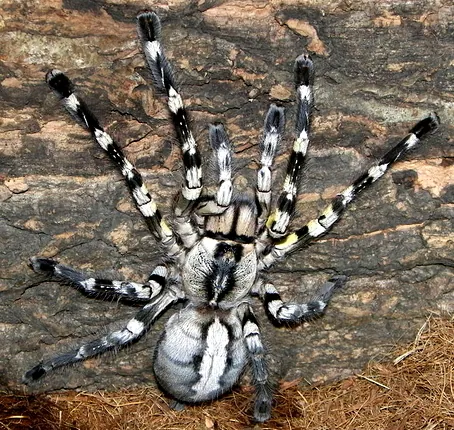
 Uko wayimenya
Imbaraga z'ubumara
Ubumara busohokera mu menyo yayo y'ubumara cyangwa mu yandi menyo iyo iriye.
Ubumara bwayo bukora iki?
The venom may cause intense pain. This is judged from the experience of keepers bitten by other spiders in the same genus, so the exact effects are not fully known for this species. The large fangs also make puncture wounds that can become infected.1
Iteje akaga kangana iki ku bantu?
Akaga ku bantu: IkomeyeKurumwa na yo bisaba kujya kwa muganga. Abapfa ni bake cyane.No death has ever been recorded from any tarantula bite. The species is still considered to have a medically significant bite. It generally prefers flight to fight but may attack when cornered.1
Ikora iki iyo ifite ubwoba?
It tends to be quite defensive, and may attack when cornered, though it generally prefers to escape.1
 Niba iruma
- Bites need proper treatment, because the fang punctures can lead to a secondary bacterial infection if they are not treated properly.1
- Oza aho yarumye kandi uhakonjeshe. Shaka ubufasha bwa muganga niba ububabare bukabije cyangwa umuntu yumva atameze neza.
Buri gihe banza uhamagare nimero y'ubutabazi (112, 000, 911). Izi ni inama rusange z'ubutabazi bw'ibanze, si inama za muganga. Ibanze by'ubutabazi bw'ibanze
 Irinde akaga
- Ntuzigere ukora, ufata cyangwa ushotora inyamaswa yo mu gasozi, nubwo yaba ntoya, kandi nubwo yasa n'isinziriye cyangwa yapfuye.
- Yihe umwanya. Niba uhuye n'imwe, tuza, usubire inyuma buhoro buhoro kandi uyireke yigendere.
- Niba imwe ikurumye: tuza, ntunyeganyege, hamagara nimero y'ubutabazi (112, 000, 911) cyangwa ujye ku bitaro vuba. Ibuka uko yasaga, ifoto irafasha.
Ntigushakisha ngo ikugirire nabi. Ikoresha ubumara bwayo kugira ngo ifate ibyo kurya cyangwa yirinde, kandi ikunda cyane kwihisha. Ibindi ku kwirinda
Ingana gute?
Ireshya ite?
 ireshya n'ibice 6 by'ibikinisho byo kubaka biri ku murongo
 yakwiruka metero 100 mu masegonda 190 (umuntu wihuta kurusha abandi akenera 9,6)
Indian ornamental tarantula ingana ite ugereranyije NAWE?
Ni imibare gusa ikorerwa muri mudasobwa yawe. Nta kintu kibikwa cyangwa cyoherezwa ahandi.
Yihuta gute?


Ibintu by'ukuri
No case of anaphylactic shock, a severe allergic reaction, has ever been reported from tarantula venom.1
Some individuals of this genus live communally when territory is limited, sharing a tree with several holes.1
Females can live upwards of 12 years, while males usually live only 3 to 5 years.1
In captivity, it is usually fed crickets and grasshoppers, and adults can occasionally be fed small rodents.1
It is one of the most popular arboreal tarantulas among amateur collectors.1
Usenya ibinyoma
Ikinyoma: Tarantula bites are always deadly.
Ukuri: No death has ever been recorded from any tarantula bite, although the bite of this species can still be medically significant and cause intense pain.1
Aho ibintu bivugwa bituruka
- Poecilotheria regalis (Wikipedia (CC BY-SA 4.0))
- Poecilotheria regalis (iNaturalist): amazina n'ibyiciro.
- Venom Wiki: urwego rw'akaga, ingano isanzwe n'ikigereranyo cy'umuvuduko ni ibyacu bwite. Reba uko tubibara: Uko tugena akaga.
Buri kintu kivugwa kuri iyi paji gifite nimero yerekana aho cyavuye. Niba twibeshye, tubabarire, turi abakunzi b'inyamaswa, ntituri ikinyamakuru cya siyansi. Tubwire kuri [email protected] tuzabikosora.
 Sikorupiyo irashonje! Venom Wiki ni umushinga w'umuntu umwe: ni ubuntu, nta matangazo kandi nta bikurikirana abantu. Impano ntoya ifasha kugira ngo ikomeze kuboneka kuri interineti.Gaburira sikorupiyo
Izindi zo mu itsinda rimwe: Tarantula na funnel-web
 Gooty sapphire tarantulaTarantula na funnel-webBisaba muganga
 Cobalt blue tarantulaTarantula na funnel-webIrababaza gusa
 Chinese bird spiderTarantula na funnel-webBisaba muganga
 Chinese black earth tiger tarantulaTarantula na funnel-webBisaba muganga
 Fringed ornamental tarantulaTarantula na funnel-webBisaba muganga
 Japanese funnel-web spiderTarantula na funnel-webBisaba muganga
 Deathstalker
 Indian cobra
 Indian saw-scaled viper
 King cobra
 Puff adder
 Impiri ya Russell