
 Afurika
 Aziya
Aziya Uburayi
 Amerika y'Amajyepfo
 Ositaraliya na Oseyaniya
 Antaragitika
 Inyanja ya Pasifika
 Inyanja ya Atalantika
 Inyanja y'Abahinde
 Inyanja ya Arigitika
 Inyanja ya Mediterane
 Inyanja Itukura
 Inyanja ya Karayibe
 Inyanja ya Korali
 Inyanja y'Amajyepfo y'u Bushinwa
 Inyanja ya Filipine
 Inyanja ya Andamani
 Inyanja y'Amajyaruguru
 Inyanja ya Timor na Arafura
 Ikigobe cya Bengali
 Ikigobe cya Kaliforuniya
Lollyfish
 Uburozi mu ruhu rwayoIrya: Bike muri buri kimweIfite uburozi, ntifite ubumara
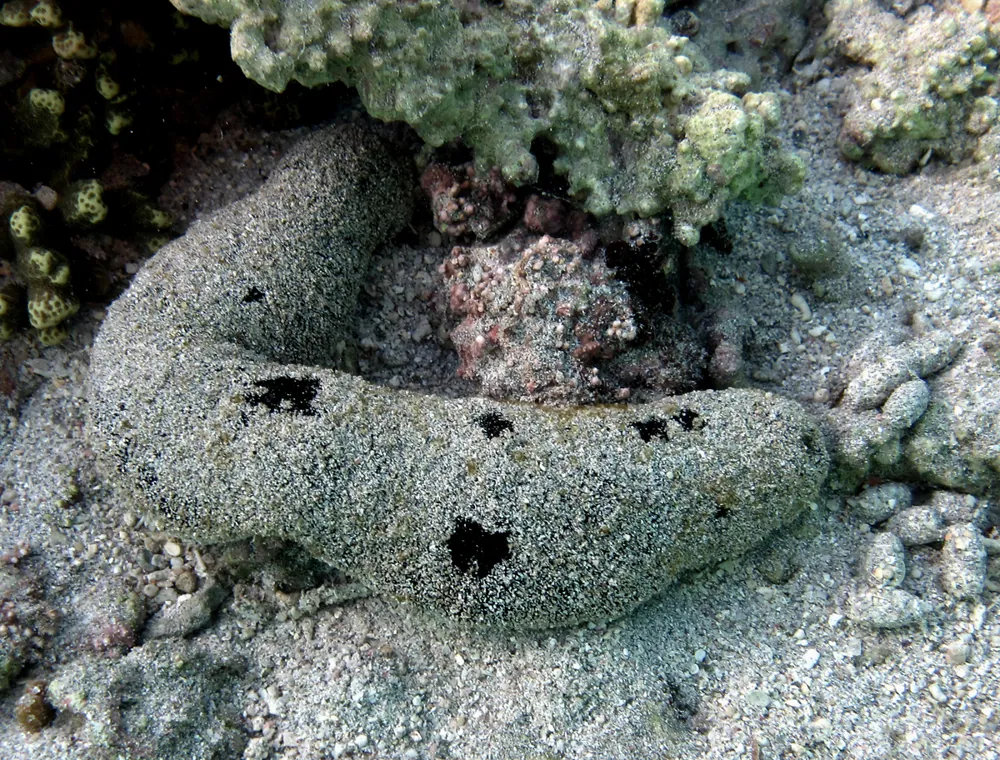
The lollyfish is a black sea cucumber, a soft-bodied animal that lives on the seabed. It is found in shallow tropical waters across the Indo-Pacific, from the Red Sea and East Africa to Australia. It matters to people because its skin releases a toxic red fluid when it is damaged.1
 Uko wayimenya
Imbaraga z'uburozi
Uruhu rwayo rufite uburozi. Ni bibi kuyikoraho, kuyirigata cyangwa kuyirya.
Uburozi bwayo bukora iki?
It is not venomous. When its skin is rubbed or damaged, it releases a toxic red fluid.1
Iteje akaga kangana iki ku bantu?
Akaga ku bantu: YorohejeNko guterwa urubori n'uruyuki cyangwa munsi yaho. Mu by'ukuri ntacyo itwaye abantu.Ikora iki iyo ifite ubwoba?
When attacked, it pushes its internal organs out through its anus, and it releases a toxic red fluid when its skin is rubbed or damaged.1
 Niba hari uwayikozeho cyangwa uwayiriye
- Shyira igikomere mu mazi ashyushye, ashyushye uko umuntu abyihanganira atiriwe ashya, kandi ushake ubufasha bwa muganga kugira ngo amahwa avanwemo. Ntukayacukure ubwawe.
Buri gihe banza uhamagare nimero y'ubutabazi (112, 000, 911). Izi ni inama rusange z'ubutabazi bw'ibanze, si inama za muganga. Ibanze by'ubutabazi bw'ibanze
 Irinde akaga
- Ntuzigere ukora, ufata cyangwa ushotora inyamaswa yo mu gasozi, nubwo yaba ntoya, kandi nubwo yasa n'isinziriye cyangwa yapfuye.
- Yihe umwanya. Niba uhuye n'imwe, tuza, usubire inyuma buhoro buhoro kandi uyireke yigendere.
- Niba wayikozeho cyangwa wayiriye: ntukube amaso cyangwa umunwa, karaba intoki kandi ushake ubufasha bwa muganga.
Ntigushakisha ngo ikugirire nabi. Uburozi bwayo buriho gusa kugira ngo hatagira ikiyirya. Ibindi ku kwirinda
Ni hehe ku isi?
Ingana gute?
Ireshya ite?
 ireshya n'imineke 3 ikurikiranye
 itinda kurusha ikinyamushongo cyo mu murima
Lollyfish ingana ite ugereranyije NAWE?
Ni imibare gusa ikorerwa muri mudasobwa yawe. Nta kintu kibikwa cyangwa cyoherezwa ahandi.
Yihuta gute?


Ibintu by'ukuri
When attacked, it pushes its internal organs out through its anus rather than firing sticky Cuvierian tubules as some sea cucumbers do.1
On Guam, its toxic red fluid is used to drive octopuses out of their hiding holes.1
It can split in two by transverse fission, and a sand coating does not stick to the new surfaces.1
Pools warmed by the sun can reach 39 °C, and individuals there still appeared healthy and fed.1
A thick coating of sand may help keep it cool by shading it from the sun.1
Ku bahanga mu by'ubumara
- Izina rya siyansi
- Holothuria atra
- Itsinda
- Oursins, inyenyeri zo mu nyanja n'inyo
- Umuryango
- Holothuriidae2
- Itsinda rinini (order)
- Holothuriida
- Imigabane
- Inyanja ya Pasifika, Inyanja y'Abahinde, Inyanja Itukura, Inyanja ya Korali, Inyanja ya Filipine, Inyanja y'Amajyepfo y'u Bushinwa, Inyanja ya Timor na Arafura, Ikigobe cya Bengali, Inyanja ngari
- Abana bato
- It is not possible to tell males from females by looking at them. It spawns mostly in summer and autumn, or all year in equatorial waters. It can also reproduce by splitting in two, which mostly happens to smaller animals.1
- Akaga ku bantu
- 1 / 5: Yoroheje3
Aho ibintu bivugwa bituruka
- Holothuria atra (Wikipedia (CC BY-SA 4.0))
- Holothuria atra (iNaturalist): amazina n'ibyiciro.
- Venom Wiki: urwego rw'akaga, ingano isanzwe n'ikigereranyo cy'umuvuduko ni ibyacu bwite. Reba uko tubibara: Uko tugena akaga.
Buri kintu kivugwa kuri iyi paji gifite nimero yerekana aho cyavuye. Niba twibeshye, tubabarire, turi abakunzi b'inyamaswa, ntituri ikinyamakuru cya siyansi. Tubwire kuri [email protected] tuzabikosora.
 Sikorupiyo irashonje! Venom Wiki ni umushinga w'umuntu umwe: ni ubuntu, nta matangazo kandi nta bikurikirana abantu. Impano ntoya ifasha kugira ngo ikomeze kuboneka kuri interineti.Gaburira sikorupiyo
Izindi zo mu itsinda rimwe: Oursins, inyenyeri zo mu nyanja n'inyo
 Crown-of-thorns starfishOursins, inyenyeri zo mu nyanja n'inyoBisaba mugangaNtukayikoreho
 Flower urchinOursins, inyenyeri zo mu nyanja n'inyoIshobora kwica
 Fire urchinOursins, inyenyeri zo mu nyanja n'inyoBisaba mugangaNtukayikoreho
 Bearded firewormOursins, inyenyeri zo mu nyanja n'inyoIrababaza gusaNtukayikoreho
 Black long-spined urchinOursins, inyenyeri zo mu nyanja n'inyoIrababaza gusaNtukayikoreho
 BloodwormOursins, inyenyeri zo mu nyanja n'inyoIrababaza gusa
Iba kandi muri: Inyanja ya Pasifika
 Australian box jellyfishJellyfish n'izindi nyamaswa zo mu nyanja zitera uruboriYicaNtukayikoreho
 Geography coneCone snail na octopusYica
 Greater blue-ringed octopusCone snail na octopusYica
 Japanese pufferfishIzindi nyamaswa zifite uburoziYica
 Southern blue-ringed octopusCone snail na octopusYica
 Hawksbill sea turtleIzindi nyamaswa zifite uburoziIshobora kwica