
 Afurika
 Aziya
Aziya Uburayi
 Amerika y'Amajyepfo
 Ositaraliya na Oseyaniya
 Antaragitika
 Inyanja ya Pasifika
 Inyanja ya Atalantika
 Inyanja y'Abahinde
 Inyanja ya Arigitika
 Inyanja ya Mediterane
 Inyanja Itukura
 Inyanja ya Karayibe
 Inyanja ya Korali
 Inyanja y'Amajyepfo y'u Bushinwa
 Inyanja ya Filipine
 Inyanja ya Andamani
 Inyanja y'Amajyaruguru
 Inyanja ya Timor na Arafura
 Ikigobe cya Bengali
 Ikigobe cya Kaliforuniya
Philippine cobra
 Iraruma
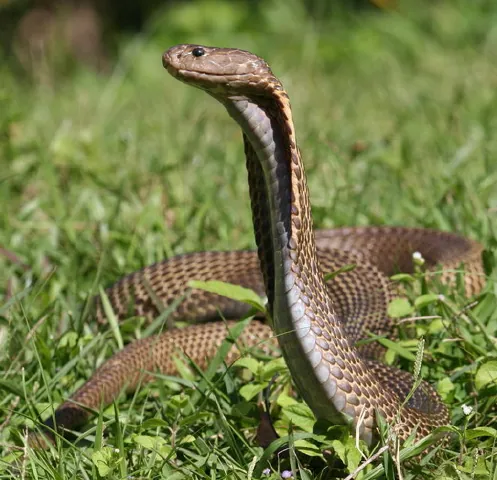
The Philippine cobra is a stocky, highly venomous snake that lives in the northern parts of the Philippines. It is a type of spitting cobra, and its bite can cause serious breathing problems very quickly. It is important to know it because it lives close to people, in farms, villages and near water.1



 Uko wayimenya
Imbaraga z'ubumara
Ubumara busohokera mu menyo yayo y'ubumara cyangwa mu yandi menyo iyo iriye.
Ubumara bwayo bukora iki?
Its venom is a potent neurotoxin, which attacks the nerves and stops nerve signals from reaching the muscles. This can cause respiratory paralysis, meaning the victim can no longer breathe properly. Symptoms can include headache, nausea, vomiting, abdominal pain, diarrhoea, dizziness and difficulty breathing. In some cases, breathing stopped within 30 minutes of the bite.1
Iteje akaga kangana iki ku bantu?
Akaga ku bantu: YicaImwe mu nyamaswa ziteje akaga kurusha izindi ku isi.Bites cause severe neurotoxicity that comes on quickly, with little or no swelling at the bite site. In a study of 39 patients bitten by this snake in 1988, 19 developed complete respiratory failure and there were two deaths. Both people who died were already in a critical state when they reached hospital.1
Ikora iki iyo ifite ubwoba?
When threatened, it forms a hood, and females can spit venom at a target up to 3 metres away.1
 Niba iruma cyangwa icira ubumara
- Umuntu agume atanyeganyega kandi atuje, mukuremo impeta n'ibindi bintu bifashe cyane, kandi mujye ku bitaro vuba: umuti urwanya ubumara (antivenom) ni wo muti.
- Niba ubumara bwaciriwe mu maso, yoze ako kanya ukoresheje amazi menshi meza.
Buri gihe banza uhamagare nimero y'ubutabazi (112, 000, 911). Izi ni inama rusange z'ubutabazi bw'ibanze, si inama za muganga. Ibanze by'ubutabazi bw'ibanze
 Irinde akaga
- Ntuzigere ukora, ufata cyangwa ushotora inyamaswa yo mu gasozi, nubwo yaba ntoya, kandi nubwo yasa n'isinziriye cyangwa yapfuye.
- Yihe umwanya. Niba uhuye n'imwe, tuza, usubire inyuma buhoro buhoro kandi uyireke yigendere.
- Niba imwe ikurumye cyangwa ikagucira ubumara mu maso: tuza, ntunyeganyege, hamagara nimero y'ubutabazi (112, 000, 911) cyangwa ujye ku bitaro vuba. Ibuka uko yasaga, ifoto irafasha.
Ntigushakisha ngo ikugirire nabi. Ikoresha ubumara bwayo kugira ngo ifate ibyo kurya cyangwa yirinde, kandi ikunda cyane kwihisha. Ibindi ku kwirinda
Ingana gute?
Ireshya ite?
 ireshya n'injangwe zo mu rugo 3 zikurikiranye kuva ku zuru kugeza ku murizo
 ireshya n'imineke 9 ikurikiranye
 yakwiruka metero 100 mu masegonda 52 (umuntu wihuta kurusha abandi akenera 9,6)
Philippine cobra ingana ite ugereranyije NAWE?
Ni imibare gusa ikorerwa muri mudasobwa yawe. Nta kintu kibikwa cyangwa cyoherezwa ahandi.
Yihuta gute?


Ibintu by'ukuri
Only female Philippine cobras have been reported to spit their venom, and they can hit a target up to 3 metres away.1
Its venom is considered one of the most toxic among cobra species, although toxicity can vary between individual snakes.1
Research has found that its venom is purely a neurotoxin, with no cardiotoxins and no obvious tissue-destroying components.1
Large rats sometimes fight back after being bitten. They can injure the snake's eyes, and this can leave it blind.1
Aho ibintu bivugwa bituruka
- Philippine cobra (Wikipedia (CC BY-SA 4.0))
- Naja philippinensis (iNaturalist): amazina n'ibyiciro.
- Venom Wiki: urwego rw'akaga, ingano isanzwe n'ikigereranyo cy'umuvuduko ni ibyacu bwite. Reba uko tubibara: Uko tugena akaga.
Buri kintu kivugwa kuri iyi paji gifite nimero yerekana aho cyavuye. Niba twibeshye, tubabarire, turi abakunzi b'inyamaswa, ntituri ikinyamakuru cya siyansi. Tubwire kuri [email protected] tuzabikosora.
 Sikorupiyo irashonje! Venom Wiki ni umushinga w'umuntu umwe: ni ubuntu, nta matangazo kandi nta bikurikirana abantu. Impano ntoya ifasha kugira ngo ikomeze kuboneka kuri interineti.Gaburira sikorupiyo
 Indian cobra
 King cobra
 Caspian cobra
 Common krait
 Malayan krait
 Many-banded krait
 Deathstalker
 Indian saw-scaled viper
 Puff adder
 Impiri ya Russell
 Asian giant hornet
 Komodo dragon