
 Afurika
 Aziya
Aziya Uburayi
 Amerika y'Amajyepfo
 Ositaraliya na Oseyaniya
 Antaragitika
 Inyanja ya Pasifika
 Inyanja ya Atalantika
 Inyanja y'Abahinde
 Inyanja ya Arigitika
 Inyanja ya Mediterane
 Inyanja Itukura
 Inyanja ya Karayibe
 Inyanja ya Korali
 Inyanja y'Amajyepfo y'u Bushinwa
 Inyanja ya Filipine
 Inyanja ya Andamani
 Inyanja y'Amajyaruguru
 Inyanja ya Timor na Arafura
 Ikigobe cya Bengali
 Ikigobe cya Kaliforuniya
Pygmy slow loris
 Iraruma
The pygmy slow loris is a small, nocturnal primate that moves slowly through forest trees at night. It lives in parts of Vietnam, Laos, Cambodia and China. It is one of the few primates that can produce a toxic bite, which makes it special and very rare.1



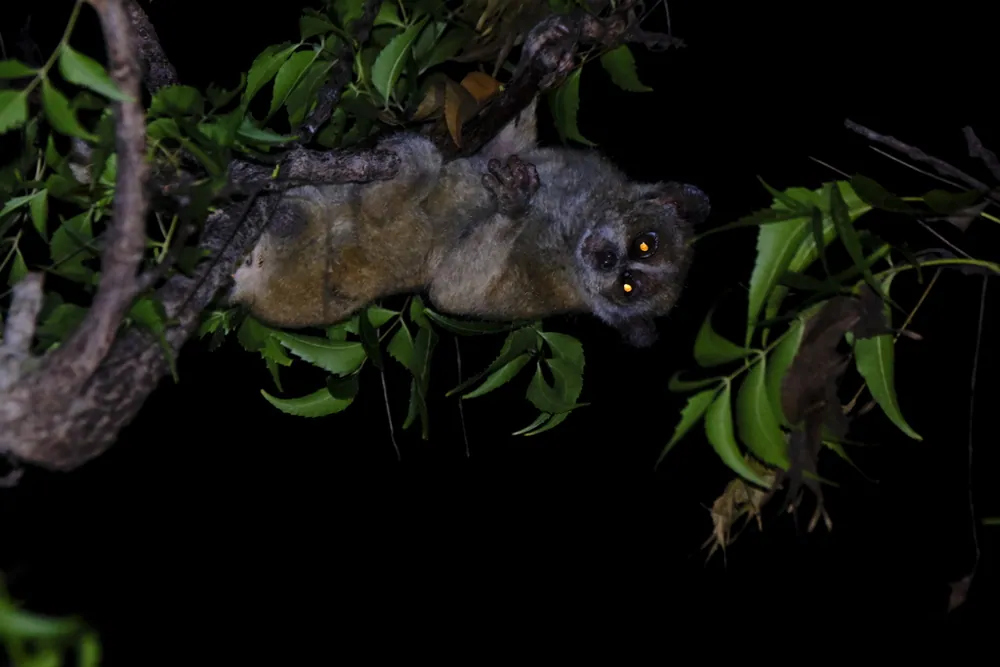
 Uko wayimenya
- Rings around the eyes that are seal brown in adults and darker in young animals1
- A white stripe running from the nose up to the forehead1
- Small black ears, about 23 mm long, with no fur on the tips1
- A rufous to brownish-black stripe along the back, from the nape to the middle of the lower back1
- Silvery white hands and feet with yellowish-white nails1
Ikunze kwitiranywa na: The Bengal slow loris (N. bengalensis) lives in some of the same areas, near the border of southern China and Vietnam. The two can be told apart by differences in their chromosomes, not by appearance alone.1
Imbaraga z'ubumara
Ubumara busohokera mu menyo yayo y'ubumara cyangwa mu yandi menyo iyo iriye.
Ubumara bwayo bukora iki?
The bite is toxic. The animal licks a clear, oily secretion from glands on the inside of its elbows and mixes it with its saliva, which creates a noxious toxin. The secretion contains over 200 chemical components, and one of them is a protein similar to an allergen found in cat dander. In people who are sensitive to it, this can cause anaphylaxis, a severe allergic reaction.1
Iteje akaga kangana iki ku bantu?
Akaga ku bantu: IrababazaIshobora kubabaza cyane, ariko hafi ya buri gihe nta kibazo gikomeye biteza.The main risk is anaphylaxis, which can affect people who are sensitive to the protein in its secretion.1
Ikora iki iyo ifite ubwoba?
When startled, it licks the secretion from its elbow glands and spreads it over its head.1
 Niba iruma
- Oza igikomere neza kandi ushake ubufasha bwa muganga.
Buri gihe banza uhamagare nimero y'ubutabazi (112, 000, 911). Izi ni inama rusange z'ubutabazi bw'ibanze, si inama za muganga. Ibanze by'ubutabazi bw'ibanze
 Irinde akaga
- Ntuzigere ukora, ufata cyangwa ushotora inyamaswa yo mu gasozi, nubwo yaba ntoya, kandi nubwo yasa n'isinziriye cyangwa yapfuye.
- Yihe umwanya. Niba uhuye n'imwe, tuza, usubire inyuma buhoro buhoro kandi uyireke yigendere.
- Niba imwe ikurumye: tuza, ntunyeganyege, hamagara nimero y'ubutabazi (112, 000, 911) cyangwa ujye ku bitaro vuba. Ibuka uko yasaga, ifoto irafasha.
Ntigushakisha ngo ikugirire nabi. Ikoresha ubumara bwayo kugira ngo ifate ibyo kurya cyangwa yirinde, kandi ikunda cyane kwihisha. Ibindi ku kwirinda
Ingana gute?
Ireshya ite?
Iremera ibingana iki?

 ireshya n'ibice 7 by'ibikinisho byo kubaka biri ku murongo
 yakwiruka metero 100 mu masegonda 180 (umuntu wihuta kurusha abandi akenera 9,6)
Pygmy slow loris ingana ite ugereranyije NAWE?
Ni imibare gusa ikorerwa muri mudasobwa yawe. Nta kintu kibikwa cyangwa cyoherezwa ahandi.
Yihuta gute?


Ibintu by'ukuri
Its lower teeth form a comb-like toothcomb, which it uses for grooming and for scraping resin from tree bark.1
Its weight changes with the seasons. Adults can be about 50 percent heavier in winter than in summer, and individuals up to 700 grams have been recorded.1
Unlike most other primates, it does not leap. It moves by crawling slowly along branches.1
Males mark their territories with scent, and females prefer males whose scent is familiar.1
Females are only fertile for a short time each year, so mating opportunities are rare.1
Usenya ibinyoma
Ikinyoma: Animals found near Hòa Bình in Vietnam were a separate species, N. intermedius.
Ukuri: DNA analysis showed these were adults of the pygmy slow loris. Differences in dorsal stripes and silvery hairs are seasonal variation.1
Ku bahanga mu by'ubumara
- Izina rya siyansi
- Xanthonycticebus pygmaeus
- Itsinda
- Inyamabere zifite ubumara
- Umuryango
- Lorisidae2
- Itsinda rinini (order)
- Primates
- Imigabane
- Aziya
- Abana bato
- It usually has one or two offspring after a gestation of about six months, and the young cling to their mother's belly for the first few days.1
- Igihe ibaho
- hafi imyaka 201
- Uko imeze mu gasozi
- Endangered1
- Akaga ku bantu
- 2 / 5: Irababaza3
Aho ibintu bivugwa bituruka
- Pygmy slow loris (Wikipedia (CC BY-SA 4.0))
- Xanthonycticebus pygmaeus (iNaturalist): amazina n'ibyiciro.
- Venom Wiki: urwego rw'akaga, ingano isanzwe n'ikigereranyo cy'umuvuduko ni ibyacu bwite. Reba uko tubibara: Uko tugena akaga.
Buri kintu kivugwa kuri iyi paji gifite nimero yerekana aho cyavuye. Niba twibeshye, tubabarire, turi abakunzi b'inyamaswa, ntituri ikinyamakuru cya siyansi. Tubwire kuri [email protected] tuzabikosora.
 Sikorupiyo irashonje! Venom Wiki ni umushinga w'umuntu umwe: ni ubuntu, nta matangazo kandi nta bikurikirana abantu. Impano ntoya ifasha kugira ngo ikomeze kuboneka kuri interineti.Gaburira sikorupiyo
Izindi zo mu itsinda rimwe: Inyamabere zifite ubumara
 Bengal slow lorisInyamabere zifite ubumaraIrababaza gusa
 Javan slow lorisInyamabere zifite ubumaraIrababaza gusa
 Sunda slow lorisInyamabere zifite ubumaraIrababaza gusa
 Kayan River slow lorisInyamabere zifite ubumaraIrababaza gusa
 Philippine slow lorisInyamabere zifite ubumaraIrababaza gusa
 Eurasian water shrewInyamabere zifite ubumaraNtacyo itwaye
 Deathstalker
 Indian cobra
 Indian saw-scaled viper
 King cobra
 Puff adder
 Impiri ya Russell