
 Afurika
 Aziya
Aziya Uburayi
 Amerika y'Amajyepfo
 Ositaraliya na Oseyaniya
 Antaragitika
 Inyanja ya Pasifika
 Inyanja ya Atalantika
 Inyanja y'Abahinde
 Inyanja ya Arigitika
 Inyanja ya Mediterane
 Inyanja Itukura
 Inyanja ya Karayibe
 Inyanja ya Korali
 Inyanja y'Amajyepfo y'u Bushinwa
 Inyanja ya Filipine
 Inyanja ya Andamani
 Inyanja y'Amajyaruguru
 Inyanja ya Timor na Arafura
 Ikigobe cya Bengali
 Ikigobe cya Kaliforuniya
Walser viper
 Iraruma
The Walser viper is a venomous snake found only in a small area of the western Italian Alps. Scientists only recognised it as its own species after genetic studies, because it looks very much like the common adder. Its tiny range makes it one of the more unusual vipers in Europe.1
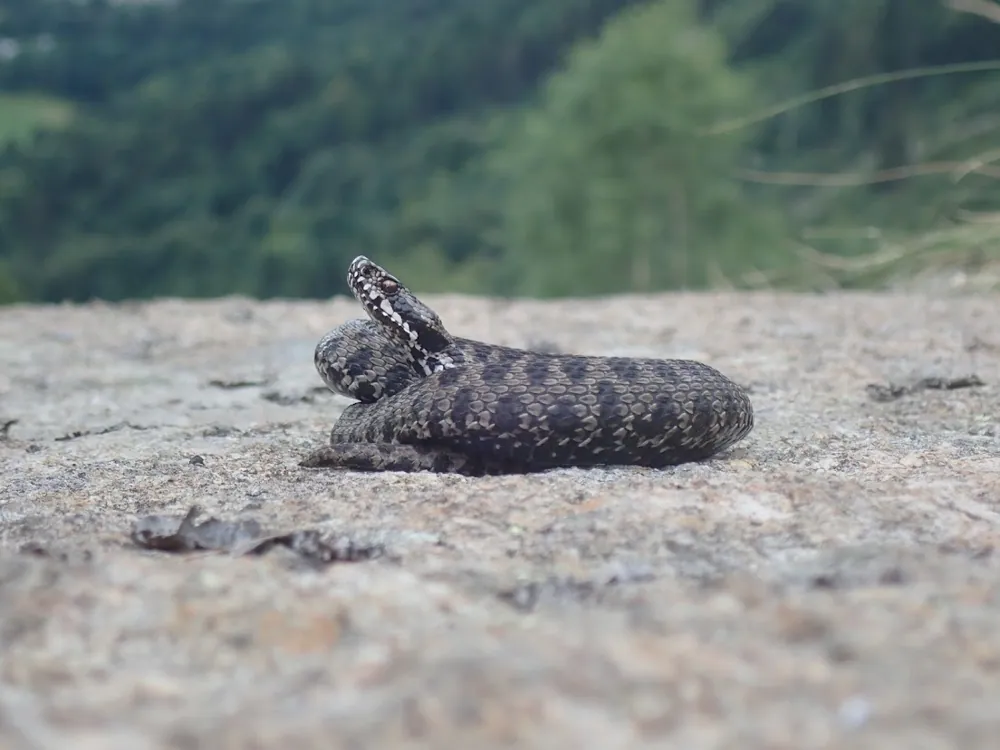
 Uko wayimenya
- Colour varies a great deal between individuals.1
- Many have a zigzag pattern along the back, while others have a reduced pattern of horizontal bars.1
- Some individuals are melanistic, meaning they are very dark or black.1
- Most have 1.5 to 2 rows of scales below the eye on each side of the head.1
Ikunze kwitiranywa na: It closely resembles the common adder (Vipera berus), which is far more widespread. The Walser viper has more scales on the top of the head, these head shields are more often broken up, and it usually has 1.5 to 2 rows of scales below each eye, where the common adder usually has only one.1
Imbaraga z'ubumara
Ubumara busohokera mu menyo yayo y'ubumara cyangwa mu yandi menyo iyo iriye.
Iteje akaga kangana iki ku bantu?
Akaga ku bantu: IkomeyeKurumwa na yo bisaba kujya kwa muganga. Abapfa ni bake cyane. Niba iruma
- Umuntu agume atanyeganyega kandi atuje, urugingo rwarumwe rugume ku rwego rumwe n'umutima, mukuremo impeta n'ibindi bintu bifashe cyane, kandi mujye ku bitaro vuba.
Buri gihe banza uhamagare nimero y'ubutabazi (112, 000, 911). Izi ni inama rusange z'ubutabazi bw'ibanze, si inama za muganga. Ibanze by'ubutabazi bw'ibanze
 Irinde akaga
- Ntuzigere ukora, ufata cyangwa ushotora inyamaswa yo mu gasozi, nubwo yaba ntoya, kandi nubwo yasa n'isinziriye cyangwa yapfuye.
- Yihe umwanya. Niba uhuye n'imwe, tuza, usubire inyuma buhoro buhoro kandi uyireke yigendere.
- Niba imwe ikurumye: tuza, ntunyeganyege, hamagara nimero y'ubutabazi (112, 000, 911) cyangwa ujye ku bitaro vuba. Ibuka uko yasaga, ifoto irafasha.
Ntigushakisha ngo ikugirire nabi. Ikoresha ubumara bwayo kugira ngo ifate ibyo kurya cyangwa yirinde, kandi ikunda cyane kwihisha. Ibindi ku kwirinda
Ingana gute?
Ireshya ite?
 ireshya n'imineke 3 ikurikiranye
 ireshya n'ibice 17 by'ibikinisho byo kubaka biri ku murongo
 yakwiruka metero 100 mu masegonda 110 (umuntu wihuta kurusha abandi akenera 9,6)
Walser viper ingana ite ugereranyije NAWE?
Ni imibare gusa ikorerwa muri mudasobwa yawe. Nta kintu kibikwa cyangwa cyoherezwa ahandi.
Yihuta gute?


Ibintu by'ukuri
For a long time it was thought to be an isolated group of the common adder, until genetic analysis showed it is a separate species related to the Vipera ursinii group.1
Its genetic variety is low, which may make it more vulnerable to disturbance.1
Its range is split into two separate populations: a southern one of about 225 km² and a northern one of about 45 km².1
It lives at high altitude, between 1300 and 2300 metres.1
Usenya ibinyoma
Ikinyoma: The Walser viper is just an isolated population of the common adder (Vipera berus).
Ukuri: Molecular analyses have shown it is a distinct species, related to the Vipera ursinii group.1
Ku bahanga mu by'ubumara
- Izina rya siyansi
- Vipera walser
- Itsinda
- Vipera na adder
- Umuryango
- Viperidae2
- Itsinda rinini (order)
- Squamata
- Imigabane
- Uburayi
- Uko imeze mu gasozi
- Not yet evaluated by the IUCN. The original species description argues for a classification of Endangered, because its range is under 1000 km².1
- Akaga ku bantu
- 3 / 5: Ikomeye3
Aho ibintu bivugwa bituruka
- Vipera walser (Wikipedia (CC BY-SA 4.0))
- Vipera walser (iNaturalist): amazina n'ibyiciro.
- Venom Wiki: urwego rw'akaga, ingano isanzwe n'ikigereranyo cy'umuvuduko ni ibyacu bwite. Reba uko tubibara: Uko tugena akaga.
Buri kintu kivugwa kuri iyi paji gifite nimero yerekana aho cyavuye. Niba twibeshye, tubabarire, turi abakunzi b'inyamaswa, ntituri ikinyamakuru cya siyansi. Tubwire kuri [email protected] tuzabikosora.
 Sikorupiyo irashonje! Venom Wiki ni umushinga w'umuntu umwe: ni ubuntu, nta matangazo kandi nta bikurikirana abantu. Impano ntoya ifasha kugira ngo ikomeze kuboneka kuri interineti.Gaburira sikorupiyo
Izindi zo mu itsinda rimwe: Vipera na adder
 Common European adder
 Blunt-nosed viper
 Nose-horned viper
 Ottoman viper
 Asp viper
 Lataste's viper
Iba kandi muri: Uburayi
 Spanish flyIzindi nyamaswa zifite uburoziBisaba mugangaNtukayikoreho
 Common waspInzuki, amavubi n'amavubi maniniIrababaza gusa
 European hornetInzuki, amavubi n'amavubi maniniIrababaza gusa
 Fire salamanderIbikeri by'uburozi, ibikeri binini na newtIrababaza gusaNtukayikoreho
 Western honey beeInzuki, amavubi n'amavubi maniniIrababaza gusa
 Mediterranean black widowIbitagangurirwaBisaba muganga