
 Afrika
 Asia
Asia Yuropu
 Amerika yeKumaodzanyemba
 Australia neOceania
 Antarctica
 Gungwa rePacific
 Gungwa reAtlantic
 Gungwa reIndia
 Gungwa reArctic
 Gungwa reMediterranean
 Gungwa Dzvuku
 Gungwa reCaribbean
 Gungwa reCoral
 Gungwa reChina yeKumaodzanyemba
 Gungwa rePhilippines
 Gungwa reAndaman
 Gungwa reKuchamhembe
 Gungwa reTimor neArafura
 Gungwa reBengal
 Gulf yeCalifornia
Black house spider
 Inoruma
The black house spider is a dark, sturdy spider that lives across Australia. It was carried to New Zealand and Japan, and it often lives in homes, where it sits in a messy web in corners and near windows. It is venomous, but its bite is rarely a serious danger to people.1

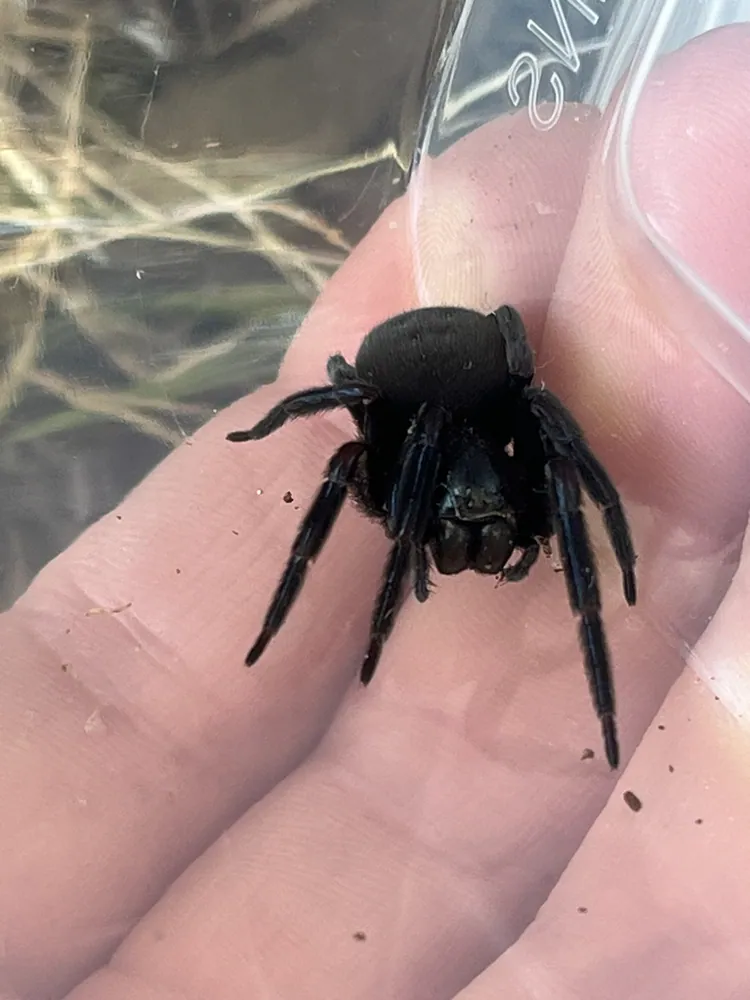
 Maziviro ayo
- A dark, robust spider. Females have a body up to 18 mm long and a leg span of 30 mm.1
- Males are smaller, about 10 mm long, with longer legs in proportion to their body.1
- The body and legs are dark brown to black. The abdomen (rear part) is charcoal grey, with light markings that are sometimes faint, and it is covered in fine, velvety hair.1
- The web looks messy, with irregular sail-like sheets of silk and a funnel-shaped retreat, usually in the middle or corner of the web.1
Inowanzovhiringidzwa ne: The grey house spider (Badumna longinqua) is similar and has a similar range. It is slightly smaller, at about 14 mm, has a greyish top section (carapace) and black-brown legs. It is more often found outdoors.1
Simba reuturu
Uturu hunobuda nemeno ayo painoruma.
Uturu hwayo hunoitei?
The bite is venomous. It may be excruciatingly painful and cause local swelling. Nausea, vomiting, sweating and dizziness are occasionally recorded. In a few cases, skin lesions (arachnogenic necrosis, damage to the skin and tissue) have developed after several bites.1
Ine ngozi yakadii kuvanhu?
Ngozi kuvanhu: InorwadzaInogona kurwadza chaizvo, asi kazhinji haisi njodzi huru.Black house spiders are venomous but are not considered dangerous. They are timid, and bites from them are infrequent.1
 Kana ikaruma
- Geza parumwa woisa pakiti yechando kuderedza marwadzo. Wana rubatsiro rwechiremba kana marwadzo akanyanya, achipararira kana munhu asinganzwi zvakanaka.
Gara uchitanga wafonera nhamba yechimbichimbi (112, 000, 911). Iri izano rakajairika rerubatsiro rwekutanga, kwete zano rechiremba. Zvakakosha zverubatsiro rwekutanga
 Gara wakachengeteka
- Usambobata mhuka yesango, kuedza kuitora kana kuinetsa, kunyange iri diki, uye kunyange ichiita seyakarara kana yakafa.
- Ipa nzvimbo. Kana ukasangana nayo, dzikama, dzokera shure zvishoma nezvishoma uirege iende nenzira yayo.
- Kana imwe ikakuruma: dzikama, gara wakanyarara, fonera nhamba yechimbichimbi (112, 000, 911) kana kuti enda kuchipatara nokukurumidza. Rangarira kuti yaitaridzika sei, mufananidzo unobatsira.
Haisi kukutsvaga. Inoshandisa uturu hwayo kubata chikafu kana kuzvidzivirira, uye inotonyanya kuda kuhwanda. Zvimwe pamusoro pekugara wakachengeteka
Yakakura sei?
Yakareba zvakadii?
 ipfupi kupfuura munwe wako mudiki
Black house spider yakakura sei kana yaenzaniswa NEWE?
Masvomhu chete mubrowser yako. Hapana chinochengetwa kana kutumirwa kupi zvako.
Inomhanya zvakadii?


Chokwadi
A male plucks the female's web to attract her attention before he approaches to mate. They may stay together for several days and mate several times.1
The spider rarely moves its web, so old webs become messy, with dust and small objects stuck in them.1
At night, the spider repairs and adds to its web, often by laying new silk over the old.1
The female almost never leaves her web unless she is forced to.1
Predators include the white-tailed spider, as well as parasitic wasps and flies.1
Kuputsa ngano
Ngano: Black house spiders are dangerous spiders.
Chokwadi: They are venomous, but they are not considered dangerous. They are timid, and their bites are infrequent.1
Kune nyanzvi dzeuturu
- Zita resainzi
- Badumna insignis
- Boka
- Madandemutande
- Mhuri
- Desidae2
- Odha
- Araneae
- Makondinendi
- Australia neOceania
- Vacheche
- The female builds several white silk egg sacs inside the web retreat and stays with the eggs until they hatch. The young may leave or stay in the mother's web for some time.1
- Ngozi kuvanhu
- 2 / 5: Inorwadza3
Kwakabva chokwadi
- Black house spider (Wikipedia (CC BY-SA 4.0))
- Badumna insignis (iNaturalist): mazita nekurongwa kwemhuka.
- Venom Wiki: danho rengozi, saizi yakajairika nekufungidzira kwekumhanya ndezvedu. Ona kuti tinozviwana sei: Matinoyera ngozi.
Chokwadi chimwe nechimwe pane peji rino chine nhamba inoratidza kwachakabva. Kana takakanganisa, ruregerero, tiri vanoda mhuka, kwete magazini yesainzi. Tiudze pa[email protected] tichazvigadzirisa.
 Chinyavada chine nzara! Venom Wiki iprojekiti yemunhu mumwe: yemahara, isina kushambadza uye isina zvinokuteedzera. Chipo chidiki chinobatsira kuti irambe iri paindaneti.Fudza chinyavada
Zvimwe kubva muboka rimwe chete: Madandemutande
 Redback spider
 Katipo
 White-tailed spider
 Peacock spider
 Badge huntsman spider
 Eastern white-tailed spider
Inogarawo mu: Australia neOceania
 Coastal taipanNyoka dzekuAustraliaInouraya
 Common death adderNyoka dzekuAustraliaInouraya
 Eastern brown snakeNyoka dzekuAustraliaInouraya
 Taipan yemukati menyikaNyoka dzekuAustraliaInouraya
 Sydney funnel-web spiderMatarantula nemafunnel-webInouraya
 Nyoka ine mitsetse yakaita sengweNyoka dzekuAustraliaInouraya