
 Afrika
 Asia
Asia Yuropu
 Amerika yeKumaodzanyemba
 Australia neOceania
 Antarctica
 Gungwa rePacific
 Gungwa reAtlantic
 Gungwa reIndia
 Gungwa reArctic
 Gungwa reMediterranean
 Gungwa Dzvuku
 Gungwa reCaribbean
 Gungwa reCoral
 Gungwa reChina yeKumaodzanyemba
 Gungwa rePhilippines
 Gungwa reAndaman
 Gungwa reKuchamhembe
 Gungwa reTimor neArafura
 Gungwa reBengal
 Gulf yeCalifornia
Eastern brown snake
 Inoruma
The eastern brown snake is a slender snake that lives across eastern and central Australia and in southern New Guinea. It is one of the most venomous land snakes in the world, so it is important to know what it looks like. It often lives near farms and the edges of towns, where it hunts house mice.1

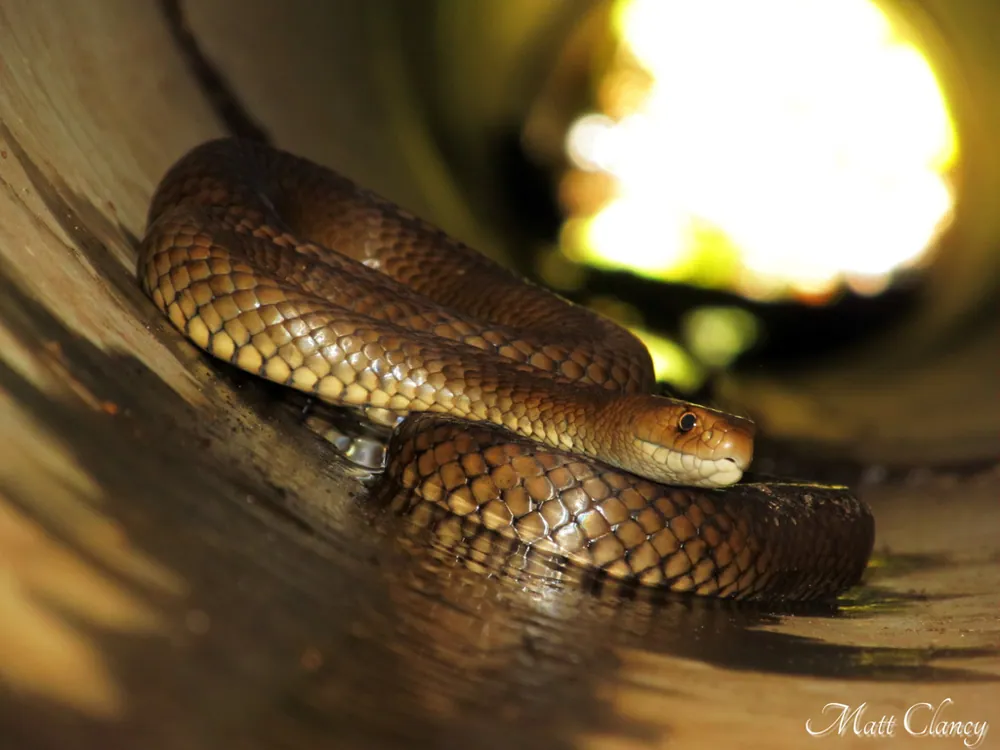
 Maziviro ayo
- Slender build, with no clear line between the head and neck.1
- Upper parts range from pale brown to black, and sometimes orange or russet.1
- Underside is pale cream or yellow, often with orange, brown or dark grey blotches.1
- Young snakes usually have a black head and may have dark bands or a pattern across the body. These markings fade as the snake grows.1
- Inside of the mouth is flesh-pink.1
Inowanzovhiringidzwa ne: Large eastern brown snakes are often confused with mulga snakes, which share their habitat in many areas; they can be told apart by head size. Its yellowish underparts separate it from the dugite and peninsula brown snake, which are entirely brown or have grey underparts. Young eastern brown snakes have head markings similar to red-naped snakes, grey snakes, Dwyer's snakes and curl snakes.1
Simba reuturu
Uturu hunobuda nemeno ayo painoruma.
Uturu hwayo hunoitei?
Its venom mainly affects the circulatory system, which carries blood around the body. The main effects are coagulopathy (a problem with blood clotting), haemorrhage (bleeding), cardiovascular collapse (the heart and blood vessels failing) and cardiac arrest (the heart stopping). One of the main components is pseutarin-C, a prothrombinase complex that breaks down prothrombin, a substance needed for blood to clot.1
Ine ngozi yakadii kuvanhu?
Ngozi kuvanhu: InourayaImwe yemhuka dzine ngozi zvikuru pasi rose.It is considered the world's second-most venomous land snake after the inland taipan, based on laboratory tests in mice.1
 Kana ikaruma
- Kusunga nekumisa (pressure immobilisation): monera bhandeji rinotambanuka zvakasimba pamusoro peparumwa wozokwira nenhengo yose, isungirire nechitsigiso (splint), uye chengeta munhu asingafambe zvachose kusvikira rubatsiro rwasvika.
- Usageza parumwa: zvipatara zvinogona kuongorora uturu hwasara paganda kuti zvisarudze antivenom (mushonga weuturu) chaiwo.
Gara uchitanga wafonera nhamba yechimbichimbi (112, 000, 911). Iri izano rakajairika rerubatsiro rwekutanga, kwete zano rechiremba. Zvakakosha zverubatsiro rwekutanga
 Gara wakachengeteka
- Usambobata mhuka yesango, kuedza kuitora kana kuinetsa, kunyange iri diki, uye kunyange ichiita seyakarara kana yakafa.
- Ipa nzvimbo. Kana ukasangana nayo, dzikama, dzokera shure zvishoma nezvishoma uirege iende nenzira yayo.
- Kana imwe ikakuruma: dzikama, gara wakanyarara, fonera nhamba yechimbichimbi (112, 000, 911) kana kuti enda kuchipatara nokukurumidza. Rangarira kuti yaitaridzika sei, mufananidzo unobatsira.
Haisi kukutsvaga. Inoshandisa uturu hwayo kubata chikafu kana kuzvidzivirira, uye inotonyanya kuda kuhwanda. Zvimwe pamusoro pekugara wakachengeteka
Yakakura sei?
Yakareba zvakadii?
 yakareba sekatsi dzepamba 5 kubva pamhuno kusvika kumuswe
 yakareba semabhanana 13 akateedzana
 inogona kumhanya mamita 100 mumasekondi 46 (munhu anomhanyisa kupfuura vose anoda 9.6)
Eastern brown snake yakakura sei kana yaenzaniswa NEWE?
Masvomhu chete mubrowser yako. Hapana chinochengetwa kana kutumirwa kupi zvako.
Inomhanya zvakadii?


Chokwadi
In December 2023, an eastern brown snake paused a match at the Brisbane International tennis tournament for 40 minutes until a professional snake catcher removed it.1
In winter, it brumates (goes into a state of rest like hibernation). Groups have been found sheltering under concrete slabs of houses in Sydney.1
Its fangs are small compared with other Australian venomous snakes, averaging 2.8 mm and reaching up to 4 mm in larger specimens.1
Within its genus, it has the largest number of chromosomes, at 38 in its cells.1
Local Aboriginal peoples in Sydney, the Illawarra and the Wiradjuri region had their own names for it, and the Dharawal and Awabakal held ceremonies for it.1
Kuputsa ngano
Ngano: Young and adult brown snakes are different species.
Chokwadi: Early scientists thought they were different because their markings differ. Later research showed that the markings of young snakes fade as they grow, and all these forms are the same species.1
Kwakabva chokwadi
- Eastern brown snake (Wikipedia (CC BY-SA 4.0))
- Pseudonaja textilis (iNaturalist): mazita nekurongwa kwemhuka.
- Venom Wiki: danho rengozi, saizi yakajairika nekufungidzira kwekumhanya ndezvedu. Ona kuti tinozviwana sei: Matinoyera ngozi.
Chokwadi chimwe nechimwe pane peji rino chine nhamba inoratidza kwachakabva. Kana takakanganisa, ruregerero, tiri vanoda mhuka, kwete magazini yesainzi. Tiudze pa[email protected] tichazvigadzirisa.
 Chinyavada chine nzara! Venom Wiki iprojekiti yemunhu mumwe: yemahara, isina kushambadza uye isina zvinokuteedzera. Chipo chidiki chinobatsira kuti irambe iri paindaneti.Fudza chinyavada
Zvimwe kubva muboka rimwe chete: Nyoka dzekuAustralia
 Coastal taipanNyoka dzekuAustraliaInouraya
 Common death adderNyoka dzekuAustraliaInouraya
 Taipan yemukati menyikaNyoka dzekuAustraliaInouraya
 Nyoka ine mitsetse yakaita sengweNyoka dzekuAustraliaInouraya
 Collett's snakeNyoka dzekuAustraliaInogona kuuraya
 Desert death adderNyoka dzekuAustraliaInogona kuuraya
Inogarawo mu: Australia neOceania
 Sydney funnel-web spiderMatarantula nemafunnel-webInouraya
 Redback spiderMadandemutandeInoda chiremba
 Brown tree snakeNyoka dzine meno ekumashureInongorwadza
 Hooded pitohuiDzimwe mhuka dzine chepfuInongorwadzaUsabata
 PlatypusMhuka dzinoyamwisa dzine uturuInongorwadza
 Northern tree-dwelling funnel-web spiderMatarantula nemafunnel-webInouraya