
 Afrika
 Asia
Asia Yuropu
 Amerika yeKumaodzanyemba
 Australia neOceania
 Antarctica
 Gungwa rePacific
 Gungwa reAtlantic
 Gungwa reIndia
 Gungwa reArctic
 Gungwa reMediterranean
 Gungwa Dzvuku
 Gungwa reCaribbean
 Gungwa reCoral
 Gungwa reChina yeKumaodzanyemba
 Gungwa rePhilippines
 Gungwa reAndaman
 Gungwa reKuchamhembe
 Gungwa reTimor neArafura
 Gungwa reBengal
 Gulf yeCalifornia
Common rain spider
 Inoruma
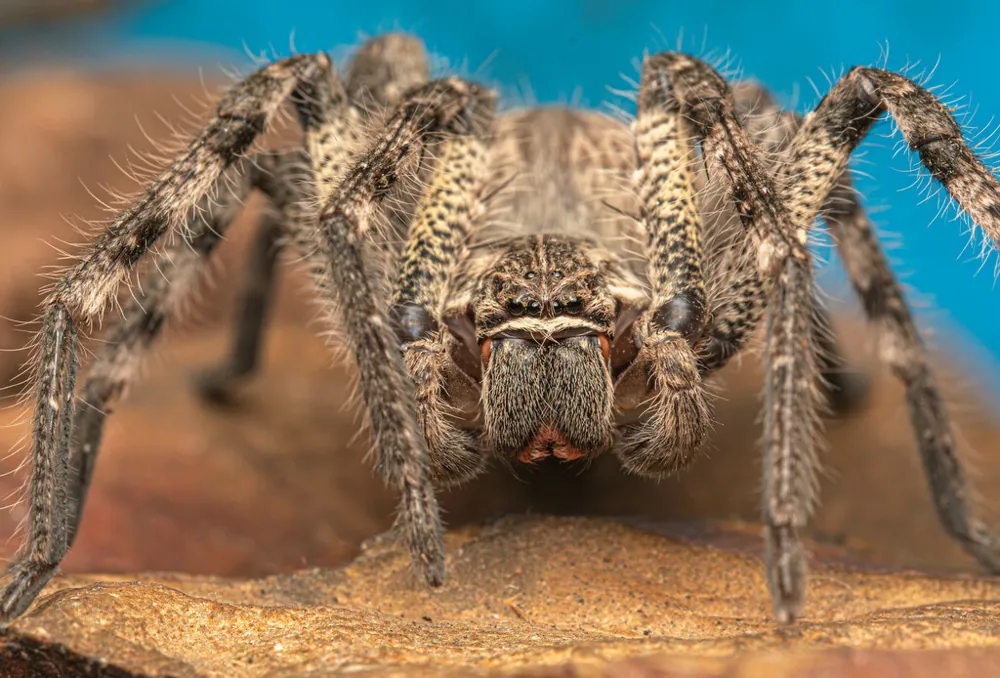
The common rain spider is a large huntsman spider that lives across southern Africa. It often comes indoors, especially before rain, and it hunts geckos. Its size and striking leg markings make it look frightening, but its bite is not dangerous to people.1

 Maziviro ayo
- A large huntsman spider. Its body can reach about 4 cm and its legs about 11 cm.1
- Both males and females are roughly the same size.1
- When threatened, it lifts into a threat pose that shows yellow and black bands on the underside of its legs.1
- Females build large round silk egg sacs with twigs and leaves woven in.1
Simba reuturu
Uturu hunobuda nemeno ayo painoruma.
Uturu hwayo hunoitei?
Its bite causes a burning sensation and swelling. The swelling lasts for a few days. Recovery is spontaneous and complete.1
Ine ngozi yakadii kuvanhu?
Ngozi kuvanhu: Ngozi shomaSenyuchi kubaya kana kushoma. Kazhinji haina ngozi kuvanhu.In humans, the bite is no more dangerous than a bee sting. Many gardeners are bitten by protective females guarding their egg sacs.1
Inoitei kana yatya?
It lifts into a threat pose that shows yellow and black banding on the underside of its legs, and females guard their egg sacs aggressively.1
 Kana ikaruma
- Geza parumwa woisa pakiti yechando kuderedza marwadzo. Wana rubatsiro rwechiremba kana marwadzo akanyanya, achipararira kana munhu asinganzwi zvakanaka.
Gara uchitanga wafonera nhamba yechimbichimbi (112, 000, 911). Iri izano rakajairika rerubatsiro rwekutanga, kwete zano rechiremba. Zvakakosha zverubatsiro rwekutanga
 Gara wakachengeteka
- Usambobata mhuka yesango, kuedza kuitora kana kuinetsa, kunyange iri diki, uye kunyange ichiita seyakarara kana yakafa.
- Ipa nzvimbo. Kana ukasangana nayo, dzikama, dzokera shure zvishoma nezvishoma uirege iende nenzira yayo.
- Kana imwe ikakuruma: dzikama, gara wakanyarara, fonera nhamba yechimbichimbi (112, 000, 911) kana kuti enda kuchipatara nokukurumidza. Rangarira kuti yaitaridzika sei, mufananidzo unobatsira.
Haisi kukutsvaga. Inoshandisa uturu hwayo kubata chikafu kana kuzvidzivirira, uye inotonyanya kuda kuhwanda. Zvimwe pamusoro pekugara wakachengeteka
Yakakura sei?
Yakareba zvakadii?
 inenge kureba sechibatanidzo chemapepa
 inogona kumhanya mamita 100 mumasekondi 210 (munhu anomhanyisa kupfuura vose anoda 9.6)
Common rain spider yakakura sei kana yaenzaniswa NEWE?
Masvomhu chete mubrowser yako. Hapana chinochengetwa kana kutumirwa kupi zvako.
Inomhanya zvakadii?


Chokwadi
Kuputsa ngano
Ngano: A guinea pig died within 7 minutes after a rain spider bit it in a 1959 experiment, so the spider's venom must be deadly.
Chokwadi: Further research on anaesthetised guinea pigs showed the original animal died of shock, not from the venom. In humans, the bite is no more dangerous than a bee sting.1
Kune nyanzvi dzeuturu
- Zita resainzi
- Palystes superciliosus
- Boka
- Madandemutande
- Mhuri
- Sparassidae2
- Odha
- Araneae
- Makondinendi
- Afrika
- Vacheche
- Females lay eggs in a large silk egg sac, about three sacs over their two-year lives. The spiderlings hatch inside the sac and chew their way out about three weeks later.1
- Makore ekurarama
- kunenge makore 21
- Ngozi kuvanhu
- 1 / 5: Ngozi shoma3
Kwakabva chokwadi
- Palystes superciliosus (Wikipedia (CC BY-SA 4.0))
- Palystes superciliosus (iNaturalist): mazita nekurongwa kwemhuka.
- Venom Wiki: danho rengozi, saizi yakajairika nekufungidzira kwekumhanya ndezvedu. Ona kuti tinozviwana sei: Matinoyera ngozi.
Chokwadi chimwe nechimwe pane peji rino chine nhamba inoratidza kwachakabva. Kana takakanganisa, ruregerero, tiri vanoda mhuka, kwete magazini yesainzi. Tiudze pa[email protected] tichazvigadzirisa.
 Chinyavada chine nzara! Venom Wiki iprojekiti yemunhu mumwe: yemahara, isina kushambadza uye isina zvinokuteedzera. Chipo chidiki chinobatsira kuti irambe iri paindaneti.Fudza chinyavada
 Mediterranean black widow
 Six-eyed sand spider
 Brown widow
 Noble false widow
 Darwin's bark spider
 Wasp spider
 Black mamba
 Deathstalker
 Egyptian cobra
 Puff adder
 Boomslang
 Fat-tailed scorpion