
 Afrika
 Asia
Asia Yuropu
 Amerika yeKumaodzanyemba
 Australia neOceania
 Antarctica
 Gungwa rePacific
 Gungwa reAtlantic
 Gungwa reIndia
 Gungwa reArctic
 Gungwa reMediterranean
 Gungwa Dzvuku
 Gungwa reCaribbean
 Gungwa reCoral
 Gungwa reChina yeKumaodzanyemba
 Gungwa rePhilippines
 Gungwa reAndaman
 Gungwa reKuchamhembe
 Gungwa reTimor neArafura
 Gungwa reBengal
 Gulf yeCalifornia
Golden silk orb-weaver
 Inoruma
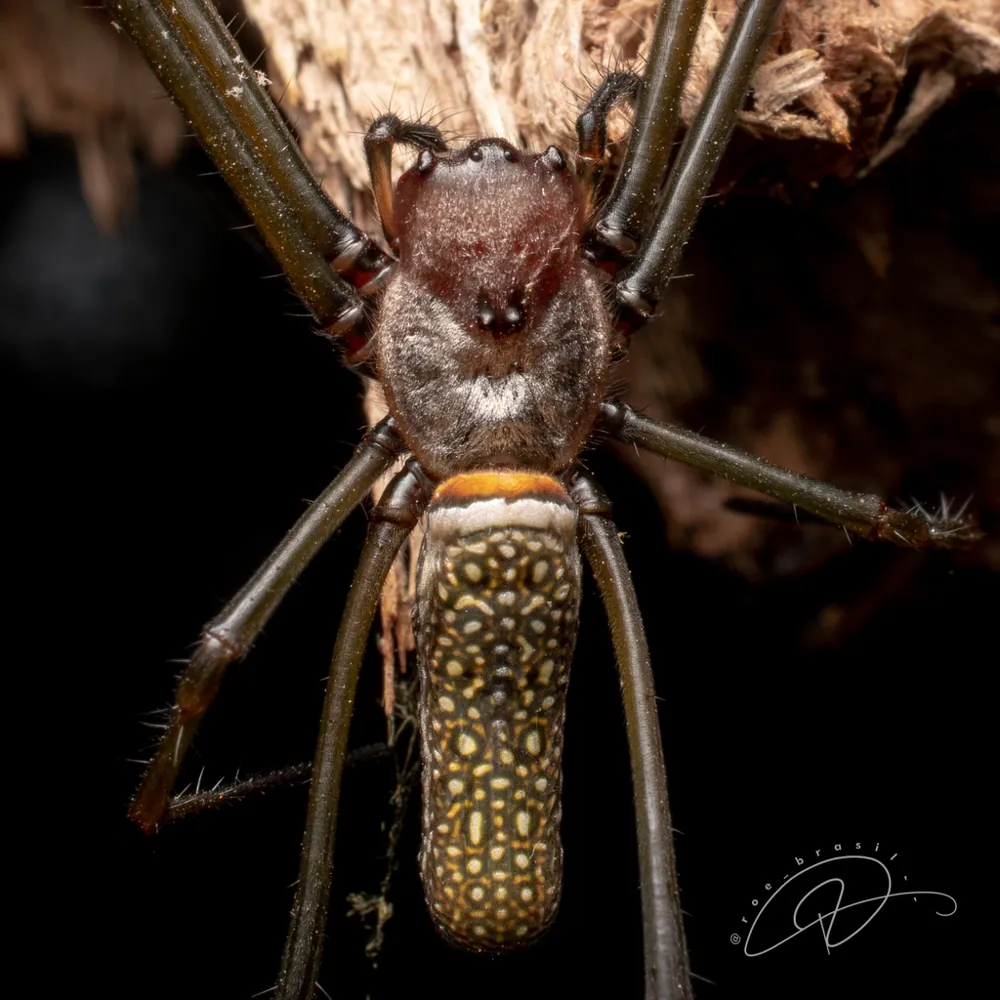
The golden silk orb-weaver is a large spider with silk that shines golden in sunlight. It lives in forests and wooded areas from the southern United States to Argentina. It is special because its silk is studied by scientists, and because it is one of the largest non-tarantula spiders in North America.1

 Maziviro ayo
- Females have a silvery white front body (cephalothorax) and a longer orange-brown abdomen with two rows of small white-yellow spots.1
- Females have dark yellow and brown banding on their legs, with black brush-like tufts of hair near the joints of the first, second and fourth leg pairs.1
- Females are about 24 to 40 mm long when fully grown.1
- Males are much smaller, about 6 mm long, with a plain dark brown body and legs.1
- The large webs are circular and vertical, and the yellow pigment in the silk gives them a golden glow in good light.1
Inowanzovhiringidzwa ne: Trichonephila plumipes also has stiff hairs on its legs. In that species the hairs are set more closely together than in the golden silk orb-weaver.1
Simba reuturu
Uturu hunobuda nemeno ayo painoruma.
Uturu hwayo hunoitei?
Its venom has low toxicity. It is relatively harmless and poses little health concern to healthy adult humans.1
Ine ngozi yakadii kuvanhu?
Ngozi kuvanhu: Ngozi shomaSenyuchi kubaya kana kushoma. Kazhinji haina ngozi kuvanhu.It is not known to be aggressive towards humans. It bites only in self-defence if it is touched, and its venom poses little health concern to healthy adults.1
Inoitei kana yatya?
It bites only in self-defence if it is touched.1
 Kana ikaruma
- Geza parumwa woisa pakiti yechando kuderedza marwadzo. Wana rubatsiro rwechiremba kana marwadzo akanyanya, achipararira kana munhu asinganzwi zvakanaka.
Gara uchitanga wafonera nhamba yechimbichimbi (112, 000, 911). Iri izano rakajairika rerubatsiro rwekutanga, kwete zano rechiremba. Zvakakosha zverubatsiro rwekutanga
 Gara wakachengeteka
- Usambobata mhuka yesango, kuedza kuitora kana kuinetsa, kunyange iri diki, uye kunyange ichiita seyakarara kana yakafa.
- Ipa nzvimbo. Kana ukasangana nayo, dzikama, dzokera shure zvishoma nezvishoma uirege iende nenzira yayo.
- Kana imwe ikakuruma: dzikama, gara wakanyarara, fonera nhamba yechimbichimbi (112, 000, 911) kana kuti enda kuchipatara nokukurumidza. Rangarira kuti yaitaridzika sei, mufananidzo unobatsira.
Haisi kukutsvaga. Inoshandisa uturu hwayo kubata chikafu kana kuzvidzivirira, uye inotonyanya kuda kuhwanda. Zvimwe pamusoro pekugara wakachengeteka
Yakakura sei?
Yakareba zvakadii?
 inenge kureba sechibatanidzo chemapepa
 inogona kumhanya mamita 100 mumasekondi 210 (munhu anomhanyisa kupfuura vose anoda 9.6)
Golden silk orb-weaver yakakura sei kana yaenzaniswa NEWE?
Masvomhu chete mubrowser yako. Hapana chinochengetwa kana kutumirwa kupi zvako.
Inomhanya zvakadii?


Chokwadi
Its silk may help in surgeries involving the nervous system, as shown in past experimental studies.1
It produces seven different types of silk, and its silk is valued in spider silk research.1
Its genome was the first of the orb-weaving spiders to be completely annotated, revealing 28 unique genes for spider silk proteins.1
Some individuals living in developed areas have grown significantly larger than their rural counterparts.1
Males rarely suffer sexual cannibalism or genital mutilation, unlike males of many related species, which makes it a focus of study into spider mating.1
Females are some of the largest non-tarantula spiders in North America, and may be the largest orb-weaver species native to the United States.1
Kuputsa ngano
Ngano: The golden silk orb-weaver is an aggressive spider that attacks people.
Chokwadi: It is not known to be aggressive towards humans. It bites only in self-defence if it is touched.1
Kwakabva chokwadi
- Trichonephila clavipes (Wikipedia (CC BY-SA 4.0))
- Trichonephila clavipes (iNaturalist): mazita nekurongwa kwemhuka.
- Venom Wiki: danho rengozi, saizi yakajairika nekufungidzira kwekumhanya ndezvedu. Ona kuti tinozviwana sei: Matinoyera ngozi.
Chokwadi chimwe nechimwe pane peji rino chine nhamba inoratidza kwachakabva. Kana takakanganisa, ruregerero, tiri vanoda mhuka, kwete magazini yesainzi. Tiudze pa[email protected] tichazvigadzirisa.
 Chinyavada chine nzara! Venom Wiki iprojekiti yemunhu mumwe: yemahara, isina kushambadza uye isina zvinokuteedzera. Chipo chidiki chinobatsira kuti irambe iri paindaneti.Fudza chinyavada
 Brazilian wandering spider
 Brown recluse
 Southern black widow
 Amazon wandering spider
 Chilean recluse
 Northern black widow
 Terciopelo
 Eastern coral snake
 Eastern diamondback rattlesnake
 Eyelash viper
 Timber rattlesnake
 Western diamondback rattlesnake