
 Afrika
 Asia
Asia Yuropu
 Amerika yeKumaodzanyemba
 Australia neOceania
 Antarctica
 Gungwa rePacific
 Gungwa reAtlantic
 Gungwa reIndia
 Gungwa reArctic
 Gungwa reMediterranean
 Gungwa Dzvuku
 Gungwa reCaribbean
 Gungwa reCoral
 Gungwa reChina yeKumaodzanyemba
 Gungwa rePhilippines
 Gungwa reAndaman
 Gungwa reKuchamhembe
 Gungwa reTimor neArafura
 Gungwa reBengal
 Gulf yeCalifornia
Jararacussu
 Inoruma
The jararacussu is a large, highly venomous pit viper that lives in South America. It can grow up to 2.2 metres long and is one of the most feared snakes on the continent. Its bite can cause serious harm, so it is important to know what it looks like.1


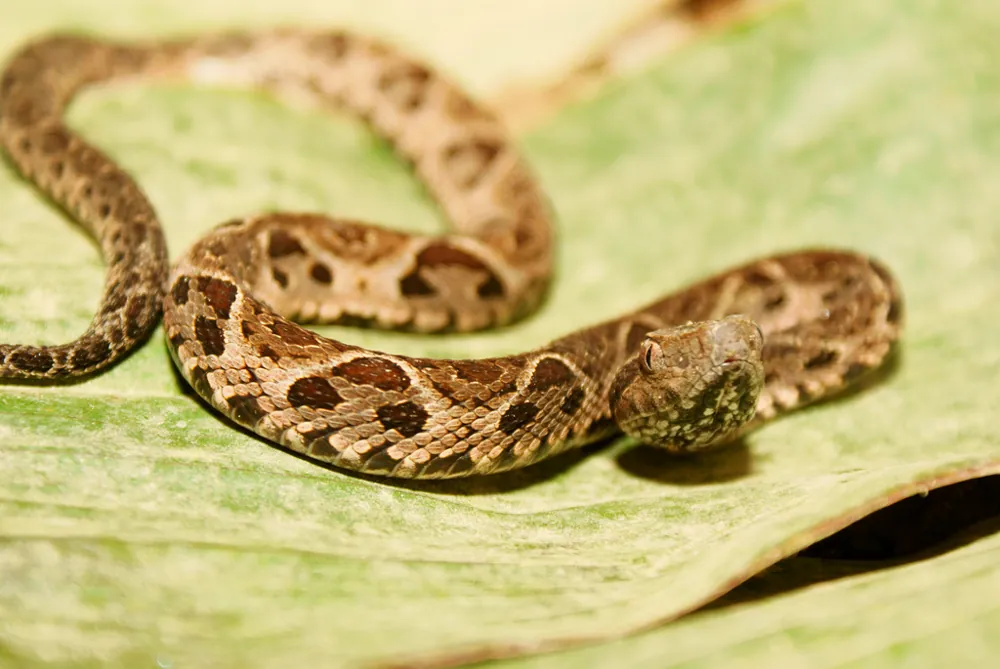
 Maziviro ayo
Simba reuturu
Uturu hunobuda nemeno ayo painoruma.
Uturu hwayo hunoitei?
The venom contains cytotoxins, haemotoxins and myotoxins. Cytotoxins damage cells, haemotoxins affect the blood, and myotoxins damage muscle. Severe bites can cause necrosis (death of tissue), shock, spontaneous bleeding inside the body, and kidney failure. Many patients also develop coagulopathy, a condition where the blood cannot clot properly.1
Ine ngozi yakadii kuvanhu?
Ngozi kuvanhu: Ine ngozi zvikuruInogona kuuraya munhu asina kurapwa.The venom is potent enough to kill sixteen people. In one study of 29 bites in São Paulo state, Brazil, three patients aged 3, 11 and 65 died from respiratory and circulatory failure, even with large doses of antivenom in intensive care. Six patients had necrosis, and one of them lost a limb to amputation. Bites from snakes over 50 cm long caused the most severe effects.1
 Mashoko akanaka: vanachiremba vane mushonga (antivenom) kana kurapwa kwechinhu ichi.1
Inoitei kana yatya?
It is described as very aggressive in behaviour.1
 Kana ikaruma
- Chengeta munhu asingafambe uye akadzikama, chengeta nhengo yakarumwa yakaenzana nemwoyo, bvisa mhete nezvinhu zvakasunga, uende kuchipatara nokukurumidza.
Gara uchitanga wafonera nhamba yechimbichimbi (112, 000, 911). Iri izano rakajairika rerubatsiro rwekutanga, kwete zano rechiremba. Zvakakosha zverubatsiro rwekutanga
 Gara wakachengeteka
- Usambobata mhuka yesango, kuedza kuitora kana kuinetsa, kunyange iri diki, uye kunyange ichiita seyakarara kana yakafa.
- Ipa nzvimbo. Kana ukasangana nayo, dzikama, dzokera shure zvishoma nezvishoma uirege iende nenzira yayo.
- Kana imwe ikakuruma: dzikama, gara wakanyarara, fonera nhamba yechimbichimbi (112, 000, 911) kana kuti enda kuchipatara nokukurumidza. Rangarira kuti yaitaridzika sei, mufananidzo unobatsira.
Haisi kukutsvaga. Inoshandisa uturu hwayo kubata chikafu kana kuzvidzivirira, uye inotonyanya kuda kuhwanda. Zvimwe pamusoro pekugara wakachengeteka
Yakakura sei?
Yakareba zvakadii?
 yakareba sekatsi dzepamba 4 kubva pamhuno kusvika kumuswe
 yakareba semabhanana 12 akateedzana
 inogona kumhanya mamita 100 mumasekondi 86 (munhu anomhanyisa kupfuura vose anoda 9.6)
Jararacussu yakakura sei kana yaenzaniswa NEWE?
Masvomhu chete mubrowser yako. Hapana chinochengetwa kana kutumirwa kupi zvako.
Inomhanya zvakadii?


Chokwadi
Its venom yield is 1000 mg, which is enough to kill 10,163 rats in laboratory measures.1
Its fangs are about 2.5 cm long, and it can inject a large amount of venom.1
It warms up in the morning sun, then goes out to hunt at night.1
It is ovoviviparous and gives birth to between 16 and 20 young in the rainy season.1
Kune nyanzvi dzeuturu
- Zita resainzi
- Bothrops jararacussu
- Boka
- Mapit viper
- Mhuri
- Viperidae2
- Odha
- Squamata
- Makondinendi
- Amerika yeKumaodzanyemba
- Vacheche
- It is ovoviviparous, meaning the eggs hatch inside the mother and she gives birth to live young. A litter has between 16 and 20 young, born in the rainy season.1
- Ngozi kuvanhu
- 4 / 5: Ine ngozi zvikuru3
Kwakabva chokwadi
- Bothrops jararacussu (Wikipedia (CC BY-SA 4.0))
- Bothrops jararacussu (iNaturalist): mazita nekurongwa kwemhuka.
- Venom Wiki: danho rengozi, saizi yakajairika nekufungidzira kwekumhanya ndezvedu. Ona kuti tinozviwana sei: Matinoyera ngozi.
Chokwadi chimwe nechimwe pane peji rino chine nhamba inoratidza kwachakabva. Kana takakanganisa, ruregerero, tiri vanoda mhuka, kwete magazini yesainzi. Tiudze pa[email protected] tichazvigadzirisa.
 Chinyavada chine nzara! Venom Wiki iprojekiti yemunhu mumwe: yemahara, isina kushambadza uye isina zvinokuteedzera. Chipo chidiki chinobatsira kuti irambe iri paindaneti.Fudza chinyavada
Zvimwe kubva muboka rimwe chete: Mapit viper
 Terciopelo
 Eyelash viper
 Golden lancehead
 South American bushmaster
 Common lancehead
 Jararaca
Inogarawo mu: Amerika yeKumaodzanyemba
 Golden poison frogMatatya ane chepfu, matoad nemanewtInourayaUsabata
 Brazilian wandering spiderMadandemutandeInogona kuuraya
 Cane toadMatatya ane chepfu, matoad nemanewtInoda chirembaUsabata
 Peruvian giant centipedeMacentipedeInoda chiremba
 Bullet antMasvosveInongorwadza
 Common vampire batMhuka dzinoyamwisa dzine uturuInongorwadza