
 Afrika
 Asia
Asia Yuropu
 Amerika yeKumaodzanyemba
 Australia neOceania
 Antarctica
 Gungwa rePacific
 Gungwa reAtlantic
 Gungwa reIndia
 Gungwa reArctic
 Gungwa reMediterranean
 Gungwa Dzvuku
 Gungwa reCaribbean
 Gungwa reCoral
 Gungwa reChina yeKumaodzanyemba
 Gungwa rePhilippines
 Gungwa reAndaman
 Gungwa reKuchamhembe
 Gungwa reTimor neArafura
 Gungwa reBengal
 Gulf yeCalifornia
Malayan pit viper
 Inoruma
The Malayan pit viper is a venomous snake of Southeast Asia. It lives in forests, farmland and plantations, where it hunts rats and mice. Its bite causes severe pain and swelling, so it is an important snake to recognise.1

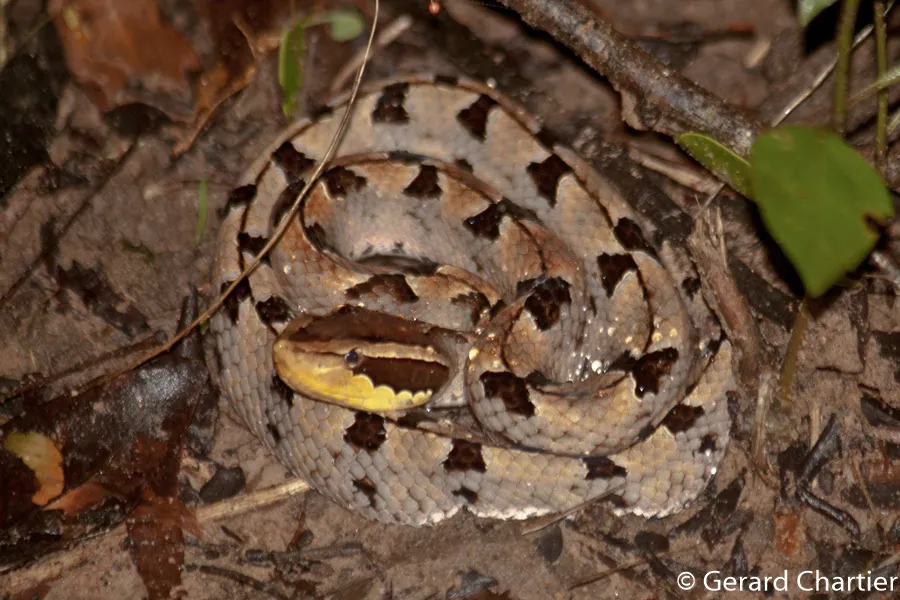
 Maziviro ayo
- Reddish, grey or pale brown in colour on its back.1
- Two rows of large, dark brown triangular blotches with black edges run down the back.1
- A broad dark brown stripe runs from the eye to the corner of the mouth.1
- Smooth scales and a pointed, upturned snout.1
- Adults average about 76 cm long and can reach about 91 cm.1
Simba reuturu
Uturu hunobuda nemeno ayo painoruma.
Uturu hwayo hunoitei?
Its venom causes severe pain and swelling around the bite, and sometimes tissue damage (necrosis), where body tissue dies. The venom acts on platelets, the small cells that help blood clot, and can cause dangerous blood clots. Symptoms are described as developing over time after a bite.1
Ine ngozi yakadii kuvanhu?
Ngozi kuvanhu: Ine ngozi zvikuruInogona kuuraya munhu asina kurapwa.In northern Malaysia it is responsible for about 700 snakebite incidents a year, with a mortality rate of about 2 percent. In a 2005 study of 145 patients in Thailand, 18.6 percent were left with permanently swollen limbs, and two patients died from brain bleeding. Many victims lose limb use or have limbs amputated when there is no antivenom or early treatment.1
 Mashoko akanaka: vanachiremba vane mushonga (antivenom) kana kurapwa kwechinhu ichi.1
Inoitei kana yatya?
It has a reputation for being bad-tempered and quick to strike when disturbed.1
 Kana ikaruma
- Get medical treatment as early as possible, as delays are linked to lasting limb damage. Antivenin is effective in reversing the blood clotting caused by the venom. Authors advise victims not to use traditional healers and to avoid overusing tourniquets.1
- Chengeta munhu asingafambe uye akadzikama, chengeta nhengo yakarumwa yakaenzana nemwoyo, bvisa mhete nezvinhu zvakasunga, uende kuchipatara nokukurumidza.
Gara uchitanga wafonera nhamba yechimbichimbi (112, 000, 911). Iri izano rakajairika rerubatsiro rwekutanga, kwete zano rechiremba. Zvakakosha zverubatsiro rwekutanga
 Gara wakachengeteka
- Usambobata mhuka yesango, kuedza kuitora kana kuinetsa, kunyange iri diki, uye kunyange ichiita seyakarara kana yakafa.
- Ipa nzvimbo. Kana ukasangana nayo, dzikama, dzokera shure zvishoma nezvishoma uirege iende nenzira yayo.
- Kana imwe ikakuruma: dzikama, gara wakanyarara, fonera nhamba yechimbichimbi (112, 000, 911) kana kuti enda kuchipatara nokukurumidza. Rangarira kuti yaitaridzika sei, mufananidzo unobatsira.
Haisi kukutsvaga. Inoshandisa uturu hwayo kubata chikafu kana kuzvidzivirira, uye inotonyanya kuda kuhwanda. Zvimwe pamusoro pekugara wakachengeteka
Yakakura sei?
Yakareba zvakadii?
 yakareba sekatsi dzepamba 2 kubva pamhuno kusvika kumuswe
 yakareba semabhanana 5 akateedzana
 inogona kumhanya mamita 100 mumasekondi 100 (munhu anomhanyisa kupfuura vose anoda 9.6)
Malayan pit viper yakakura sei kana yaenzaniswa NEWE?
Masvomhu chete mubrowser yako. Hapana chinochengetwa kana kutumirwa kupi zvako.
Inomhanya zvakadii?


Chokwadi
The venom of this snake is used to isolate an enzyme called ancrod, which doctors use to break down blood clots in patients.1
It is very sedentary, and has often been found in the same spot several hours after a bite involving a person.1
Bites happen throughout the year but mostly early in the monsoon season, in May and June.1
It is the only Asian pit viper with large crown scales and smooth back scales.1
Kwakabva chokwadi
- Calloselasma (Wikipedia (CC BY-SA 4.0))
- Calloselasma rhodostoma (iNaturalist): mazita nekurongwa kwemhuka.
- Venom Wiki: danho rengozi, saizi yakajairika nekufungidzira kwekumhanya ndezvedu. Ona kuti tinozviwana sei: Matinoyera ngozi.
Chokwadi chimwe nechimwe pane peji rino chine nhamba inoratidza kwachakabva. Kana takakanganisa, ruregerero, tiri vanoda mhuka, kwete magazini yesainzi. Tiudze pa[email protected] tichazvigadzirisa.
 Chinyavada chine nzara! Venom Wiki iprojekiti yemunhu mumwe: yemahara, isina kushambadza uye isina zvinokuteedzera. Chipo chidiki chinobatsira kuti irambe iri paindaneti.Fudza chinyavada
 Brown spotted pit viper
 Habu
Habu Hump-nosed viper
 Hundred-pace viper
 Mamushi
 Mangshan pit viper
 Deathstalker
 Indian cobra
 Indian saw-scaled viper
 King cobra
 Puff adder
 Bvumbi raRussell