
 Afrika
 Asia
Asia Yuropu
 Amerika yeKumaodzanyemba
 Australia neOceania
 Antarctica
 Gungwa rePacific
 Gungwa reAtlantic
 Gungwa reIndia
 Gungwa reArctic
 Gungwa reMediterranean
 Gungwa Dzvuku
 Gungwa reCaribbean
 Gungwa reCoral
 Gungwa reChina yeKumaodzanyemba
 Gungwa rePhilippines
 Gungwa reAndaman
 Gungwa reKuchamhembe
 Gungwa reTimor neArafura
 Gungwa reBengal
 Gulf yeCalifornia
Mangrove snake
 Inoruma
The mangrove snake is a large, tree-climbing snake with yellow and black bands. It lives in Southeast Asia and is one of the biggest cat snake species. It is mildly venomous, and it is often mistaken for a much more dangerous snake, the banded krait.1



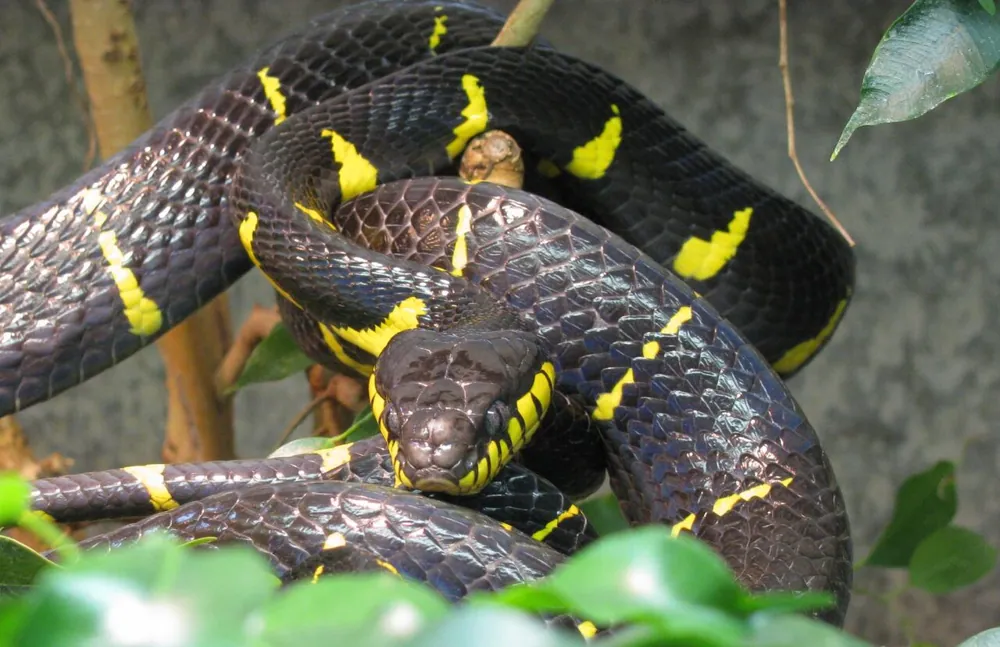
 Maziviro ayo
- Black above, with yellow bands across the back1
- Yellow lips with black edges1
- Black or bluish underside, sometimes speckled with yellow, and a yellow throat1
- Can grow to about 240 to 270 cm long1
- Has a triangular body cross-section1
Inowanzovhiringidzwa ne: The mangrove snake can be confused with the banded krait, which has alternating black and yellow crossbands and a triangular body. The banded krait is extremely venomous, so treat any black and yellow banded snake with caution.1
Simba reuturu
Uturu hunobuda nemeno ayo painoruma.
Uturu hwayo hunoitei?
The snake has rear fangs and a venom gland linked to them. It has to chew to release the venom, which is released gradually. Its venom is weak, and the rear fangs are small, so it is hard for the snake to sink them into a person's arm or leg. Moderate bites have caused intense swelling.1
Ine ngozi yakadii kuvanhu?
Ngozi kuvanhu: InorwadzaInogona kurwadza chaizvo, asi kazhinji haisi njodzi huru.It is considered mildly venomous. Moderate bites have caused intense swelling, but there has never been a confirmed death, as of 2016.1
Inoitei kana yatya?
It is a potentially defensive snake that may strike repeatedly, even when captive bred.1
 Kana ikaruma
- Geza parumwa, chengeta munhu akadzikama uye wana rubatsiro rwechiremba. Dzimwe mhando (dzakaita seboomslang) dzinogona kuuraya mushure memaawa.
Gara uchitanga wafonera nhamba yechimbichimbi (112, 000, 911). Iri izano rakajairika rerubatsiro rwekutanga, kwete zano rechiremba. Zvakakosha zverubatsiro rwekutanga
 Gara wakachengeteka
- Usambobata mhuka yesango, kuedza kuitora kana kuinetsa, kunyange iri diki, uye kunyange ichiita seyakarara kana yakafa.
- Ipa nzvimbo. Kana ukasangana nayo, dzikama, dzokera shure zvishoma nezvishoma uirege iende nenzira yayo.
- Kana imwe ikakuruma: dzikama, gara wakanyarara, fonera nhamba yechimbichimbi (112, 000, 911) kana kuti enda kuchipatara nokukurumidza. Rangarira kuti yaitaridzika sei, mufananidzo unobatsira.
Haisi kukutsvaga. Inoshandisa uturu hwayo kubata chikafu kana kuzvidzivirira, uye inotonyanya kuda kuhwanda. Zvimwe pamusoro pekugara wakachengeteka
Yakakura sei?
Yakareba zvakadii?
 yakareba seimbwa 2,5 kubva pamhuno kusvika kumuswe
 yakareba semabhanana 15 akateedzana
 inogona kumhanya mamita 100 mumasekondi 54 (munhu anomhanyisa kupfuura vose anoda 9.6)
Mangrove snake yakakura sei kana yaenzaniswa NEWE?
Masvomhu chete mubrowser yako. Hapana chinochengetwa kana kutumirwa kupi zvako.
Inomhanya zvakadii?


Chokwadi
Its venom contains denmotoxin, a three-finger toxin that is the first fully characterised bird-specific toxin.1
It is one of the biggest cat snake species.1
Despite its name, it is found more often in lowland rainforests than in mangrove swamps.1
It may refuse food for long periods if it is disturbed.1
Kuputsa ngano
Ngano: It is a dangerous killer because it looks like the banded krait.
Chokwadi: It is mildly venomous, and there has never been a confirmed death from its bite. Its look can be confused with the extremely venomous banded krait.1
Kwakabva chokwadi
- Boiga dendrophila (Wikipedia (CC BY-SA 4.0))
- Boiga dendrophila (iNaturalist): mazita nekurongwa kwemhuka.
- Venom Wiki: danho rengozi, saizi yakajairika nekufungidzira kwekumhanya ndezvedu. Ona kuti tinozviwana sei: Matinoyera ngozi.
Chokwadi chimwe nechimwe pane peji rino chine nhamba inoratidza kwachakabva. Kana takakanganisa, ruregerero, tiri vanoda mhuka, kwete magazini yesainzi. Tiudze pa[email protected] tichazvigadzirisa.
 Chinyavada chine nzara! Venom Wiki iprojekiti yemunhu mumwe: yemahara, isina kushambadza uye isina zvinokuteedzera. Chipo chidiki chinobatsira kuti irambe iri paindaneti.Fudza chinyavada
Zvimwe kubva muboka rimwe chete: Nyoka dzine meno ekumashure
 Brown tree snakeNyoka dzine meno ekumashureInongorwadza
 Tiger keelbackNyoka dzine meno ekumashureInogona kuuraya
 Red-necked keelbackNyoka dzine meno ekumashureInoda chiremba
 Green cat snakeNyoka dzine meno ekumashureInongorwadza
 Asian vine snakeNyoka dzine meno ekumashureIsina ngozi
 Golden tree snakeNyoka dzine meno ekumashureIsina ngozi
 Deathstalker
 Indian cobra
 Indian saw-scaled viper
 King cobra
 Puff adder
 Bvumbi raRussell
.JPG)