
 Afrika
 Asia
Asia Yuropu
 Amerika yeKumaodzanyemba
 Australia neOceania
 Antarctica
 Gungwa rePacific
 Gungwa reAtlantic
 Gungwa reIndia
 Gungwa reArctic
 Gungwa reMediterranean
 Gungwa Dzvuku
 Gungwa reCaribbean
 Gungwa reCoral
 Gungwa reChina yeKumaodzanyemba
 Gungwa rePhilippines
 Gungwa reAndaman
 Gungwa reKuchamhembe
 Gungwa reTimor neArafura
 Gungwa reBengal
 Gulf yeCalifornia
Rusty-winged tarantula hawk
 Inobaya
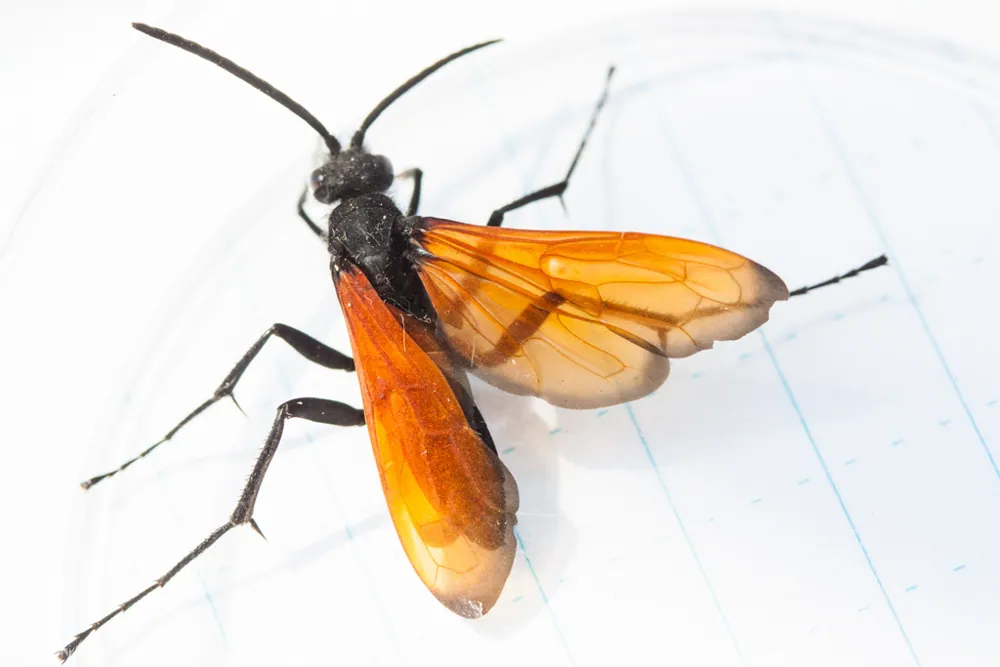
The rusty-winged tarantula hawk is a large wasp, with a matte black body and rust-orange wings. It lives in the dry Southwestern United States. Its sting is strong enough to paralyse a tarantula, which the wasp then uses to feed its young.1


 Maziviro ayo
- Matte black body with rust-orange wings1
- Grows up to 5 cm long, among the largest wasps of its order1
- Long legs, used to grapple with prey1
- Males are smaller and more slender than females, with a more vibrant wing colour1
- The antenna has twelve segments1
Inowanzovhiringidzwa ne: Its relatives in the genus Pepsis look very similar. Pepsis wasps are more metallic black, with deep-blue striped patterns. The only reliable way to tell them apart is by the pattern of veins in their wings.1
Simba reuturu
Uturu hunobuda nerumbori.
Uturu hwayo hunoitei?
Its sting paralyses a tarantula but keeps it alive, so the spider stays fresh food for the larva. The sting is described as powerful and debilitating. It is ranked among the most painful stings in the insect world on the Schmidt sting pain index.1
Ine ngozi yakadii kuvanhu?
Ngozi kuvanhu: InorwadzaInogona kurwadza chaizvo, asi kazhinji haisi njodzi huru.Its sting is among the most painful known from insects and is described as debilitating. The sting deters nearly all predators, including birds and lizards.1
Inoitei kana yatya?
Its painful sting deters nearly all predators.1
 Kana ikabaya
- Bvisa rumbori rwenyuchi nekurikwenya, wotonhodza panzvimbo iyoyo.
- Kana munhu achinetseka kufema, chiso kana huro zvichizvimba, kana achinzwa kunge ofenda, ndiyo njodzi yeallergy: fonera nhamba yechimbichimbi uye shandisa pen yake yeadrenaline kana anayo.
Gara uchitanga wafonera nhamba yechimbichimbi (112, 000, 911). Iri izano rakajairika rerubatsiro rwekutanga, kwete zano rechiremba. Zvakakosha zverubatsiro rwekutanga
 Gara wakachengeteka
- Usambobata mhuka yesango, kuedza kuitora kana kuinetsa, kunyange iri diki, uye kunyange ichiita seyakarara kana yakafa.
- Ipa nzvimbo. Kana ukasangana nayo, dzikama, dzokera shure zvishoma nezvishoma uirege iende nenzira yayo.
- Kana imwe ikakubaya: dzikama, gara wakanyarara, fonera nhamba yechimbichimbi (112, 000, 911) kana kuti enda kuchipatara nokukurumidza. Rangarira kuti yaitaridzika sei, mufananidzo unobatsira.
Haisi kukutsvaga. Inoshandisa uturu hwayo kubata chikafu kana kuzvidzivirira, uye inotonyanya kuda kuhwanda. Zvimwe pamusoro pekugara wakachengeteka
Yakakura sei?
Yakareba zvakadii?
 ipfupi kupfuura munwe wako mudiki
 inogona kubhururuka ichiyambuka nhandare yose yebhora mumasekondi 9
Rusty-winged tarantula hawk yakakura sei kana yaenzaniswa NEWE?
Masvomhu chete mubrowser yako. Hapana chinochengetwa kana kutumirwa kupi zvako.
Inomhanya zvakadii?


Chokwadi
The larva eats its living host from the inside. It hollows out the tarantula until the spider dies, once feeding reaches the bases of its legs.1
After paralysing a tarantula, the female may drag it up to 100 m to a burrow or cavity, where she seals it in with her egg.1
Males fight for territory in mid-air. The two wasps clash wings and spiral upwards, and larger males usually win and push smaller males off the best perches.1
Males gather on mountain ridges in great numbers during the breeding season, while females are rarely seen.1
Adult wasps do not grow after they emerge, so smaller males are at a permanent disadvantage when competing with larger ones.1
Kune nyanzvi dzeuturu
- Zita resainzi
- Hemipepsis ustulata
- Boka
- Nyuchi, mago nemahornet
- Mhuri
- Pompilidae2
- Odha
- Hymenoptera
- Makondinendi
- Amerika yeKuchamhembe
- Vacheche
- The female lays one egg on each tarantula she has paralysed. The egg is about 5 mm long, and the larva that hatches from it feeds on the spider.1
- Ngozi kuvanhu
- 2 / 5: Inorwadza3
Kwakabva chokwadi
- Hemipepsis ustulata (Wikipedia (CC BY-SA 4.0))
- Hemipepsis ustulata (iNaturalist): mazita nekurongwa kwemhuka.
- Venom Wiki: danho rengozi, saizi yakajairika nekufungidzira kwekumhanya ndezvedu. Ona kuti tinozviwana sei: Matinoyera ngozi.
Chokwadi chimwe nechimwe pane peji rino chine nhamba inoratidza kwachakabva. Kana takakanganisa, ruregerero, tiri vanoda mhuka, kwete magazini yesainzi. Tiudze pa[email protected] tichazvigadzirisa.
 Chinyavada chine nzara! Venom Wiki iprojekiti yemunhu mumwe: yemahara, isina kushambadza uye isina zvinokuteedzera. Chipo chidiki chinobatsira kuti irambe iri paindaneti.Fudza chinyavada
Zvimwe kubva muboka rimwe chete: Nyuchi, mago nemahornet
 Tarantula hawkNyuchi, mago nemahornetInongorwadza
 Executioner waspNyuchi, mago nemahornetInoda chiremba
 Warrior waspNyuchi, mago nemahornetInoda chiremba
 Bald-faced hornetNyuchi, mago nemahornetInongorwadza
 Cow killer velvet antNyuchi, mago nemahornetInongorwadza
 Eastern cicada killerNyuchi, mago nemahornetIsina ngozi
 Terciopelo
 Eastern coral snake
 Eastern diamondback rattlesnake
 Eyelash viper
 Timber rattlesnake
 Western diamondback rattlesnake