
 Afrika
 Asia
Asia Yuropu
 Amerika yeKumaodzanyemba
 Australia neOceania
 Antarctica
 Gungwa rePacific
 Gungwa reAtlantic
 Gungwa reIndia
 Gungwa reArctic
 Gungwa reMediterranean
 Gungwa Dzvuku
 Gungwa reCaribbean
 Gungwa reCoral
 Gungwa reChina yeKumaodzanyemba
 Gungwa rePhilippines
 Gungwa reAndaman
 Gungwa reKuchamhembe
 Gungwa reTimor neArafura
 Gungwa reBengal
 Gulf yeCalifornia
Taylor's cantil
 Inoruma
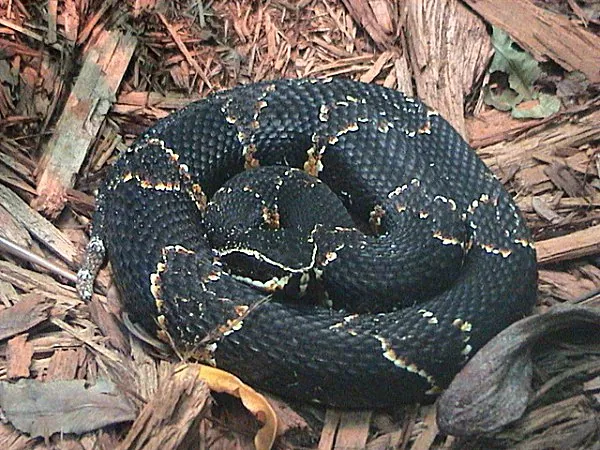
Taylor's cantil is a stout, venomous pitviper that lives only in northeastern Mexico. It is rare in the wild, and it is known to be very defensive when approached or restrained. Its name honours Edward Harrison Taylor, a herpetologist who studied the reptiles and amphibians of Mexico.1
 Maziviro ayo
- Two bold white or yellowish stripes run along each side of the face.1
- The body has a pattern of black and grey-brown bands, accented with white, yellow and orange.1
- Males are noticeably darker than females, and some older males become nearly black.1
- The tail ends in a small, downturned, spine-like scale.1
- Adults are stout and medium-sized, usually 64 to 90 cm long.1
Inowanzovhiringidzwa ne: Other members of the genus Agkistrodon differ in several ways. The cottonmouth and Conant's cantil lack the loreal scale that Taylor's cantil has, and the copperhead and broad-banded cantil lack its face stripes. Taylor's cantil also has fewer subcaudal scales than the other cantils, 45 to 56 in males and 40 to 47 in females.1
Simba reuturu
Uturu hunobuda nemeno ayo painoruma.
Uturu hwayo hunoitei?
Its venom is believed to be similar to that of its close relative, the cantil Agkistrodon bilineatus. The venom is considered potentially fatal.1
Ine ngozi yakadii kuvanhu?
Ngozi kuvanhu: Ine ngozi zvikuruInogona kuuraya munhu asina kurapwa.No case reports of human envenomations have been published. Because the snake is rare and its venom is thought to be potentially fatal, it is treated with caution.1
Inoitei kana yatya?
It is not overtly aggressive, but it is very defensive, with a volatile temper, and may be quick to strike when approached, threatened or restrained.1
 Kana ikaruma
- Chengeta munhu asingafambe uye akadzikama, chengeta nhengo yakarumwa yakaenzana nemwoyo, bvisa mhete nezvinhu zvakasunga, uende kuchipatara nokukurumidza.
Gara uchitanga wafonera nhamba yechimbichimbi (112, 000, 911). Iri izano rakajairika rerubatsiro rwekutanga, kwete zano rechiremba. Zvakakosha zverubatsiro rwekutanga
 Gara wakachengeteka
- Usambobata mhuka yesango, kuedza kuitora kana kuinetsa, kunyange iri diki, uye kunyange ichiita seyakarara kana yakafa.
- Ipa nzvimbo. Kana ukasangana nayo, dzikama, dzokera shure zvishoma nezvishoma uirege iende nenzira yayo.
- Kana imwe ikakuruma: dzikama, gara wakanyarara, fonera nhamba yechimbichimbi (112, 000, 911) kana kuti enda kuchipatara nokukurumidza. Rangarira kuti yaitaridzika sei, mufananidzo unobatsira.
Haisi kukutsvaga. Inoshandisa uturu hwayo kubata chikafu kana kuzvidzivirira, uye inotonyanya kuda kuhwanda. Zvimwe pamusoro pekugara wakachengeteka
Yakakura sei?
Yakareba zvakadii?
 yakareba sekatsi dzepamba 2 kubva pamhuno kusvika kumuswe
 yakareba semabhanana 5 akateedzana
 inogona kumhanya mamita 100 mumasekondi 100 (munhu anomhanyisa kupfuura vose anoda 9.6)
Taylor's cantil yakakura sei kana yaenzaniswa NEWE?
Masvomhu chete mubrowser yako. Hapana chinochengetwa kana kutumirwa kupi zvako.
Inomhanya zvakadii?


Chokwadi
Only a handful of specimens were known for decades. A 1948 to 1953 field study in Tamaulipas yielded just three specimens over 14 months of fieldwork.1
It is the only species in its genus with an obvious difference in colour between males and females.1
It was first collected in 1938 crawling on a highway, and it was not formally described as a subspecies until 1951.1
Its tail is proportionately shorter than in other cantils, making up 16 to 19% of total length in males and 13 to 18% in females.1
Kune nyanzvi dzeuturu
Kwakabva chokwadi
- Agkistrodon taylori (Wikipedia (CC BY-SA 4.0))
- Agkistrodon taylori (iNaturalist): mazita nekurongwa kwemhuka.
- Venom Wiki: danho rengozi, saizi yakajairika nekufungidzira kwekumhanya ndezvedu. Ona kuti tinozviwana sei: Matinoyera ngozi.
Chokwadi chimwe nechimwe pane peji rino chine nhamba inoratidza kwachakabva. Kana takakanganisa, ruregerero, tiri vanoda mhuka, kwete magazini yesainzi. Tiudze pa[email protected] tichazvigadzirisa.
 Chinyavada chine nzara! Venom Wiki iprojekiti yemunhu mumwe: yemahara, isina kushambadza uye isina zvinokuteedzera. Chipo chidiki chinobatsira kuti irambe iri paindaneti.Fudza chinyavada
 Terciopelo
 Eyelash viper
 Cottonmouth
 Eastern copperhead
 Cantil
 Central American bushmaster
 Eastern coral snake
 Eastern diamondback rattlesnake
 Timber rattlesnake
 Western diamondback rattlesnake
 Arizona bark scorpion
 Brown recluse