
 Afrika
 Asia
Asia Yuropu
 Amerika yeKumaodzanyemba
 Australia neOceania
 Antarctica
 Gungwa rePacific
 Gungwa reAtlantic
 Gungwa reIndia
 Gungwa reArctic
 Gungwa reMediterranean
 Gungwa Dzvuku
 Gungwa reCaribbean
 Gungwa reCoral
 Gungwa reChina yeKumaodzanyemba
 Gungwa rePhilippines
 Gungwa reAndaman
 Gungwa reKuchamhembe
 Gungwa reTimor neArafura
 Gungwa reBengal
 Gulf yeCalifornia
Western black widow
 Inoruma
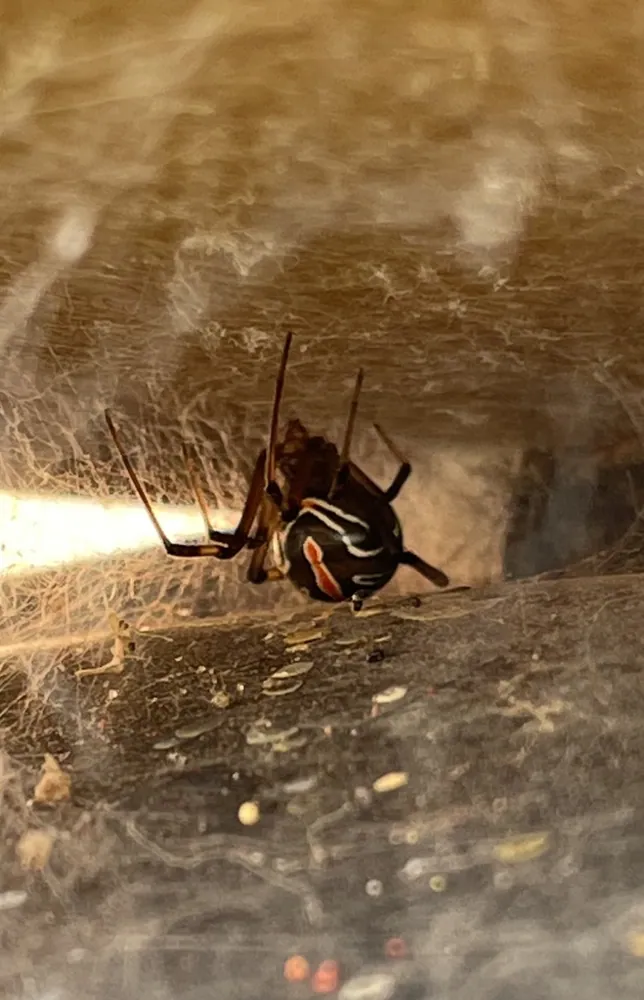
The western black widow is a venomous spider that lives in western North America. The female is black, often with a red hourglass mark on her belly, and her webs are tangled and irregular. Her venom is strong, so it is worth knowing what she looks like.1



 Maziviro ayo
- The female is about 14–16 mm long and black, often with an hourglass-shaped mark on the lower abdomen.1
- The hourglass mark is usually red, but it can be yellow and, very rarely, white.1
- The male is about half the female's length and is generally beige, with lighter striping on the abdomen.1
- Its webs are irregular or tangled, with no obvious overall pattern.1
Inowanzovhiringidzwa ne: It was once described as a subspecies of Latrodectus mactans and is closely related to the northern species Latrodectus variolus.1
Simba reuturu
Uturu hunobuda nemeno ayo painoruma.
Uturu hwayo hunoitei?
The female's venom contains a neurotoxin called α-latrotoxin, which attacks the nerves. In humans, its symptoms include pain, nausea, vomiting, goosebumps and localised sweating.1
Ine ngozi yakadii kuvanhu?
Ngozi kuvanhu: YakakombaKurumwa kunoda chiremba. Kufa hakuwanzoitiki zvachose.Historical reports gave fatality rates between 0.5% and 12%. However, recent studies have not been able to confirm any deaths from the U.S. species of Latrodectus, including zero deaths among 23,409 documented bites from 2000 through 2008.1
Inoitei kana yatya?
Juveniles and females can fling a sticky ball of silk at predators, which can stop most of them.1
 Kana ikaruma
- Geza parumwa woisa pakiti yechando kuderedza marwadzo. Wana rubatsiro rwechiremba kana marwadzo akanyanya, achipararira kana munhu asinganzwi zvakanaka.
Gara uchitanga wafonera nhamba yechimbichimbi (112, 000, 911). Iri izano rakajairika rerubatsiro rwekutanga, kwete zano rechiremba. Zvakakosha zverubatsiro rwekutanga
 Gara wakachengeteka
- Usambobata mhuka yesango, kuedza kuitora kana kuinetsa, kunyange iri diki, uye kunyange ichiita seyakarara kana yakafa.
- Ipa nzvimbo. Kana ukasangana nayo, dzikama, dzokera shure zvishoma nezvishoma uirege iende nenzira yayo.
- Kana imwe ikakuruma: dzikama, gara wakanyarara, fonera nhamba yechimbichimbi (112, 000, 911) kana kuti enda kuchipatara nokukurumidza. Rangarira kuti yaitaridzika sei, mufananidzo unobatsira.
Haisi kukutsvaga. Inoshandisa uturu hwayo kubata chikafu kana kuzvidzivirira, uye inotonyanya kuda kuhwanda. Zvimwe pamusoro pekugara wakachengeteka
Yakakura sei?
Yakareba zvakadii?
 ipfupi kupfuura munwe wako mudiki
Western black widow yakakura sei kana yaenzaniswa NEWE?
Masvomhu chete mubrowser yako. Hapana chinochengetwa kana kutumirwa kupi zvako.
Inomhanya zvakadii?


Chokwadi
When prey hits a gumfoot thread, the thread breaks and creates tension that pulls the line and prey up to the spider.1
This spider is an opportunistic cannibal, and it may eat other members of its own kind when prey is scarce, when it is very hungry, or in self-defence.1
The silk is strongly sticky, and its strength is similar to that of silk from orb-weaving spiders.1
Males can be preferred by females based on the webs, with well-fed females chosen over starved ones.1
Males may mate several times during their relatively short lives.1
Kuputsa ngano
Ngano: A black widow bite is usually deadly.
Chokwadi: Recent studies have not confirmed any deaths from the U.S. species of Latrodectus, including zero deaths among 23,409 documented bites from 2000 through 2008.1
Kwakabva chokwadi
- Latrodectus hesperus (Wikipedia (CC BY-SA 4.0))
- Latrodectus hesperus (iNaturalist): mazita nekurongwa kwemhuka.
- Venom Wiki: danho rengozi, saizi yakajairika nekufungidzira kwekumhanya ndezvedu. Ona kuti tinozviwana sei: Matinoyera ngozi.
Chokwadi chimwe nechimwe pane peji rino chine nhamba inoratidza kwachakabva. Kana takakanganisa, ruregerero, tiri vanoda mhuka, kwete magazini yesainzi. Tiudze pa[email protected] tichazvigadzirisa.
 Chinyavada chine nzara! Venom Wiki iprojekiti yemunhu mumwe: yemahara, isina kushambadza uye isina zvinokuteedzera. Chipo chidiki chinobatsira kuti irambe iri paindaneti.Fudza chinyavada
 Brown recluse
 Southern black widow
 Northern black widow
 Bold jumping spider
 Golden silk orb-weaver
 Central American wandering spider
 Terciopelo
 Eastern coral snake
 Eastern diamondback rattlesnake
 Eyelash viper
 Timber rattlesnake
 Western diamondback rattlesnake