
 Afrika
 Asia
Asia Ulaya
Ulaya Amerika Kusini
 Australia na Oceania
 Antaktika
 Bahari ya Pasifiki
 Bahari ya Atlantiki
 Bahari ya Hindi
 Bahari ya Aktiki
 Bahari ya Mediterania
 Bahari ya Shamu
 Bahari ya Karibi
 Bahari ya Matumbawe
 Bahari ya Kusini ya China
 Bahari ya Ufilipino
 Bahari ya Andaman
 Bahari ya Kaskazini
 Bahari ya Timor na Arafura
 Ghuba ya Bengal
 Ghuba ya California
Greenland shark
 Sumu akiliwaHula: NyamaSumu ya kugusa au kula, hadungi sumu
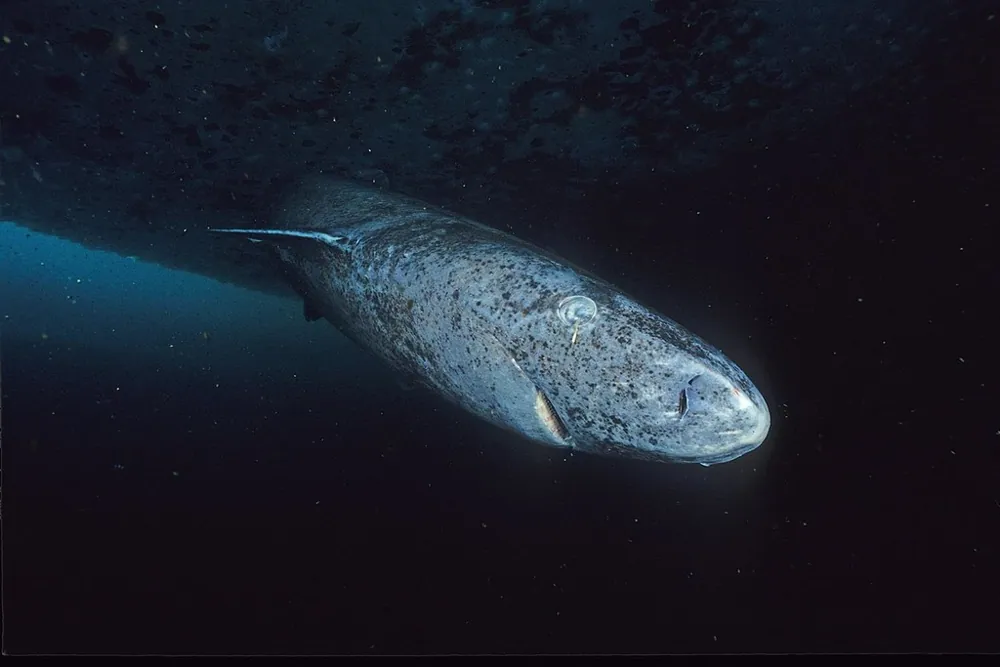
The Greenland shark is a huge, slow shark that lives in the cold, deep waters of the North Atlantic and Arctic Oceans. It is famous for living longer than any known vertebrate (animal with a backbone). Its flesh is poisonous to eat unless it is specially prepared.1



 Jinsi ya kumtambua
- A thickset, heavy body with a short, rounded snout1
- Small eyes and small dorsal and pectoral fins1
- Five very small gill openings for its size1
- Colour ranges from pale creamy-grey to blackish-brown, usually uniform, sometimes with whitish spots or faint dark streaks on the back1
- Often has small parasitic copepods (crustaceans) attached to its eyes1
Nguvu ya sumu
Ni hatari tu kitu kikimla.
Sumu yake hufanya nini?
The shark is not venomous. Its meat is poisonous to mammals because it contains high levels of trimethylamine N-oxide (TMAO), a natural chemical that makes the flesh toxic.1
Ana hatari gani kwa watu?
Hatari kwa watu: InaumaInaweza kuuma sana, lakini karibu kamwe si jambo zito.Greenland sharks are not considered a threat to people, because they live deep in remote, cold waters. Only one possible attack is recorded, in 1936, and it was never linked to this species. One unverified report from around 1859 describes a human leg found in a shark's stomach.1
Hufanya nini akiogopa?
When hauled onto a boat, it thrashes its tail so violently that it is dangerous to stand near it, and its muscles can still twitch after death.1
 Mtu akimgusa au kumla
- Mtu akimla au akipata dalili baada ya kumla: piga namba ya dharura au kituo cha taarifa za sumu mara moja.
Daima piga namba ya dharura kwanza (112, 000, 911). Huu ni mwongozo wa jumla wa huduma ya kwanza, si ushauri wa kitabibu. Misingi ya huduma ya kwanza
 Kaa salama
- Kamwe usimguse, kumkamata wala kumchokoza mnyama wa porini, hata akiwa mdogo, na hata akionekana amelala au amekufa.
- Mpe nafasi. Ukikutana naye, tulia, rudi nyuma polepole na umwache aende zake.
- Ukimgusa au kumla: usisugue macho wala mdomo, nawa mikono na utafute msaada wa kitabibu.
Hakuwindi wewe. Sumu yake ipo tu ili asiliwe na yeyote. Zaidi kuhusu kukaa salama
Wapi duniani?
Ana ukubwa gani?
Ana urefu gani?
Ana uzito gani?
 urefu sawa na mbwa 6 kutoka pua hadi mkia
 urefu sawa na ndizi 36 zilizopangwa mstari
 angeweza kuogelea urefu wa bwawa kubwa (m 50) kwa sekunde 69
Greenland shark ana ukubwa gani ukilinganisha na WEWE?
Ni hesabu tu kwenye kivinjari chako. Hakuna kinachohifadhiwa wala kutumwa popote.
Ana kasi gani?

Ukweli
It is thought to have the longest lifespan of any known vertebrate, estimated at between 272 and 510 years.1
It is one of the slowest-swimming fish for its size, with a fastest cruising speed of about 2.7 km/h.1
Parasitic copepods often attach to its eyes and can damage them, but this does not seem to shorten its life, because it relies mainly on smell and hearing.1
It is one of the largest shark species alive, with the largest confirmed specimen weighing around 1,023 kg.1
In Iceland, a specially treated form of its meat is eaten as a pungent delicacy called kæstur hákarl.1
Its slow metabolism is thought to be linked to its very long life, although this is still a hypothesis.1
Kuvunja dhana potofu
Dhana potofu: The Greenland shark is a dangerous threat to humans.
Ukweli: It is not considered a threat to people. It lives deep in cold, remote waters, and the only report of a possible attack was never confirmed as this species.1
Kwa wataalamu wa sumu
- Jina la kisayansi
- Somniosus microcephalus
- Kundi
- Wanyama wengine wenye sumu ya kugusa au kula
- Familia
- Somniosidae2
- Mpangilio
- Squaliformes
- Mabara
- Bahari ya Aktiki, Bahari ya Atlantiki, Bahari kuu
- Watoto
- Pups are born alive, after an estimated gestation period of 8 to 18 years. Females reach sexual maturity at around 150 years of age.1
- Hatari kwa watu
- 2 / 5: Inauma3
Ukweli unatoka wapi
- Greenland shark (Wikipedia (CC BY-SA 4.0))
- Somniosus microcephalus (iNaturalist): majina na uainishaji.
- Venom Wiki: kiwango cha hatari, ukubwa wa kawaida na makadirio ya kasi ni yetu wenyewe. Ona jinsi tunavyovipata: Jinsi tunavyopima hatari.
Kila ukweli kwenye ukurasa huu una namba inayoonyesha chanzo chake. Kama tumekosea kitu, samahani, sisi ni wapenzi wa wanyama, si jarida la kisayansi. Tuambie kupitia [email protected] nasi tutarekebisha.
 Nge ana njaa! Venom Wiki ni mradi wa mtu mmoja: bure, bila matangazo na bila vifuatiliaji. Mchango mdogo husaidia kuiweka hewani.Mlishe nge
Zaidi kutoka kundi hilohilo: Wanyama wengine wenye sumu ya kugusa au kula
 Japanese pufferfishWanyama wengine wenye sumu ya kugusa au kulaAnaua
 Hawksbill sea turtleWanyama wengine wenye sumu ya kugusa au kulaAnaweza kuua
 Silver-cheeked toadfishWanyama wengine wenye sumu ya kugusa au kulaAnaua
 Blackspotted pufferWanyama wengine wenye sumu ya kugusa au kulaAnaweza kuua
 White-spotted pufferWanyama wengine wenye sumu ya kugusa au kulaAnaweza kuua
 Long-spine porcupinefishWanyama wengine wenye sumu ya kugusa au kulaAnahitaji daktari
 Lion's mane jellyfish
 Moon jellyfish
 Spiny dogfish
 Bootlace worm