
 ኣፍሪቃ
ኣፍሪቃ እስያ
እስያ ኤውሮጳ
ኤውሮጳ ደቡብ ኣመሪካ
 ኣውስትራልያን ኦሽያንያን
 ኣንታርክቲካ
 ውቅያኖስ ፓሲፊክ
 ውቅያኖስ ኣትላንቲክ
 ህንዳዊ ውቅያኖስ
 ውቅያኖስ ኣርክቲክ
 ባሕሪ ሜዲተራንያን
 ቀይሕ ባሕሪ
 ባሕሪ ካሪብያን
 ባሕሪ ኮራል
 ባሕሪ ደቡብ ቻይና
 ባሕሪ ፊሊፒንስ
 ባሕሪ ኣንዳማን
 ባሕሪ ሰሜን
 ባሕሪ ቲሞርን ኣራፉራን
 ወሽመጥ ቤንጋል
 ወሽመጥ ካሊፎርንያ
Giant honey bee
 ምንዳፋት
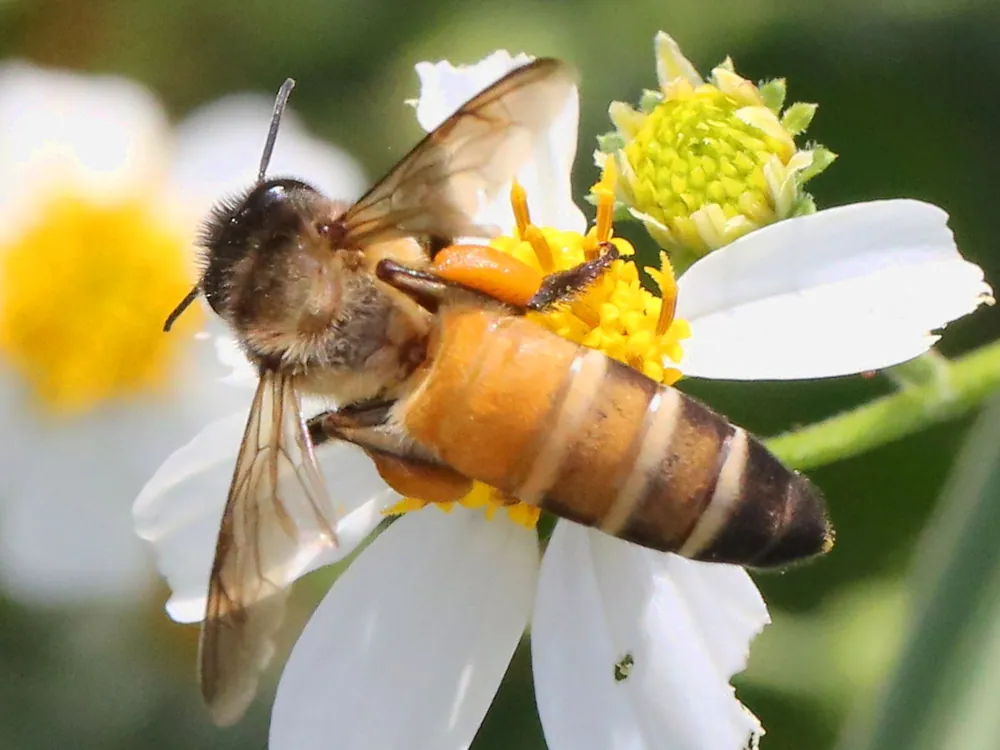
ምንዳፋትThe giant honey bee is a large honey bee that lives in South and Southeast Asia. It builds its nests in open, high places, such as tree branches, cliff overhangs and buildings. It is known for fierce defence when its nest is disturbed.1


 ብኸመይ ትፈልጦ
- Typically 17 to 20 mm long1
- Builds a single vertical comb of wax, hanging from above1
- The comb is covered by a dense mass of bees in several layers1
- Nests can reach up to 1 metre across and are often grouped, with up to 200 colonies in one tree1
- Aggressive when its nest is disturbed1
ብዙሕ ግዜ ዝደናገረሉ፦ The Himalayan giant honey bee (A. laboriosa) is very similar in shape. It has a darker abdomen and longer thoracic hair, and is now treated as a separate species from the giant honey bee.1
ሓይሊ መርዚ
መርዚ ብመንደፊ እዩ ዝወጽእ።
ንሰባት ክንደይ ሓደገኛ እዩ?
ሓደጋ ንሰባት: ከቢድምንዳፉ ሓኪም የድልዮ። ሞት ኣዝዩ ሳሕቲ እዩ።This bee is known for aggressive defensive behaviour and vicious attacks when disturbed. Workers also attack bees from other colonies, so it is wise to keep well away from nests.1
ምስ ፈርሀ እንታይ ይገብር?
When disturbed, colonies defend their nest aggressively, and they attack intruders from other colonies.1
 እንተ ነዲፉ
- ናይ ንህቢ መንደፊ ፍሒቕካ ኣውጽኦ፣ ነቲ ቦታ ድማ ኣዝሕሎ።
- እቲ ሰብ ጸገም ምስትንፋስ፣ ሕበጥ ገጽ ወይ ጎሮሮ እንተ ኣለዎ፣ ወይ ኣእምሮኡ ክስሕት ከም ዝቐረበ እንተ ተሰምዖ፣ ህጹጽ ኣለርጂ እዩ፦ ናብ ቁጽሪ ህጹጽ ረድኤት ደውል፣ እንተ ኣለዎ ድማ ናይ ኣድሬናሊን መርፍኡ (ኣድሬናሊን ፔን) ተጠቐም።
ኩሉ ግዜ ቀዳምነት ናብ ቁጽሪ ህጹጽ ረድኤት ደውል (112፣ 000፣ 911)። እዚ ሓፈሻዊ መምርሒ ቀዳማይ ረድኤት እዩ፣ ሕክምናዊ ምኽሪ ኣይኮነን። መሰረታት ቀዳማይ ረድኤት
 ብድሕንነት ጽናሕ
- ንዘገዳም እንስሳ ፈጺምካ ኣይትተንክፎ፣ ኣይትሓዞ ወይ ኣይተሕርቖ፣ ንእሽቶ እንተ ኾነ እውን፣ ደቂሱ ወይ ሞይቱ እንተ መሰለ እውን።
- ቦታ ሃቦ። እንተ ረኺብካዮ፣ ህዱእ ኹን፣ ቀስ ኢልካ ንድሕሪት ተመለስ፣ ናብ መገዱ ድማ ይኺድ ሕደጎ።
- ሓደ እንተ ነዲፉካ፦ ህዱእ ኹን፣ ከይተንቀሳቐስካ ጽናሕ፣ ናብ ቁጽሪ ህጹጽ ረድኤት (112፣ 000፣ 911) ደውል ወይ ብቕልጡፍ ናብ ሆስፒታል ኪድ። ከመይ ከም ዝመስል ዘክር፣ ስእሊ ይሕግዝ።
ንዓኻ ከጥቅዕ ኣይደልን እዩ። መርዙ ዝጥቀመሉ መግቢ ንምሓዝ ወይ ንርእሱ ንምክልኻል እዩ፣ ምሕባእ ድማ ኣዝዩ ይመርጽ። ብዛዕባ ድሕንነት ተወሳኺ
ክንደይ ዓቢ እዩ?
ክንደይ ይነውሕ?
 ኣስታት ከም መሓዝ ወረቐት ይነውሕ
 ምሉእ ሜዳ ኩዕሶ እግሪ ብ15 ካልኢት ነፊሩ ክሰግሮ ይኽእል
Giant honey bee ምሳኻ ክወዳደር ከሎ ክንደይ ዓቢ እዩ?
ኣብ ብራውዘርካ ዝስራሕ ሕሳብ ጥራይ። ዋላ ሓደ ነገር ኣይዕቀብን ናብ ዝኾነ ቦታ ድማ ኣይለኣኽን።
ክንደይ ቅልጡፍ እዩ?


ሓቅታት
Unlike most honey bees, this species forages at night, and it is the only bee of its genus known to do so.1
The queen mates with many drones, and the Himalayan subspecies has the highest levels of polyandry of any social insect.1
Each colony can have up to 100,000 bees, and colonies are only a few centimetres apart in large groups.1
Colonies migrate between nesting sites with the seasons, usually staying about 3 to 4 months at each site.1
Bees use a waggle dance to show other bees the distance, direction and value of a food source.1
Indigenous peoples have traditionally harvested the honey and beeswax of this bee, a practice known as honey hunting.1
ሓቅታት ካበይ ይመጹ
- Apis dorsata (Wikipedia (CC BY-SA 4.0))
- Apis dorsata (iNaturalist): ኣስማትን ምምዳብን።
- Venom Wiki: ደረጃ ሓደጋ፣ ልሙድ ዓቐንን ግምት ቅልጣፈን ናትና እዮም። ብኸመይ ከም እነውጽኦም ርአ፦ ሓደጋ ብኸመይ ንግምግም.
ኣብዚ ገጽ ዘሎ ነፍሲ ወከፍ ሓቂ ናብ ምንጩ ዘመልክት ቁጽሪ ኣለዎ። ገለ ነገር እንተ ተጋጊና፣ ይቕሬታ፣ ንሕና ፈተውቲ እንስሳታት ኢና፣ መጽሔት ሳይንስ ኣይኮንናን። ብ[email protected] ንገረና፣ ክነስተኻኽሎ ኢና።
 እቲ ዕንቅርቢ ጠምዩ! Venom Wiki ናይ ሓደ ሰብ ፕሮጀክት እዩ፦ ናጻ፣ ብዘይ ረኽላምን ብዘይ ሰዓብትን። ንእሽቶ ወፈያ ኣብ መስመር ክጸንሕ ይሕግዞ።ንዕንቅርቢ ኣብልዖ
 Asian giant hornet
 Common wasp
 European hornet
 Western honey bee
 Asian hornet
 European paper wasp
 Deathstalker
 Indian cobra
 Indian saw-scaled viper
 King cobra
 Puff adder
 ኣፍዒ ራሰል