
 Aforika
 Asia
Asia Yuropa
 Amerika Borwa
 Australia le Oceania
 Antarctica
 Lewatle la Pacific
 Lewatle la Atlantic
 Lewatle la India
 Lewatle la Arctic
 Lewatle la Mediterranean
 Lewatle le Lehibidu
 Lewatle la Caribbean
 Lewatle la Coral
 Lewatle la China Borwa
 Lewatle la Philippines
 Lewatle la Andaman
 Lewatle la Bokone
 Lewatle la Timor le la Arafura
 Kou ya Bengal
 Gulf ya California
Beadlet anemone
 Mesela e e tlhabang
The beadlet anemone is a small sea animal that lives fixed to rocks on the shore. It looks like a blob of jelly when the tide is out, but under water it opens a crown of tentacles. It is common around the coasts of northern and western Europe, the Mediterranean, Africa, Australia and East Asia.1
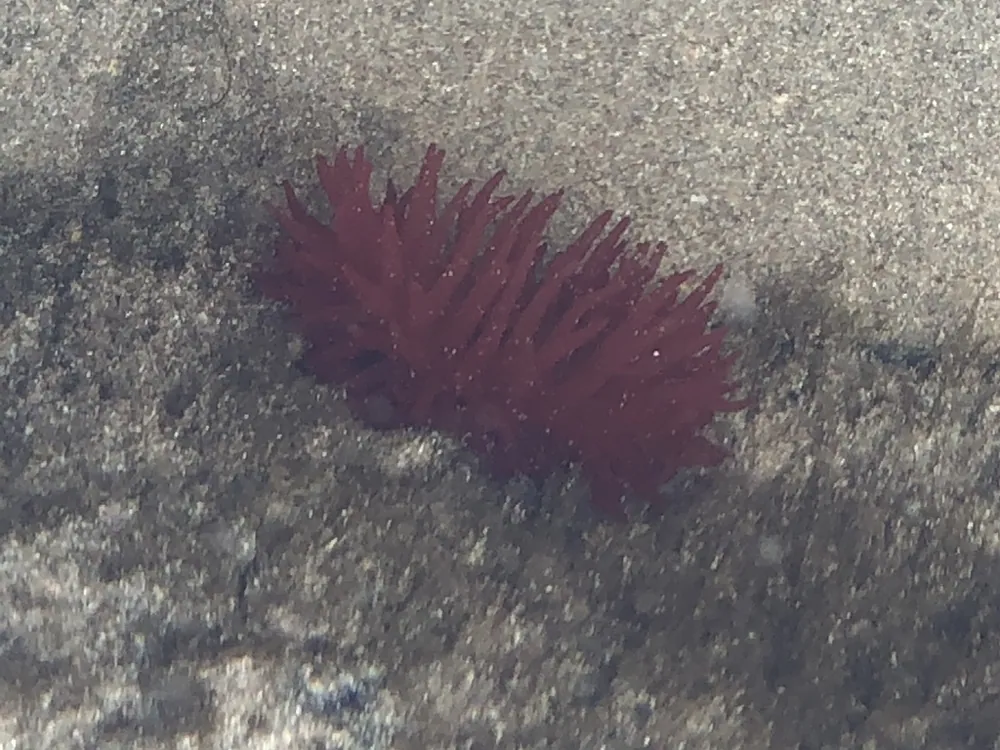
 Tsela ya go e lemoga
- Under water, it has up to 192 tentacles arranged in six circles.1
- Out of water, the tentacles pull in and it looks like a blob of red, brown, green or orange jelly.1
- It is up to about 5 cm across.1
- It has bright blue beads just beneath the tentacles, at the top of its body.1
Gantsi e tlhakanngwa le: The Waratah anemone of Australia and New Zealand has a similar form. The strawberry anemone is also similar, but the beadlet anemone is a single uniform colour and is usually smaller.1
Maatla a botlhole
Dikete tsa disele tse dinnye tse di tlhabang di a thuntsha fa sengwe se di ama.
E kotsi go le kae go batho?
Kotsi go batho: Kotsi e nnyeJaaka go tlhabiwa ke notshe kgotsa go le kwa tlase. Ga e na kotsi go batho.E dira eng fa e tshogile?
It uses its blue beads, which contain stinging cells, to fight other anemones over territory, and it pulls its tentacles in when out of water.1
 Fa e tlhaba
- Tswa mo metsing mme o tlose mesela (tentacles) epe fela e e setseng (ka ditlelafo kgotsa ka lesela).
- Ya dijelifishi tsa lebokoso tsa tropiki: tshela asene mo mafelong a a tlhabilweng bonnye metsotswana e le 30, bitsa thuso mme o ipaakanyetse go dira CPR. Ya dibluebottle le tse dingwe tse dintsi: tlhatswa ka metsi a lewatle, morago ka metsi a a mogote go fokotsa botlhoko.
Ka gale leletsa nomoro ya gago ya tshoganyetso pele (112, 000, 911). Se ke kaelo e e akaretsang ya thuso ya ntlha, ga se kgakololo ya bongaka. Motheo wa thuso ya ntlha
 Nna o babalesegile
- O se ka wa ama, wa tshwara kgotsa wa tshwenya phologolo ya naga, le fa e le e nnye, le fa e lebega e robetse kgotsa e sule.
- E fe sebaka. Fa o kopana le yone, ritibala, boela morago ka bonya mme o e tlogele e tsamaye ka tsela ya yone.
- Fa e nngwe e go tlhaba: ritibala, o se ka wa tshikinyega, leletsa nomoro ya gago ya tshoganyetso (112, 000, 911) kgotsa o ye bookelong ka bonako. Gopola gore e ne e lebega jang, setshwantsho se a thusa.
Ga e go batle. E dirisa botlhole jwa yone go tshwara dijo kgotsa go itshireletsa, mme e rata go iphitlha go feta. Go le gontsi ka go nna o babalesegile
Kae mo lefatsheng?
E kgolo go le kae?
E telele go le kae?
 khutshwane go feta monwana wa gago o monnye
 bonya go feta kgopa ya tshingwana
Beadlet anemone e kgolo go le kae fa e bapisiwa le WENA?
Ke dipalo fela mo sefetleng sa gago (browser). Ga go sepe se se bolokwang kgotsa se se romelwang gope.
E bonako go le kae?

Dintlha
A famous individual called "Granny" was found on Scotland's east coast in 1828 and produced several hundred offspring before it died in 1887.1
The only known predator of the beadlet anemone is the grey sea slug.1
They can tolerate high temperatures and drying out, which helps them survive on the shore.1
Beadlet anemones can live alone or in clusters, and solitary ones tend to grow larger.1
Ya baitseanape ba botlhole
- Leina la saense
- Actinia equina
- Setlhopha
- Dijelifishi le dibopiwa tsa lewatle tse di tlhabang
- Lelapa
- Actiniidae2
- Lekoko
- Actiniaria
- Dikontinente
- Lewatle la Atlantic, Lewatle la Mediterranean, Lewatle la Bokone, Mawatle
- Masea
- It gives birth to live young. Up to one hundred embryos develop inside its body before being released into the water as juveniles.1
- Kotsi go batho
- 1 / 5: Kotsi e nnye3
Kwa dintlha di tswang teng
- Beadlet anemone (Wikipedia (CC BY-SA 4.0))
- Actinia equina (iNaturalist): maina le thulaganyo ya mefuta.
- Venom Wiki: seelo sa kotsi, bogolo jo bo tlwaelegileng le kakanyo ya lebelo ke tsa rona. Bona kafa re di balang ka teng: Kafa re lekanyang kotsi ka teng.
Ntlha nngwe le nngwe mo tsebeng e e na le nomoro e e supang motswedi wa yone. Fa re dirile phoso, maitshwarelo, re barati ba diphologolo, e seng kgatiso ya saense. Re bolelele kwa [email protected] mme re tla e baakanya.
 Phepheng e tshwerwe ke tlala! Venom Wiki ke porojeke ya motho a le mongwe: ke mahala, ga e na dipapatso le ditraka. Mpho e nnye e thusa go e tshegetsa mo inthaneteng.Fepa phepheng
Tse dingwe tsa setlhopha se se tshwanang: Dijelifishi le dibopiwa tsa lewatle tse di tlhabang
 Australian box jellyfishDijelifishi le dibopiwa tsa lewatle tse di tlhabangE a bolayaO se ka wa ama
 Irukandji jellyfishDijelifishi le dibopiwa tsa lewatle tse di tlhabangE ka bolayaO se ka wa ama
 Portuguese man o' warDijelifishi le dibopiwa tsa lewatle tse di tlhabangE tlhoka ngakaO se ka wa ama
 Lion's mane jellyfishDijelifishi le dibopiwa tsa lewatle tse di tlhabangE utlwisa botlhoko felaO se ka wa ama
 Moon jellyfishDijelifishi le dibopiwa tsa lewatle tse di tlhabangGa e na kotsi
 Common kingslayerDijelifishi le dibopiwa tsa lewatle tse di tlhabangE ka bolayaO se ka wa ama
E tshela gape kwa: Lewatle la Atlantic
 Hawksbill sea turtleDiphologolo tse dingwe tse di botlhole go di ama kgotsa go di jaE ka bolaya
 Blue sea dragonDikgopa tsa khouno le diokotopaseE utlwisa botlhoko fela
 Greenland sharkDiphologolo tse dingwe tse di botlhole go di ama kgotsa go di jaE utlwisa botlhoko fela
 Common octopusDikgopa tsa khouno le diokotopaseGa e na kotsi
 Common stingrayDitlhapi tse di tsenyang botlholeE tlhoka ngaka
 Greater weeverDitlhapi tse di tsenyang botlholeE tlhoka ngakaO se ka wa ama